




Which of the following vitamin contains nitrogen?
A) Vitamin A
B) Vitamin B
C) Vitamin E
D) Vitamin D
Answer
 Verified
513.6k+ views
Hint: The word vitamin is derived from the Latin word Vita meaning life and amine means nitrogen. Vitamins are the organic compounds that are needed for the growth, development and metabolic activities of our body. They are not produced in our body but are taken in large amounts through the food we eat. Plant and animal products are rich sources of vitamins.
Complete answer:
The body requires vitamins and they are as essential as the proteins, carbohydrates and fats in our body. They are supplemented through the diet that we take. The vitamins are necessary to carry out metabolic activities in our body.
There are two categories of vitamins-
I) Water-soluble- Vitamin A, D, E, K. They can only dissolve in fats.
II) Fat-soluble- Vitamin B and vitamin C are water-soluble vitamins and can only dissolve in water.
To answer this question, we must know the structure of the vitamins.
- Vitamin A: It comprises fat-soluble retinoids. It is critical for the vision. It is an important component of rhodopsin.
- Vitamin B: It is a water-soluble vitamin that is present in eight different forms. They contain nitrogen in their ring. They are important for the development of the brain.
- Vitamin E: It is a fat-soluble vitamin. Alpha-tocopherol is only used in our bodies. This vitamin acts as an antioxidant.
- Vitamin D: These are fat-soluble secosteroids. They are produced in our bodies in response to the sunlight. They are responsible for the absorption of minerals into our bodies.
The structure of the vitamins is as follows:
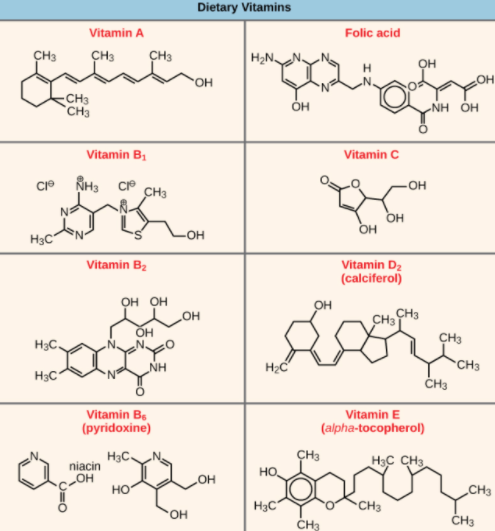
So, we can conclude that vitamin B is a nitrogen-containing vitamin. Therefore the correct answer is option ‘B’.
Note: Vitamin B is essential for the nervous system of our body. Folic acid is essential for the proper growth and development of the fetus. They act as the building blocks of our bodies. Vitamin B is abundant in whole grains, meat, dairy products etc.
Complete answer:
The body requires vitamins and they are as essential as the proteins, carbohydrates and fats in our body. They are supplemented through the diet that we take. The vitamins are necessary to carry out metabolic activities in our body.
There are two categories of vitamins-
I) Water-soluble- Vitamin A, D, E, K. They can only dissolve in fats.
II) Fat-soluble- Vitamin B and vitamin C are water-soluble vitamins and can only dissolve in water.
To answer this question, we must know the structure of the vitamins.
- Vitamin A: It comprises fat-soluble retinoids. It is critical for the vision. It is an important component of rhodopsin.
- Vitamin B: It is a water-soluble vitamin that is present in eight different forms. They contain nitrogen in their ring. They are important for the development of the brain.
- Vitamin E: It is a fat-soluble vitamin. Alpha-tocopherol is only used in our bodies. This vitamin acts as an antioxidant.
- Vitamin D: These are fat-soluble secosteroids. They are produced in our bodies in response to the sunlight. They are responsible for the absorption of minerals into our bodies.
The structure of the vitamins is as follows:
So, we can conclude that vitamin B is a nitrogen-containing vitamin. Therefore the correct answer is option ‘B’.
Note: Vitamin B is essential for the nervous system of our body. Folic acid is essential for the proper growth and development of the fetus. They act as the building blocks of our bodies. Vitamin B is abundant in whole grains, meat, dairy products etc.
Recently Updated Pages
Master Class 10 Social Science: Engaging Questions & Answers for Success

Master Class 10 Science: Engaging Questions & Answers for Success
Master Class 10 Maths: Engaging Questions & Answers for Success
Master Class 10 General Knowledge: Engaging Questions & Answers for Success
Master Class 10 Computer Science: Engaging Questions & Answers for Success
Class 10 Question and Answer - Your Ultimate Solutions Guide
Trending doubts
What is the full form of PNG A Petrol Natural Gas B class 10 chemistry CBSE
Explain the Treaty of Vienna of 1815 class 10 social science CBSE
In cricket, how many legal balls are there in a standard over?
Why is there a time difference of about 5 hours between class 10 social science CBSE
Who Won 36 Oscar Awards? Record Holder Revealed
What is the median of the first 10 natural numbers class 10 maths CBSE