




Which of the following statements is incorrect?
a.) The frequency of radiation is inversely proportional to its wavelength.
b.) The energy of radiation increases with an increase in frequency.
c.) The energy of radiation decreases with an increase in wavelength.
d.) The frequency of radiation is directly proportional to its wavelength.
Answer
 Verified
664.8k+ views
Hint: Wavelength is the distance between identical points in the adjacent cycles of a waveform signal propagated in space or along a wire. Wavelength is inversely related to frequency. The higher the frequency of the signal, the shorter the wavelength.
Complete step by step solution:
Wavelength is inversely proportional to the frequency of the wave. The waves with higher frequencies have shorter wavelengths, and lower frequencies have longer wavelengths.
As we know that, E=hν
Where, E = Energy of the radiation
h = Planck’s constant
${ \mu }$ = frequency of radiation
As we see the energy of the radiation is directly proportional to the frequency of the radiation. Hence, we can say that as the energy of radiation increases, the frequency also increases and vice versa.
As we know, ${ E=h\upsilon =hc\div \lambda }$
Where, E = Energy of the radiation
h = Planck’s constant
${ \mu }$ = frequency of radiation
${\lambda}$ = wavelength of the radiation
Energy is directly proportional to frequency and frequency is inversely proportional to the wavelength of the radiation. So, as the energy decreases, wavelength increases and vice versa as the energy of the radiation is inversely proportional to the wavelength of the radiation.
${ \upsilon =c\div \lambda }$
where, ${ \mu }$ = frequency of radiation
${\lambda}$ = wavelength of the radiation
c =speed of light
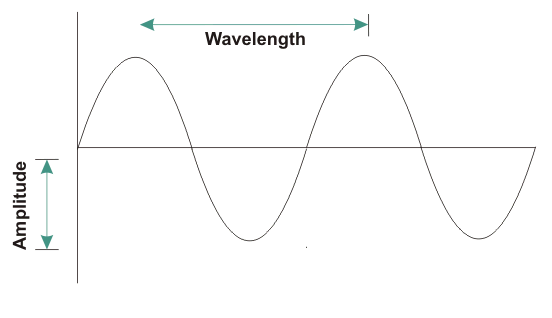
From here, we see that frequency of the radiation is inversely proportional to the wavelength of the radiation. So, the above statement is incorrect.
So, the correct answer is “Option D”.
Note: The possibility to make a mistake is that you may confuse between A and D. But as we know the frequency of the radiation is inversely proportional to the frequency of the radiation, so option D has an incorrect statement.
Complete step by step solution:
Wavelength is inversely proportional to the frequency of the wave. The waves with higher frequencies have shorter wavelengths, and lower frequencies have longer wavelengths.
As we know that, E=hν
Where, E = Energy of the radiation
h = Planck’s constant
${ \mu }$ = frequency of radiation
As we see the energy of the radiation is directly proportional to the frequency of the radiation. Hence, we can say that as the energy of radiation increases, the frequency also increases and vice versa.
As we know, ${ E=h\upsilon =hc\div \lambda }$
Where, E = Energy of the radiation
h = Planck’s constant
${ \mu }$ = frequency of radiation
${\lambda}$ = wavelength of the radiation
Energy is directly proportional to frequency and frequency is inversely proportional to the wavelength of the radiation. So, as the energy decreases, wavelength increases and vice versa as the energy of the radiation is inversely proportional to the wavelength of the radiation.
${ \upsilon =c\div \lambda }$
where, ${ \mu }$ = frequency of radiation
${\lambda}$ = wavelength of the radiation
c =speed of light
From here, we see that frequency of the radiation is inversely proportional to the wavelength of the radiation. So, the above statement is incorrect.
So, the correct answer is “Option D”.
Note: The possibility to make a mistake is that you may confuse between A and D. But as we know the frequency of the radiation is inversely proportional to the frequency of the radiation, so option D has an incorrect statement.
Recently Updated Pages
Write structures of the following compounds i 2 Chloro3methylpentane class 11 chemistry CBSE

What is BLO What is the full form of BLO class 8 social science CBSE
Explain the Treaty of Vienna of 1815 class 10 social science CBSE
A Paragraph on Pollution in about 100-150 Words
XIX+XXX A 49 B 51 C 55 D 44 class 5 maths CBSE
If x a + bt + ct2 where x is in meters and t is in class 11 physics CBSE
Trending doubts
One Metric ton is equal to kg A 10000 B 1000 C 100 class 11 physics CBSE
What do you mean by retardation What is its SI uni class 11 physics CBSE
Draw a diagram of nephron and explain its structur class 11 biology CBSE
10 examples of friction in our daily life
Difference between physical and chemical change class 11 chemistry CBSE
Proton was discovered by A Thomson B Rutherford C Chadwick class 11 chemistry CBSE