




Which of the following options correctly describe the respective image?
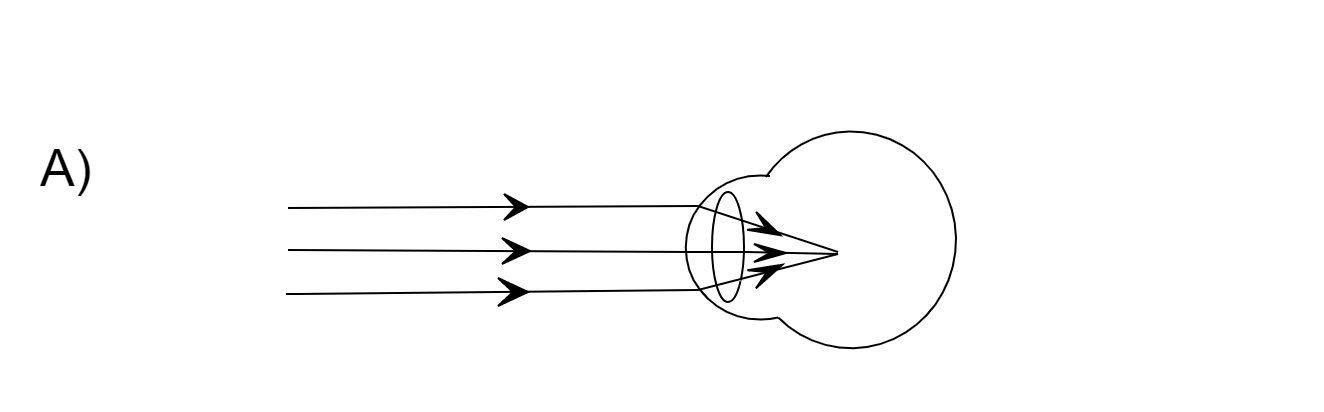
A short-sighted eye corrected by a convex lens.
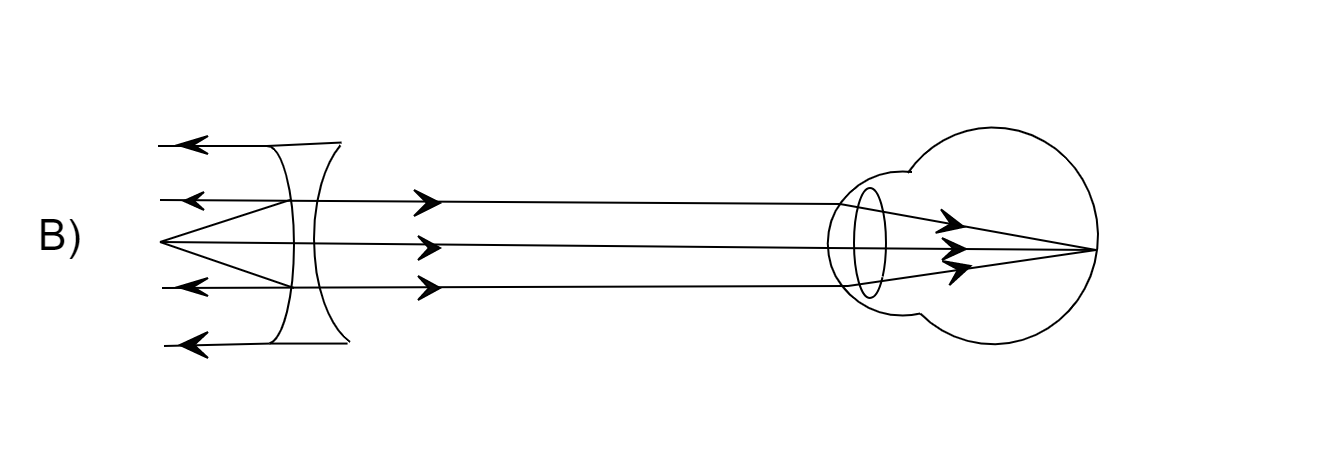
A short-sighted eye corrected by a concave lens.
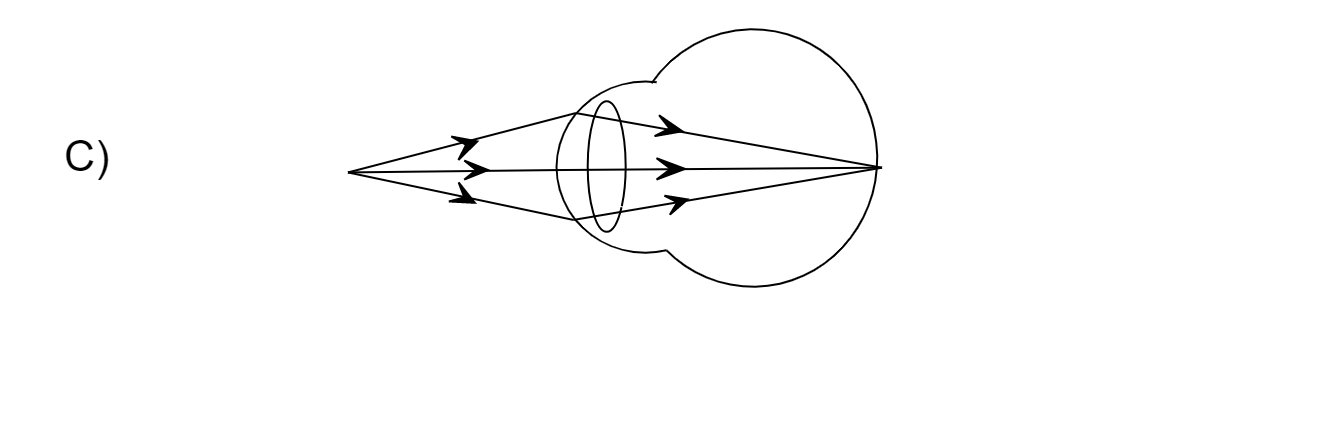
A healthy eye.
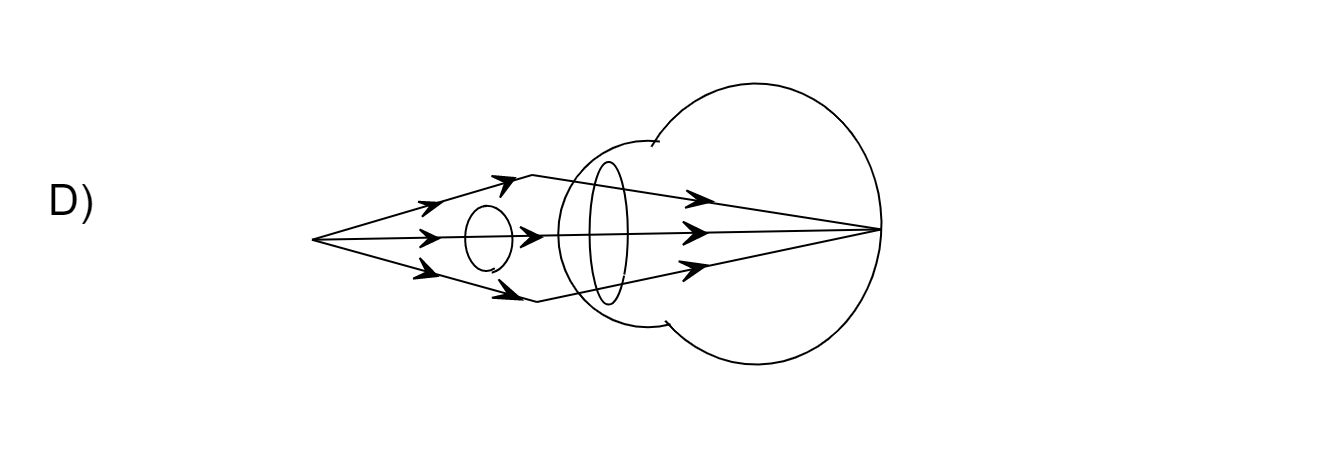
A short-sighted eye corrected by a convex lens.
Answer
 Verified
510.6k+ views
Hint: Convex lenses converge the light rays and a concave lens diverges the rays. Image formation is possible only when the rays converge and get focused on the retina. A convex lens is present in the eyeball of human beings.
Complete step by step answer:
In the first figure,
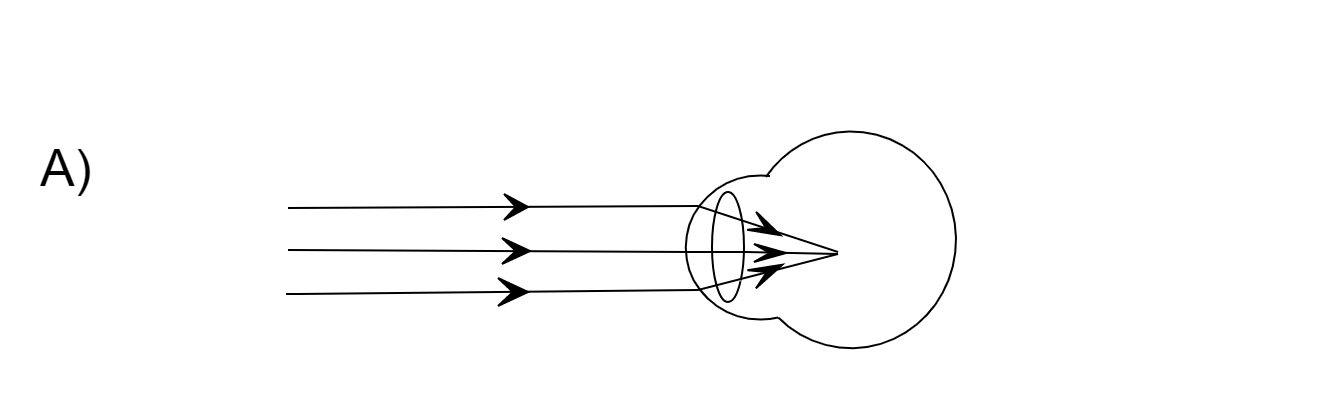
The light is coming out from a convex lens so the light rays should be converging even before reaching the eyes. But here the rays are travelling parallel to each other and converge only after passing through the lens in the eyes causing them to get focussed on a point in front of the retina. So no correction is used. Therefore this option does not represent its respective image.
B) In the second figure,
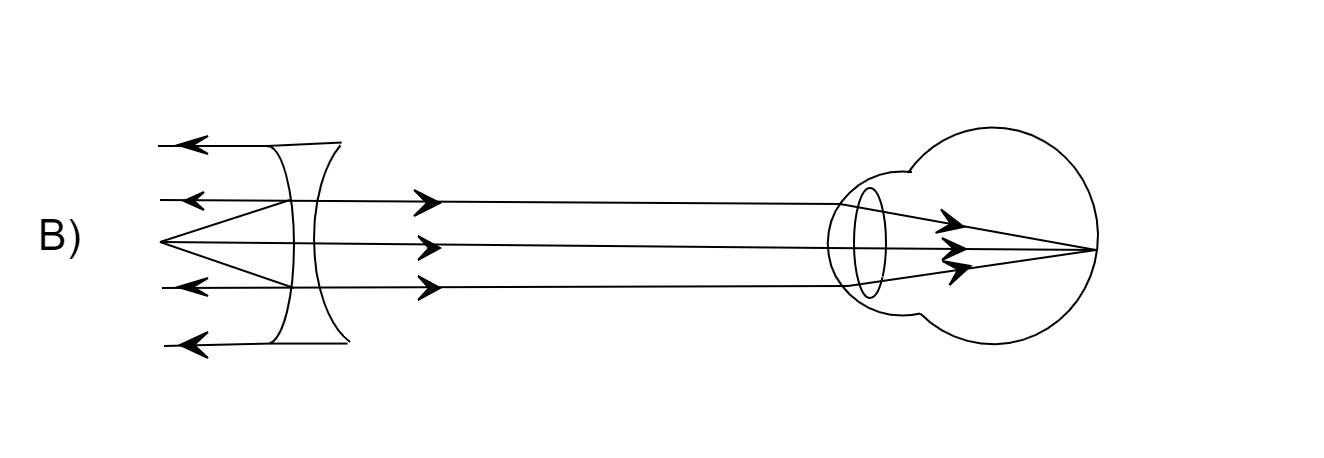
The direction of the light ray is towards the opposite direction of the eye so image formation is not possible. This option is also wrong.
C) In the third figure,
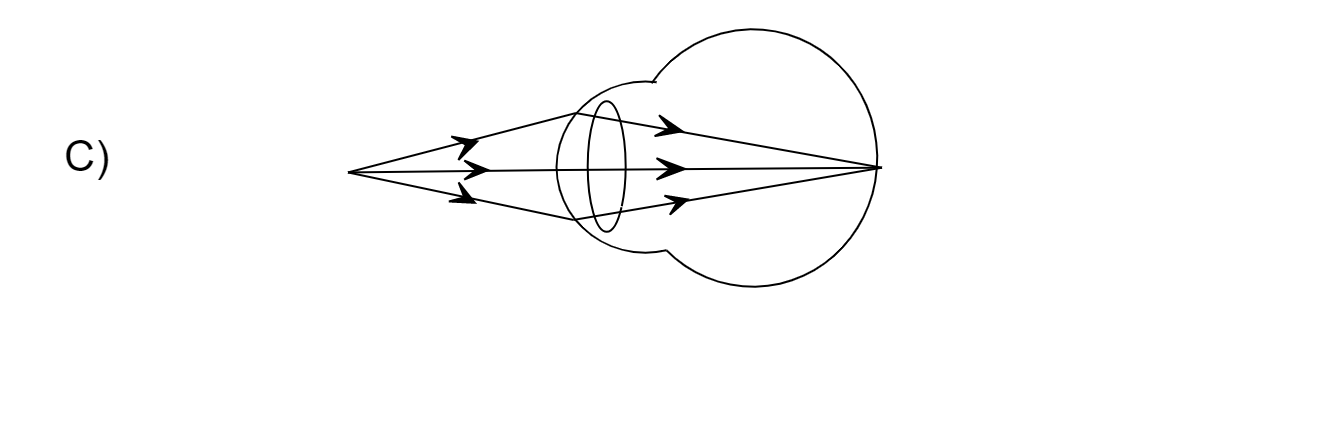
The light from an object reaches the lens of a healthy eyeball which converges the rays and an image is formed at the retina. This option correctly describes its respective image.
D) In the fourth figure,
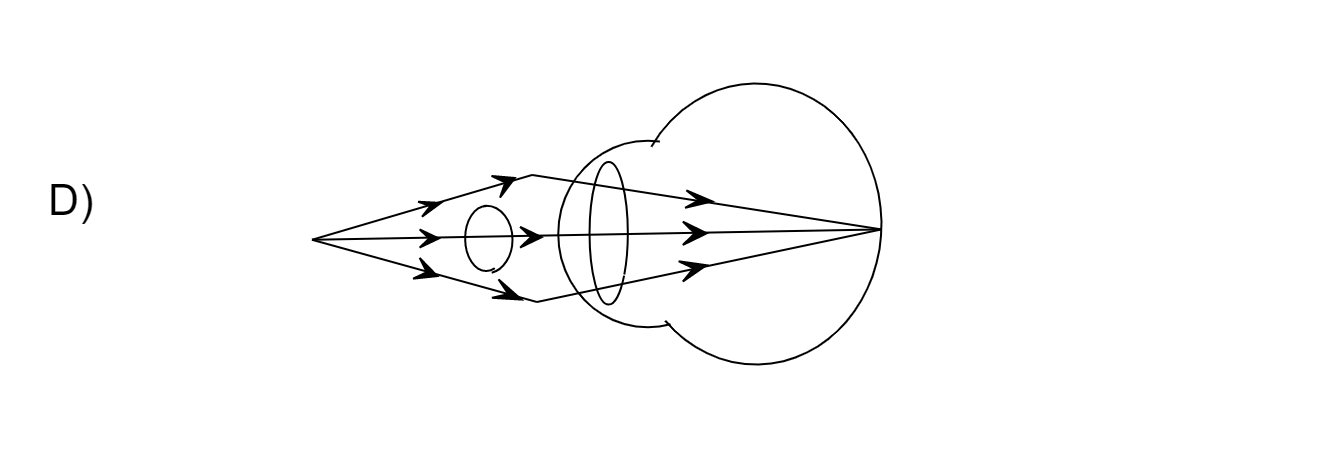
A convex lens is used to correct short sightedness which is wrong because for correcting short sightedness a concave lens should be used, as the focus point of the image of person having this defect will be in front of the retina and concave lens can make focus point on the retina. This option does not correctly describe its respective image.
Therefore, option (C) is the only correct answer.
Note:
Short sightedness is known as myopia and can be rectified by using a concave lens. farsightedness is known as hyperopia, a convex lens can rectify this defect. The reason for this defect can be due to the size difference of your eyeball or the inability of ciliary muscles to adjust the tightening or relaxation of the eye lens.
Complete step by step answer:
In the first figure,
The light is coming out from a convex lens so the light rays should be converging even before reaching the eyes. But here the rays are travelling parallel to each other and converge only after passing through the lens in the eyes causing them to get focussed on a point in front of the retina. So no correction is used. Therefore this option does not represent its respective image.
B) In the second figure,
The direction of the light ray is towards the opposite direction of the eye so image formation is not possible. This option is also wrong.
C) In the third figure,
The light from an object reaches the lens of a healthy eyeball which converges the rays and an image is formed at the retina. This option correctly describes its respective image.
D) In the fourth figure,
A convex lens is used to correct short sightedness which is wrong because for correcting short sightedness a concave lens should be used, as the focus point of the image of person having this defect will be in front of the retina and concave lens can make focus point on the retina. This option does not correctly describe its respective image.
Therefore, option (C) is the only correct answer.
Note:
Short sightedness is known as myopia and can be rectified by using a concave lens. farsightedness is known as hyperopia, a convex lens can rectify this defect. The reason for this defect can be due to the size difference of your eyeball or the inability of ciliary muscles to adjust the tightening or relaxation of the eye lens.
Recently Updated Pages
Master Class 12 Economics: Engaging Questions & Answers for Success

Master Class 12 English: Engaging Questions & Answers for Success
Master Class 12 Social Science: Engaging Questions & Answers for Success
Master Class 12 Maths: Engaging Questions & Answers for Success
Master Class 12 Physics: Engaging Questions & Answers for Success
Master Class 9 General Knowledge: Engaging Questions & Answers for Success
Trending doubts
One Metric ton is equal to kg A 10000 B 1000 C 100 class 11 physics CBSE
Difference Between Prokaryotic Cells and Eukaryotic Cells
Two of the body parts which do not appear in MRI are class 11 biology CBSE
1 ton equals to A 100 kg B 1000 kg C 10 kg D 10000 class 11 physics CBSE
Draw a diagram of nephron and explain its structur class 11 biology CBSE
10 examples of friction in our daily life