




Which of the following leaves have reticulate venation?
Wheat, Tulsi, Maize, Grass, Coriander(dhania), China rose.
Answer
 Verified
623.4k+ views
Hint: The arrangement of veins and the veinlets in the lamina of leaf is termed as venation. When the veinlets form a network, the venation is termed as reticulate . Dicots have reticulate venation whereas monocots have parallel venation.
Complete answer:
First of all let’s see what is venation, it is the arrangement of veins and the veinlets in the lamina of leaves .
The venation is said to be reticulate, when the arrangement of the veins and veinlets form a network, as shown in the following picture.
As shown in the diagram, the veins are veinlets arranged in reticulate venation.
Now let us take each leaflet as given in the question one by one
>Wheat
As it is clear from the picture wheat leaf has parallel venation.

> Tulsi
As we can see the venation seen in tulsi leaf is reticulate.

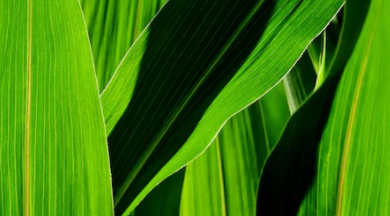
> Maize
You can see since maize is an example of monocot, it also has parallel venation.
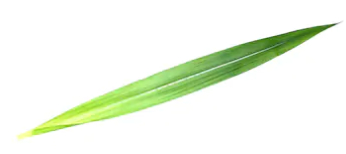
> Grass
It is also a monocot, the venation seen is parallel.
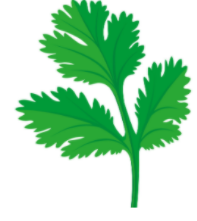
> Coriander (Dhania)
It is an example of dicot, hence the venation seen is reticulate.
> China Rose
It belongs to the dicotyledons category, and it also has reticulate venation.

Additional information:
There are some exceptions as follows:-
Exceptions-Dicots which show parallel venation- Calophyllum, Corymbium.
Monocots which show reticulate venation- Alocasia, Colocasia, Smilax.
Hence, we can conclude that Tulsi, Coriander and China rose have leaves with reticulate venation.
Note: Dicotyledonous plants have reticulate venation whereas the monocotyledonous plants have parallel venation but exceptions are always there in biology.
The pictures given can help you relate to the answer.
Complete answer:
First of all let’s see what is venation, it is the arrangement of veins and the veinlets in the lamina of leaves .
The venation is said to be reticulate, when the arrangement of the veins and veinlets form a network, as shown in the following picture.
As shown in the diagram, the veins are veinlets arranged in reticulate venation.
Now let us take each leaflet as given in the question one by one
>Wheat
As it is clear from the picture wheat leaf has parallel venation.
> Tulsi
As we can see the venation seen in tulsi leaf is reticulate.
> Maize
You can see since maize is an example of monocot, it also has parallel venation.
> Grass
It is also a monocot, the venation seen is parallel.
> Coriander (Dhania)
It is an example of dicot, hence the venation seen is reticulate.
> China Rose
It belongs to the dicotyledons category, and it also has reticulate venation.
Additional information:
There are some exceptions as follows:-
Exceptions-Dicots which show parallel venation- Calophyllum, Corymbium.
Monocots which show reticulate venation- Alocasia, Colocasia, Smilax.
Hence, we can conclude that Tulsi, Coriander and China rose have leaves with reticulate venation.
Note: Dicotyledonous plants have reticulate venation whereas the monocotyledonous plants have parallel venation but exceptions are always there in biology.
The pictures given can help you relate to the answer.
Recently Updated Pages
Master Class 11 English: Engaging Questions & Answers for Success

Master Class 11 Social Science: Engaging Questions & Answers for Success
Master Class 11 Maths: Engaging Questions & Answers for Success
Master Class 11 Biology: Engaging Questions & Answers for Success
Master Class 11 Physics: Engaging Questions & Answers for Success
Master Class 11 Chemistry: Engaging Questions & Answers for Success
Trending doubts
One Metric ton is equal to kg A 10000 B 1000 C 100 class 11 physics CBSE
Difference Between Prokaryotic Cells and Eukaryotic Cells
1 ton equals to A 100 kg B 1000 kg C 10 kg D 10000 class 11 physics CBSE
Find the value of the expression given below sin 30circ class 11 maths CBSE
Two of the body parts which do not appear in MRI are class 11 biology CBSE
What are hard magnetic materials class 11 physics CBSE