




Which of the following has a haplontic life cycle?
A. Wheat
B. Funaria
C. Polytrichum
D. Ustilago
Answer
 Verified
610.8k+ views
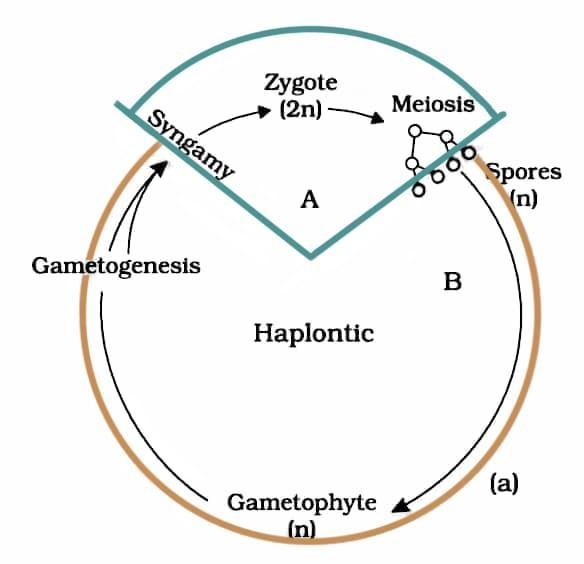
Hint: In haplontic life cycle ,the dominant phase is haploid. The diploid phase is represented by zygote only. In this life cycle the dominant, photosynthetic phase of such plants is free-living gametophyte.
Complete answer:
1. Ustilago undergoes haplontic life cycle .
- In ustilago sporophytic generation is represented only by the one-celled zygote. There are no free-living sporophytes.
- Meiosis in the zygote results in the formation of haploid spores.
- The haploid spores divide mitotically and form the gametophyte.
- The dominant, photosynthetic phase in such plants is the free-living gametophyte.
2. Wheat undergoes a diplontic life cycle.
- In this the diploid sporophyte is the dominant, photosynthetic, independent phase of the plant.
- The gametophytic phase is represented by the single to the few-celled haploid gametophyte. This kind of life cycle is termed as diplontic.
3. Funaria and Polytrichum are both bryophytes. These undergo haplo -diplontic life cycle.
- These have an intermediate condition, both the phases are multicellular. However, they differ in dominant phases.
- A dominant, independent, photosynthetic, thalloid or erect phase is represented by a haploid gametophyte and it alternates with the short-lived multicellular sporophyte totally or partially dependent on the gametophyte for its anchorage and nutrition.
Hence, the correct answer is option D.
Note: In pteridophytes, the diploid sporophyte is represented by a dominant, independent photosynthetic, vascular plant body. It alternates with multicellular, saprophytic/autotrophic, independent but short-lived haploid gametophyte. Such a pattern is known as haplo-diplontic life cycle. All pteridophytes exhibit this pattern.
Complete answer:
1. Ustilago undergoes haplontic life cycle .
- In ustilago sporophytic generation is represented only by the one-celled zygote. There are no free-living sporophytes.
- Meiosis in the zygote results in the formation of haploid spores.
- The haploid spores divide mitotically and form the gametophyte.
- The dominant, photosynthetic phase in such plants is the free-living gametophyte.
2. Wheat undergoes a diplontic life cycle.
- In this the diploid sporophyte is the dominant, photosynthetic, independent phase of the plant.
- The gametophytic phase is represented by the single to the few-celled haploid gametophyte. This kind of life cycle is termed as diplontic.
3. Funaria and Polytrichum are both bryophytes. These undergo haplo -diplontic life cycle.
- These have an intermediate condition, both the phases are multicellular. However, they differ in dominant phases.
- A dominant, independent, photosynthetic, thalloid or erect phase is represented by a haploid gametophyte and it alternates with the short-lived multicellular sporophyte totally or partially dependent on the gametophyte for its anchorage and nutrition.
Hence, the correct answer is option D.
Note: In pteridophytes, the diploid sporophyte is represented by a dominant, independent photosynthetic, vascular plant body. It alternates with multicellular, saprophytic/autotrophic, independent but short-lived haploid gametophyte. Such a pattern is known as haplo-diplontic life cycle. All pteridophytes exhibit this pattern.
Recently Updated Pages
Master Class 12 Economics: Engaging Questions & Answers for Success

Master Class 12 English: Engaging Questions & Answers for Success
Master Class 12 Social Science: Engaging Questions & Answers for Success
Master Class 12 Maths: Engaging Questions & Answers for Success
Master Class 12 Physics: Engaging Questions & Answers for Success
Master Class 11 Social Science: Engaging Questions & Answers for Success
Trending doubts
One Metric ton is equal to kg A 10000 B 1000 C 100 class 11 physics CBSE
Difference Between Prokaryotic Cells and Eukaryotic Cells
Find the value of the expression given below sin 30circ class 11 maths CBSE
Two of the body parts which do not appear in MRI are class 11 biology CBSE
1 ton equals to A 100 kg B 1000 kg C 10 kg D 10000 class 11 physics CBSE
Draw a diagram of nephron and explain its structur class 11 biology CBSE