




Which of the following correctly represents the type of life cycle patterns from the options given?
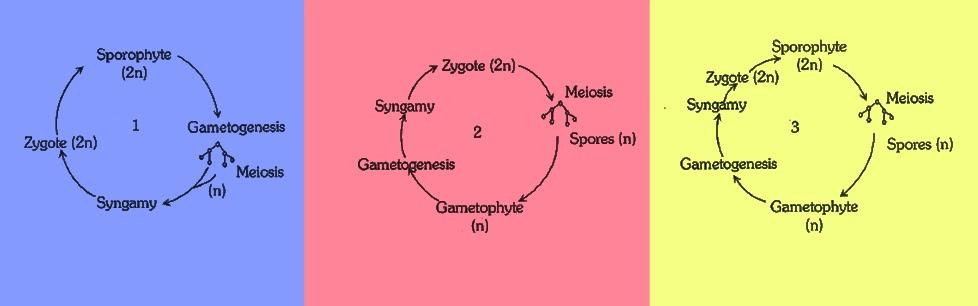
a) 1. Diplontic 2. Haplodiplontic 3. Haplontic
b) 1. Haplodiplontic 2. Haplontic 3. Diplontic
c) 1. Haplontic 2. Diplontic 3. Haplodiplontic
d) 1. Diplontic 2. Haplontic 3. Haplodiplontic
e) 1. Haplontic 2. Haplodiplontic 3. Diplontic
Answer
 Verified
546k+ views
Hint: The lifecycle of the organism involves the time period from birth till death. During that life cycle, the ploidy of the cells present in our body changes from time to time. The haploid gametes fuse together to form a diploid individual.
Complete answer:
-The diplontic life cycle occurs when the zygote form is diploid in nature and it grows to form a diploid and multicellular organism. This zygote when fully grown produces haploid cells which are called the gametes. The gametes are produced by the reductional division or meiosis. The gametes that fuse to form the zygote and the cycle continues. Humans have a diplontic life cycle.
-The haplontic life cycle occurs when the zygote or the multicellular stage is haploid in nature. When a diploid zygote is formed it forms haploid spores as soon as possible. These spores are produced inside the sporangia. The spores then grow by mitosis and form a haploid multicellular organism. The grown-up organism then produces haploid spores by the process of mitosis. The gametes produced then fuse together to form the zygote which then produces spores. And this haplontic cycle continues. It occurs mostly in the fungi and some algae.
-The haplodiplontic stage two multicellular division takes place and leads to the formations of two multicellular individuals. The diploid zygote grows by the process of mitosis and forms a diploid organism. It produces sporophyte and it then produces the haploid spores by the process of meiosis. These spores grow and form haploid organisms and produce haploid gametes by the process of mitosis. This is the haplodiplontic life cycle or is known as the alternation of generations.
So, the answer is ‘1. diplontic, 2. haplontic, 3. haplodiplontic’.
Notes:
The haplodiplontic life cycle is the most complex life cycle as one organism changes its cellular level from diploid to haploid. It usually occurs in some algae and in all the plants. The simplest life cycle is the diplontic life cycle and it occurs in humans.
Complete answer:
-The diplontic life cycle occurs when the zygote form is diploid in nature and it grows to form a diploid and multicellular organism. This zygote when fully grown produces haploid cells which are called the gametes. The gametes are produced by the reductional division or meiosis. The gametes that fuse to form the zygote and the cycle continues. Humans have a diplontic life cycle.
-The haplontic life cycle occurs when the zygote or the multicellular stage is haploid in nature. When a diploid zygote is formed it forms haploid spores as soon as possible. These spores are produced inside the sporangia. The spores then grow by mitosis and form a haploid multicellular organism. The grown-up organism then produces haploid spores by the process of mitosis. The gametes produced then fuse together to form the zygote which then produces spores. And this haplontic cycle continues. It occurs mostly in the fungi and some algae.
-The haplodiplontic stage two multicellular division takes place and leads to the formations of two multicellular individuals. The diploid zygote grows by the process of mitosis and forms a diploid organism. It produces sporophyte and it then produces the haploid spores by the process of meiosis. These spores grow and form haploid organisms and produce haploid gametes by the process of mitosis. This is the haplodiplontic life cycle or is known as the alternation of generations.
So, the answer is ‘1. diplontic, 2. haplontic, 3. haplodiplontic’.
Notes:
The haplodiplontic life cycle is the most complex life cycle as one organism changes its cellular level from diploid to haploid. It usually occurs in some algae and in all the plants. The simplest life cycle is the diplontic life cycle and it occurs in humans.
Recently Updated Pages
Master Class 12 Economics: Engaging Questions & Answers for Success

Master Class 12 English: Engaging Questions & Answers for Success
Master Class 12 Social Science: Engaging Questions & Answers for Success
Master Class 12 Maths: Engaging Questions & Answers for Success
Master Class 12 Physics: Engaging Questions & Answers for Success
Master Class 9 General Knowledge: Engaging Questions & Answers for Success
Trending doubts
One Metric ton is equal to kg A 10000 B 1000 C 100 class 11 physics CBSE
Difference Between Prokaryotic Cells and Eukaryotic Cells
Two of the body parts which do not appear in MRI are class 11 biology CBSE
1 ton equals to A 100 kg B 1000 kg C 10 kg D 10000 class 11 physics CBSE
Draw a diagram of nephron and explain its structur class 11 biology CBSE
10 examples of friction in our daily life