




Which of the following constitutes an edible fungus?
(a) Agaricus
(b) Morchella
(c) Lycoperdon
(d) Both A and B
Answer
 Verified
538.5k+ views
Hint: An edible fungi means, which can be eaten as a food. One of the fungi is also known as the ‘true morels.’ The other species of fungi contain both edible and poisonous mushrooms. This genus of edible fungi includes the common or button mushroom.
Agaricus and Morchella both are edible fungi.
They have the following features:
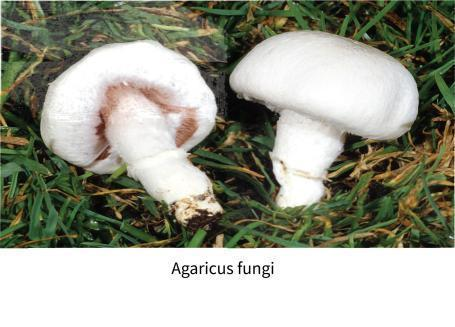
-Agaricus fungi- It has possibly over 300 members worldwide. The two most edible genus of this group of fungi is Agaricus bisporus and the field mushroom Agaricus campestris. Members of Agaricus have fleshy cap or pileus, from the underside of which grow several radiating plates or gills on which are produced the naked spores. They also have a stem, which elevates it above the object on which the mushroom grows.
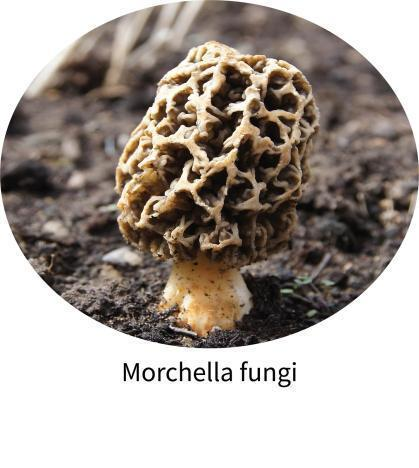
-Morchella fungi- The scientific name of this fungi is Morchella esculenta. The other names of this fungus are common morel, morel, yellow morel, morel mushroom, and sponge morel. It is closely related to anatomically simpler cup fungi and has a honeycomb structure. It is a species of fungus in the family Morchellaceae of the Ascomycota. It is one of the most readily edible mushrooms of all the other mushrooms. Its fruiting body consists of grayish sponge with lighter ridges and expands to form a large yellowish sponge with large pits. The ridges are raised on a large white stem.
So, the correct answer is, ‘Both A and B.’
Note:
The Morchella fungus is sometimes solitary, but more often in groups, on the ground in a variety of habitats. They have been found in both acidic and alkaline soil. The Morchella mushroom is found in the early spring, in forests, orchards, yards, gardens, and sometimes in recently burned areas. On the other hand, Agaricus fungus grows on soil humus, decaying litter on forest floors, in the fields and lawns, wood logs, and manure piles.
Agaricus and Morchella both are edible fungi.
They have the following features:
-Agaricus fungi- It has possibly over 300 members worldwide. The two most edible genus of this group of fungi is Agaricus bisporus and the field mushroom Agaricus campestris. Members of Agaricus have fleshy cap or pileus, from the underside of which grow several radiating plates or gills on which are produced the naked spores. They also have a stem, which elevates it above the object on which the mushroom grows.
-Morchella fungi- The scientific name of this fungi is Morchella esculenta. The other names of this fungus are common morel, morel, yellow morel, morel mushroom, and sponge morel. It is closely related to anatomically simpler cup fungi and has a honeycomb structure. It is a species of fungus in the family Morchellaceae of the Ascomycota. It is one of the most readily edible mushrooms of all the other mushrooms. Its fruiting body consists of grayish sponge with lighter ridges and expands to form a large yellowish sponge with large pits. The ridges are raised on a large white stem.
So, the correct answer is, ‘Both A and B.’
Note:
The Morchella fungus is sometimes solitary, but more often in groups, on the ground in a variety of habitats. They have been found in both acidic and alkaline soil. The Morchella mushroom is found in the early spring, in forests, orchards, yards, gardens, and sometimes in recently burned areas. On the other hand, Agaricus fungus grows on soil humus, decaying litter on forest floors, in the fields and lawns, wood logs, and manure piles.
Recently Updated Pages
Master Class 11 Social Science: Engaging Questions & Answers for Success

Master Class 11 English: Engaging Questions & Answers for Success
Master Class 11 Maths: Engaging Questions & Answers for Success
Master Class 11 Chemistry: Engaging Questions & Answers for Success
Master Class 11 Biology: Engaging Questions & Answers for Success
Master Class 11 Physics: Engaging Questions & Answers for Success
Trending doubts
One Metric ton is equal to kg A 10000 B 1000 C 100 class 11 physics CBSE
Difference Between Prokaryotic Cells and Eukaryotic Cells
How many of the following diseases can be studied with class 11 biology CBSE
Two of the body parts which do not appear in MRI are class 11 biology CBSE
Which of the following enzymes is used for carboxylation class 11 biology CBSE
Explain zero factorial class 11 maths CBSE