




Which of the following are semi-autonomous organelles?
A. Golgi body and Mitochondria
B. Mitochondria and chloroplasts
C. Mitochondria and Ribosomes
D. Ribosomes and Chloroplasts
Answer
 Verified
608.4k+ views
Hint: The organelles which contain their own DNA are the semi-organelles. As compared to the nuclear genes that obey the Mendelian, biparental inheritance, the genes found in semi-autonomous organelles follow cytoplasmic inheritance. This implies that the cytoplasm transmits these genes.
Complete answer:
In most eukaryotic cells that are part of the endomembrane system in the cytoplasm, the Golgi body is an organelle that bundles proteins within the cell into membrane-bound vesicles and lacks their DNA. In lipid transport and lysosome formation, the Golgi apparatus is also involved. Ribosomes are minute particles that are composed of RNA and associated proteins that operate to synthesize proteins and lack DNA as well.
Chloroplast and mitochondria are referred to since semi-autonomous organelles as they have their own DNA with single stranded DNA. As compared to the nuclear genes that follow the Mendelian, biparental inheritance, the genes found in chloroplast and mitochondria follow cytoplasmic inheritance. This implies that the cytoplasm transmits these genes.
They cannot exist independently, because they rely on the nuclear gene for biogenesis and the ground cytoplasm for biosynthetic activities. They are thus classified as semi autonomous organelles.
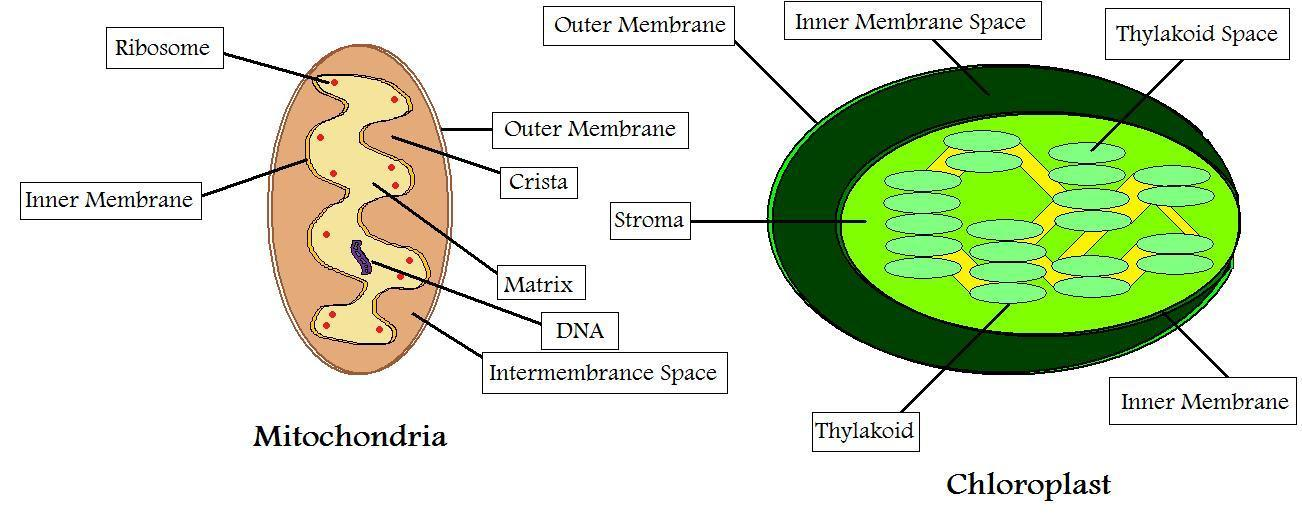
So, the correct answer is “Option B”.
Note: Depending on the tissue and the organisms, mitochondrial proteins (proteins transcribed from mitochondrial DNA) differ. 615 distinct forms of proteins from cardiac mitochondria have been described in humans. Chloroplasts are extremely dynamic and circulate within plant cells and are passed around and sometimes pinched in two to replicate. Ecological factors such as light color and intensity strongly affect their behavior.
Complete answer:
In most eukaryotic cells that are part of the endomembrane system in the cytoplasm, the Golgi body is an organelle that bundles proteins within the cell into membrane-bound vesicles and lacks their DNA. In lipid transport and lysosome formation, the Golgi apparatus is also involved. Ribosomes are minute particles that are composed of RNA and associated proteins that operate to synthesize proteins and lack DNA as well.
Chloroplast and mitochondria are referred to since semi-autonomous organelles as they have their own DNA with single stranded DNA. As compared to the nuclear genes that follow the Mendelian, biparental inheritance, the genes found in chloroplast and mitochondria follow cytoplasmic inheritance. This implies that the cytoplasm transmits these genes.
They cannot exist independently, because they rely on the nuclear gene for biogenesis and the ground cytoplasm for biosynthetic activities. They are thus classified as semi autonomous organelles.
So, the correct answer is “Option B”.
Note: Depending on the tissue and the organisms, mitochondrial proteins (proteins transcribed from mitochondrial DNA) differ. 615 distinct forms of proteins from cardiac mitochondria have been described in humans. Chloroplasts are extremely dynamic and circulate within plant cells and are passed around and sometimes pinched in two to replicate. Ecological factors such as light color and intensity strongly affect their behavior.
Recently Updated Pages
Master Class 5 Maths: Engaging Questions & Answers for Success

Master Class 5 English: Engaging Questions & Answers for Success
Class 5 Question and Answer - Your Ultimate Solutions Guide
Master Class 5 Science: Engaging Questions & Answers for Success
Master Class 5 Social Science: Engaging Questions & Answers for Success
Master Class 4 English: Engaging Questions & Answers for Success
Trending doubts
One Metric ton is equal to kg A 10000 B 1000 C 100 class 11 physics CBSE
What is cell theory Who formulated it class 11 biology CBSE
Phyllotaxy is the arrangement of ALeaflets BLeaves class 11 biology CBSE
Difference Between Prokaryotic Cells and Eukaryotic Cells
The symbiotic association of fungi and algae is called class 11 biology CBSE
Cell theory was formulated by A Schleiden and Schwann class 11 biology CBSE