




Which of the following amino acid is not optically active –
1)Alanine
2) Glycine
3) Lysine
4) All of these
Answer
 Verified
563.7k+ views
Hint: Optical activity is the phenomenon when any compound is capable of rotating plane polarized light. This phenomenon occurs in compounds having a chiral centre. Alanine, glycine and lysine are some amino acids that have an amine group along with carboxylic acid groups. The chiral centre in these compounds will tell their optical activity.
Complete answer:
Optical activity of any compound is the ability of that compound to rotate the plane polarized light. For a compound to be optically active, a chiral centre is necessary that has all the four substituted atoms to be different from each other.
We have been given amino acids that are alanine, glycine and lysine. The structures of these will identify any chiral centre. Those amino acids that have a chiral centre will be optically active, while those without a chiral carbon centre will be optically inactive.
Alanine consists of a chiral centre as it contains all the substituted atoms to be different as shown in its structure:
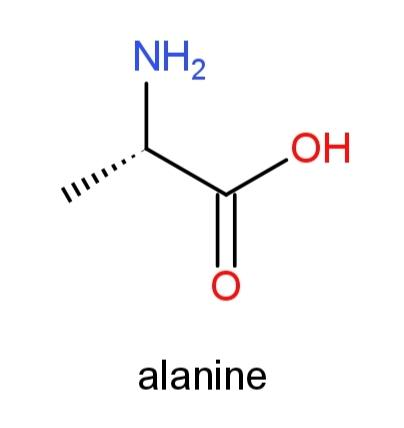
So it is optically active.
Glycine consists of an achiral centre as it has two same substituent that are hydrogen atoms, as shown in the structure:

so it is not optically active.
Lysine also consists of the alpha carbon atom to be a chiral centre that makes it optically active. So it is optically active. The structure is:
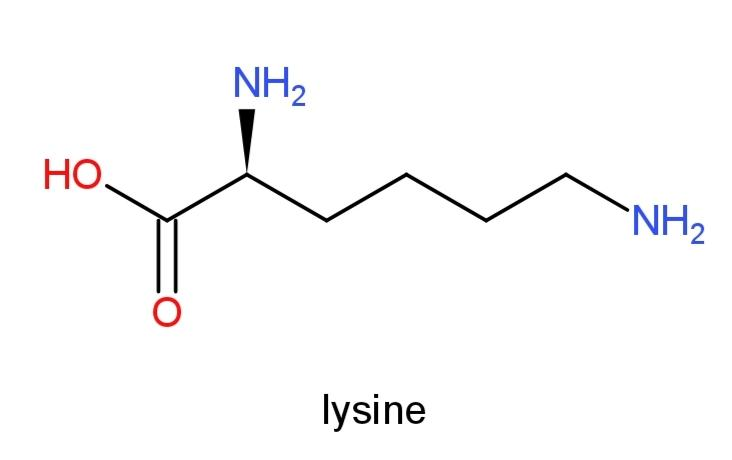
Hence, glycine is not optically active.
So option 2 is correct.
Note:
The amino acids are zwitterions as they consist of a positive charge of the amine group and the negative charge of the carboxylic acid group. So they are termed as zwitter salts. These amino acids together make up proteins that are essential for the human body. Glycine, alanine are non – essential amino acids.
Complete answer:
Optical activity of any compound is the ability of that compound to rotate the plane polarized light. For a compound to be optically active, a chiral centre is necessary that has all the four substituted atoms to be different from each other.
We have been given amino acids that are alanine, glycine and lysine. The structures of these will identify any chiral centre. Those amino acids that have a chiral centre will be optically active, while those without a chiral carbon centre will be optically inactive.
Alanine consists of a chiral centre as it contains all the substituted atoms to be different as shown in its structure:
So it is optically active.
Glycine consists of an achiral centre as it has two same substituent that are hydrogen atoms, as shown in the structure:
so it is not optically active.
Lysine also consists of the alpha carbon atom to be a chiral centre that makes it optically active. So it is optically active. The structure is:
Hence, glycine is not optically active.
So option 2 is correct.
Note:
The amino acids are zwitterions as they consist of a positive charge of the amine group and the negative charge of the carboxylic acid group. So they are termed as zwitter salts. These amino acids together make up proteins that are essential for the human body. Glycine, alanine are non – essential amino acids.
Recently Updated Pages
Basicity of sulphurous acid and sulphuric acid are

Master Class 11 English: Engaging Questions & Answers for Success
Master Class 11 Physics: Engaging Questions & Answers for Success
Master Class 11 Computer Science: Engaging Questions & Answers for Success
Master Class 11 Chemistry: Engaging Questions & Answers for Success
Master Class 11 Social Science: Engaging Questions & Answers for Success
Trending doubts
Difference Between Prokaryotic Cells and Eukaryotic Cells
Two of the body parts which do not appear in MRI are class 11 biology CBSE
One Metric ton is equal to kg A 10000 B 1000 C 100 class 11 physics CBSE
10 examples of friction in our daily life
Draw a diagram of nephron and explain its structur class 11 biology CBSE
What will happen if the mucus is not secreted by the class 11 biology CBSE