




Which is wrong about sieve tube elements
(a)Peripheral cytoplasm and large vacuole
(b)Perforated end wall becomes impregnated with lignin
(c)P- protein occurs evenly and is distributed throughout the lumen
(d)Absence of nucleus at maturity
(e)Tube-like structures present in longitudinal series
Answer
 Verified
599.7k+ views
Hint: Found in the phloem, sieve tube elements are very specialized cells due to their modified and metabolically restricted protoplasm. Phloem is also connected with contiguous sieve elements through modified cell wall areas.
Complete answer:
The phloem is the vascular tissue that is responsible for the translocation of photosynthate materials throughout a plant. It mainly comprises sieve elements, companion cells, phloem sclerenchyma, and phloem parenchyma cells.
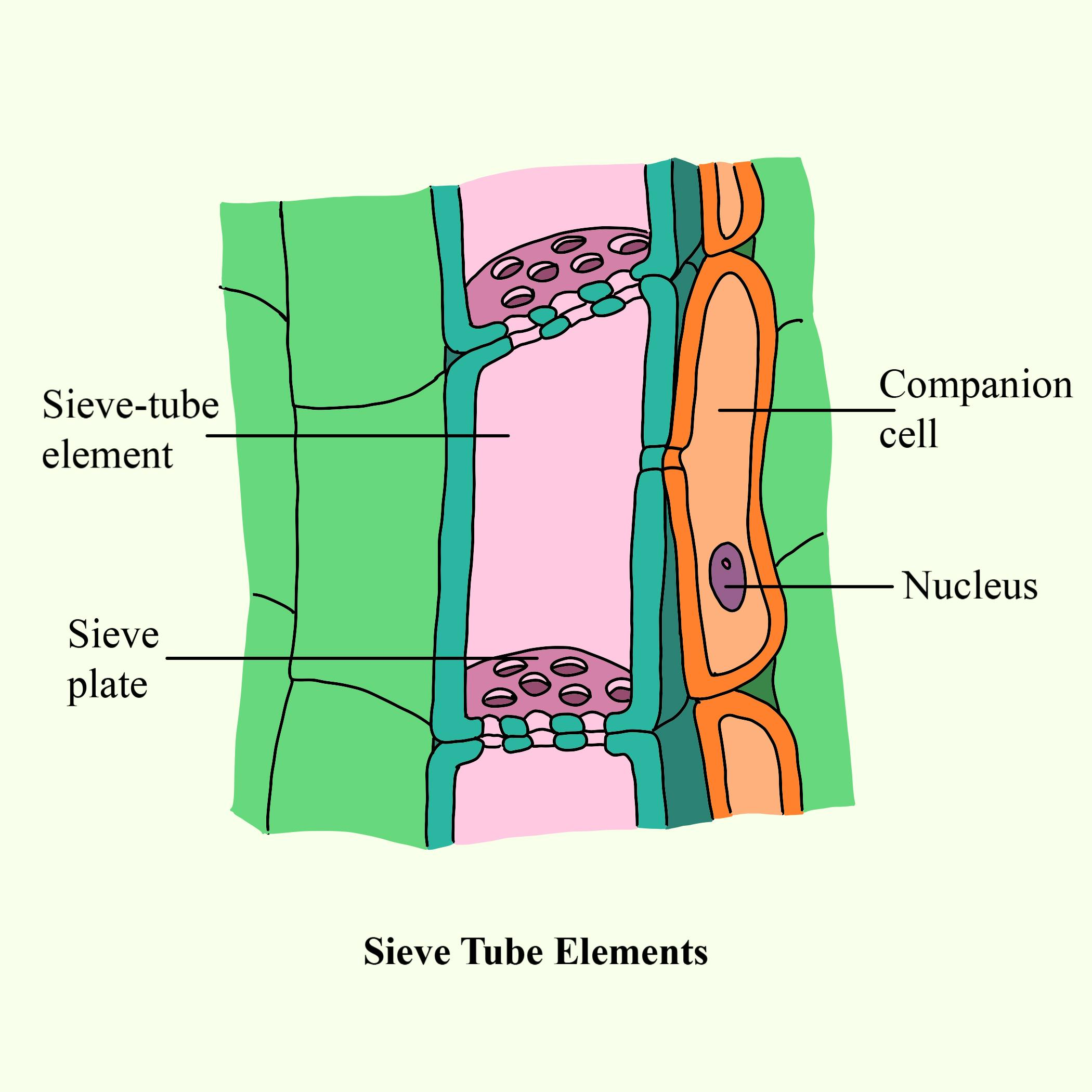
The sieve tube elements are generally the main conductive cell in the phloem. It is a living cell with a protoplast. The nucleus is absent at maturity. There are also fewer organelles present. It is known to be a special type of sclerenchyma cell. However, the cell wall is not lignified. In angiosperms, the sieve element is termed as a sieve tube (element) and the cell associated with it is called a companion cell.
Additional Information: Sieve element cell is usually closely related to a ‘companion cell’ in angiosperms and an albuminous cell or ‘Strasburger cell’ in gymnosperms.
Companion cells that have a nucleus, are packed with dense cytoplasm and contain many ribosomes and mitochondria. That's why the companion cells are able to undertake the metabolic reactions and other cellular functions, which the sieve element cannot perform as it lacks the appropriate organelles. The sieve elements are therefore dependent upon the companion cells for their proper functioning and as well as survival.
So, the correct answer is 'Perforated end wall becomes impregnated with lignin’.
Note: Only the sieve tube and the companion cell have an ontogenetic relationship, that means they arise from a common mother cell. Additionally, the sieve element is connected to the specialized cell (companion cell or albuminous cell) through plasmodesmata.
Complete answer:
The phloem is the vascular tissue that is responsible for the translocation of photosynthate materials throughout a plant. It mainly comprises sieve elements, companion cells, phloem sclerenchyma, and phloem parenchyma cells.
The sieve tube elements are generally the main conductive cell in the phloem. It is a living cell with a protoplast. The nucleus is absent at maturity. There are also fewer organelles present. It is known to be a special type of sclerenchyma cell. However, the cell wall is not lignified. In angiosperms, the sieve element is termed as a sieve tube (element) and the cell associated with it is called a companion cell.
Additional Information: Sieve element cell is usually closely related to a ‘companion cell’ in angiosperms and an albuminous cell or ‘Strasburger cell’ in gymnosperms.
Companion cells that have a nucleus, are packed with dense cytoplasm and contain many ribosomes and mitochondria. That's why the companion cells are able to undertake the metabolic reactions and other cellular functions, which the sieve element cannot perform as it lacks the appropriate organelles. The sieve elements are therefore dependent upon the companion cells for their proper functioning and as well as survival.
So, the correct answer is 'Perforated end wall becomes impregnated with lignin’.
Note: Only the sieve tube and the companion cell have an ontogenetic relationship, that means they arise from a common mother cell. Additionally, the sieve element is connected to the specialized cell (companion cell or albuminous cell) through plasmodesmata.
Recently Updated Pages
Master Class 12 Economics: Engaging Questions & Answers for Success

Master Class 12 English: Engaging Questions & Answers for Success
Master Class 12 Social Science: Engaging Questions & Answers for Success
Master Class 12 Maths: Engaging Questions & Answers for Success
Master Class 12 Physics: Engaging Questions & Answers for Success
Master Class 11 Social Science: Engaging Questions & Answers for Success
Trending doubts
One Metric ton is equal to kg A 10000 B 1000 C 100 class 11 physics CBSE
Difference Between Prokaryotic Cells and Eukaryotic Cells
Two of the body parts which do not appear in MRI are class 11 biology CBSE
1 ton equals to A 100 kg B 1000 kg C 10 kg D 10000 class 11 physics CBSE
Draw a diagram of nephron and explain its structur class 11 biology CBSE
10 examples of friction in our daily life