




Which is correct for the structure of the cell wall of bacteria and fungi?
A. Both are made up of cellulose
B. Both have mucopeptide
C. Both are made up of N-acetylglucosamine
D. None of these
Answer
 Verified
613.8k+ views
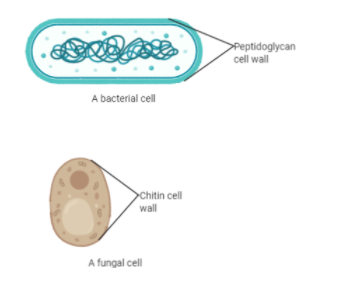
Hint: The bacterial cell wall is made up of peptidoglycans and GlcNAc chains. On the other hand, the cell walls of fungi are made up of chitin and linked chains of GlcNAc.
Complete answer: The cell wall is the outermost layer of prokaryotic or fungal cells. It lies above the plasma membrane. It acts as a filtering membrane. GlcNAc is an amide derivative of the monosaccharide glucose. It is considered secondary amide and is found in fungal and bacterial cell walls. It is another name for N-acetylglucosamine.
Option A: The cell walls of both bacteria and fungi are made of cellulose. Cellulose is the building block for plant cell walls. It is not a component of either bacterial or fungal cell walls.
Option B: It states that the cell walls of both bacteria and fungi are made up of mucopeptide. It is peptidoglycan composed of polysaccharides and peptide chains. It is peptidoglycan, it is found in bacterial cell walls. But it is not present in fungal cell walls.
Option C: Both bacterial and fungal cell walls are composed of N-acetylglucosamine or GlcNAc. Although the bacterial cell wall contains peptidoglycans as their main unit of the cell wall, they do contain some N-acetylglucosamine. The cell walls of fungi are made of chitin mainly, but also contain chains of N-acetylglucosamine. Thus, N-acetylglucosamine is common in both cell wall structures.
Hence option C is correct.
Note: The cell walls provide shape and structure to the cells. But another major function of cell walls in prokaryotes and fungi is to regulate the expansion of cell walls when water enters inside the cell. The chemical composition of cell walls provides characteristic features to bacterial and fungal cell walls. And these characteristics are used to identify different types of microbes.
Complete answer: The cell wall is the outermost layer of prokaryotic or fungal cells. It lies above the plasma membrane. It acts as a filtering membrane. GlcNAc is an amide derivative of the monosaccharide glucose. It is considered secondary amide and is found in fungal and bacterial cell walls. It is another name for N-acetylglucosamine.
Option A: The cell walls of both bacteria and fungi are made of cellulose. Cellulose is the building block for plant cell walls. It is not a component of either bacterial or fungal cell walls.
Option B: It states that the cell walls of both bacteria and fungi are made up of mucopeptide. It is peptidoglycan composed of polysaccharides and peptide chains. It is peptidoglycan, it is found in bacterial cell walls. But it is not present in fungal cell walls.
Option C: Both bacterial and fungal cell walls are composed of N-acetylglucosamine or GlcNAc. Although the bacterial cell wall contains peptidoglycans as their main unit of the cell wall, they do contain some N-acetylglucosamine. The cell walls of fungi are made of chitin mainly, but also contain chains of N-acetylglucosamine. Thus, N-acetylglucosamine is common in both cell wall structures.
Hence option C is correct.
Note: The cell walls provide shape and structure to the cells. But another major function of cell walls in prokaryotes and fungi is to regulate the expansion of cell walls when water enters inside the cell. The chemical composition of cell walls provides characteristic features to bacterial and fungal cell walls. And these characteristics are used to identify different types of microbes.
Recently Updated Pages
Master Class 12 Economics: Engaging Questions & Answers for Success

Master Class 12 English: Engaging Questions & Answers for Success
Master Class 12 Social Science: Engaging Questions & Answers for Success
Master Class 12 Maths: Engaging Questions & Answers for Success
Master Class 12 Physics: Engaging Questions & Answers for Success
Master Class 11 Social Science: Engaging Questions & Answers for Success
Trending doubts
One Metric ton is equal to kg A 10000 B 1000 C 100 class 11 physics CBSE
Difference Between Prokaryotic Cells and Eukaryotic Cells
Two of the body parts which do not appear in MRI are class 11 biology CBSE
1 ton equals to A 100 kg B 1000 kg C 10 kg D 10000 class 11 physics CBSE
Draw a diagram of nephron and explain its structur class 11 biology CBSE
10 examples of friction in our daily life