




Which gymnosperms show the presence of vessels?
Answer
 Verified
519k+ views
Hint: Xylem is water conducting tissue in plants. Xylem vessels or vessel elements are one of the four cell types of xylem that is the characteristic feature of angiosperms. However, it is found in some gymnosperms. The soft wood of conifers and hard wood of angiosperms are different because of the presence of xylem vessels in angiosperms
Complete answer:
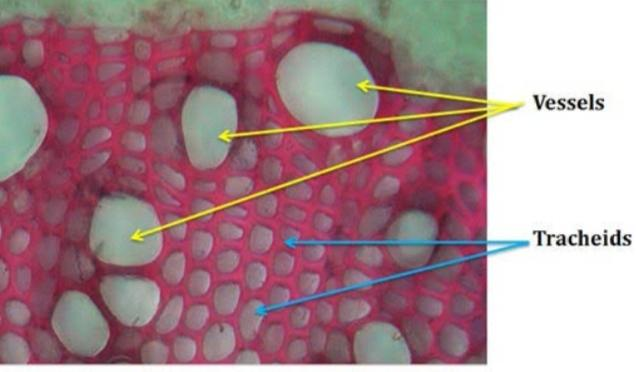
The xylem contains mainly four types of cells- tracheids, vessels, xylem parenchyma and xylem fibres. The angiosperms contain all four types of cells in their xylem tissue. The xylem vessels and tracheids mainly help in the conduction of water and minerals in these flowering plants.
The xylem vessels are long tube-like structures that help in transportation of water. It is cylindrical in shape and made up of vessel members. Each vessel member is made up of short, wide and lignified dead cells with a large central cavity. They lack nucleus and cytoplasm. The lignified cells provide mechanical support to the tissue.
The presence of vessels in angiosperms is considered to be the reason for their success. However, in gymnosperms, the xylem vessels are absent. Only the Gnetophyta class contains xylem vessels. The Gnetophyta is a class of gymnosperms that contain xylem vessels. Three genera are included under Gnetophyta that show the presence of vessels. These gymnosperms include Ephedra, Gnetum and Welwitschia. The presence of vessels in Gnetophyta suggests that they were the ancestors of flowering plants.
Note:
The gymnosperms are flowerless plants in which seeds are naked i.e. not covered. The gymnosperms are evergreen plants. They are common in boreal forests and temperate regions as their leaves are adapted to thrive in extreme environmental conditions. The presence of needle-like leaves helps in reducing surface area. The leaves have sunken stomata and thick cuticles which prevents water loss. The gymnosperms include conifers, Ginkgo, Gnetophytes and cycads.
Complete answer:
The xylem contains mainly four types of cells- tracheids, vessels, xylem parenchyma and xylem fibres. The angiosperms contain all four types of cells in their xylem tissue. The xylem vessels and tracheids mainly help in the conduction of water and minerals in these flowering plants.
The xylem vessels are long tube-like structures that help in transportation of water. It is cylindrical in shape and made up of vessel members. Each vessel member is made up of short, wide and lignified dead cells with a large central cavity. They lack nucleus and cytoplasm. The lignified cells provide mechanical support to the tissue.
The presence of vessels in angiosperms is considered to be the reason for their success. However, in gymnosperms, the xylem vessels are absent. Only the Gnetophyta class contains xylem vessels. The Gnetophyta is a class of gymnosperms that contain xylem vessels. Three genera are included under Gnetophyta that show the presence of vessels. These gymnosperms include Ephedra, Gnetum and Welwitschia. The presence of vessels in Gnetophyta suggests that they were the ancestors of flowering plants.
Note:
The gymnosperms are flowerless plants in which seeds are naked i.e. not covered. The gymnosperms are evergreen plants. They are common in boreal forests and temperate regions as their leaves are adapted to thrive in extreme environmental conditions. The presence of needle-like leaves helps in reducing surface area. The leaves have sunken stomata and thick cuticles which prevents water loss. The gymnosperms include conifers, Ginkgo, Gnetophytes and cycads.
Recently Updated Pages
Master Class 11 Social Science: Engaging Questions & Answers for Success

Master Class 11 Physics: Engaging Questions & Answers for Success
Master Class 11 Maths: Engaging Questions & Answers for Success
Master Class 11 Economics: Engaging Questions & Answers for Success
Master Class 11 Computer Science: Engaging Questions & Answers for Success
Master Class 11 Chemistry: Engaging Questions & Answers for Success
Trending doubts
One Metric ton is equal to kg A 10000 B 1000 C 100 class 11 physics CBSE
There are 720 permutations of the digits 1 2 3 4 5 class 11 maths CBSE
1 Quintal is equal to a 110 kg b 10 kg c 100kg d 1000 class 11 physics CBSE
State and prove Bernoullis theorem class 11 physics CBSE
Difference Between Prokaryotic Cells and Eukaryotic Cells
Discuss the various forms of bacteria class 11 biology CBSE