




Which are the correct IUPAC names of the following compounds?
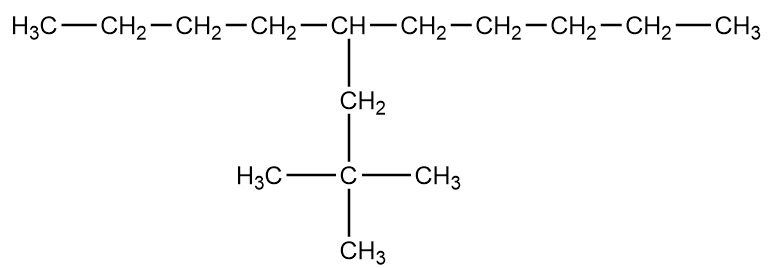
A. 5-(2’,2’-dimethylpropyl) decane
B. 4-butyl-2,2-dimethyl nonane
C. 2,2-dimethyl-4-pentyl octane
D. 5-neopentyl decane
Answer
 Verified
543.9k+ views
Hint :The systematic approach to IUPAC nomenclature relies on two basic features, first it should indicate the characteristic lattice of chain and ring in which carbon atoms are bonded together in a compound and second is to identifying and locating the functional groups (if any) with in the given compound.
Complete Step By Step Answer:
According to IUPAC, the standard rules for naming an alkane are as follows:
1. Identify the longest continuous carbon chain in the compound and name it accordingly.
2. Find the functional groups or substituent groups attached to the chain and name the groups as per IUPAC rules.
3. Numbering of parent or base carbon chains should be done in such a manner that the substituent groups get minimum allocation value.
4. Designate the location of each substituent group present in the chain by a proper number and name.
5. Arrange the name of functional group or substituent groups in alphabetical order followed by the name of parent chain.
6. The prefixes like di, tri, tera, etc are used when more than one substituent groups of the same kind are present in the carbon chain.
Therefore, for the given compound, the longest carbon chain i.e., the parent chain will be as follows:
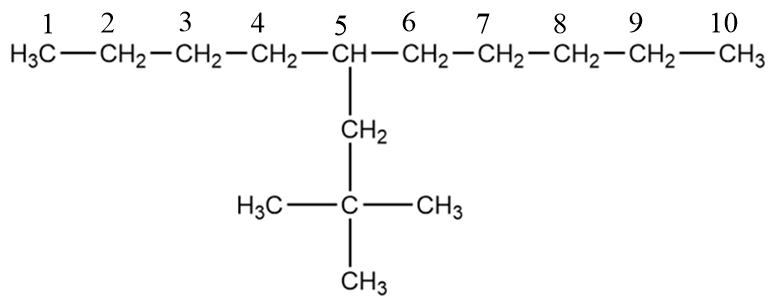
The number of carbon atoms present in the base chain $ = 10 $
So, the name of the base chain is decane.
Now, let us look at the name of substituent group present in the compound:
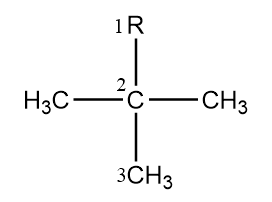
We can name this group in two ways which are as follows:
Common name- neopentyl
IUPAC name- 2,2-dimethylpropyl
Hence, the correct IUPAC names for the given compounds are as follows:
5-(2’,2’-dimethylpropyl) decane
5-neopentyl decane
Thus, options (A) and (D) are the correct answers.
Note :
It is important to note that in the name of substituent groups, numbers are written along with an apostrophe (’) sign to differentiate the groups of substituent carbon atoms from the groups of parent chain. Also, if two or more longest chains are present within a structure, then the chain with largest substituent groups is chosen.
Complete Step By Step Answer:
According to IUPAC, the standard rules for naming an alkane are as follows:
1. Identify the longest continuous carbon chain in the compound and name it accordingly.
2. Find the functional groups or substituent groups attached to the chain and name the groups as per IUPAC rules.
3. Numbering of parent or base carbon chains should be done in such a manner that the substituent groups get minimum allocation value.
4. Designate the location of each substituent group present in the chain by a proper number and name.
5. Arrange the name of functional group or substituent groups in alphabetical order followed by the name of parent chain.
6. The prefixes like di, tri, tera, etc are used when more than one substituent groups of the same kind are present in the carbon chain.
Therefore, for the given compound, the longest carbon chain i.e., the parent chain will be as follows:
The number of carbon atoms present in the base chain $ = 10 $
So, the name of the base chain is decane.
Now, let us look at the name of substituent group present in the compound:
We can name this group in two ways which are as follows:
Common name- neopentyl
IUPAC name- 2,2-dimethylpropyl
Hence, the correct IUPAC names for the given compounds are as follows:
5-(2’,2’-dimethylpropyl) decane
5-neopentyl decane
Thus, options (A) and (D) are the correct answers.
Note :
It is important to note that in the name of substituent groups, numbers are written along with an apostrophe (’) sign to differentiate the groups of substituent carbon atoms from the groups of parent chain. Also, if two or more longest chains are present within a structure, then the chain with largest substituent groups is chosen.
Recently Updated Pages
Master Class 12 Economics: Engaging Questions & Answers for Success

Master Class 12 English: Engaging Questions & Answers for Success
Master Class 12 Social Science: Engaging Questions & Answers for Success
Master Class 12 Maths: Engaging Questions & Answers for Success
Master Class 12 Physics: Engaging Questions & Answers for Success
Master Class 11 Social Science: Engaging Questions & Answers for Success
Trending doubts
One Metric ton is equal to kg A 10000 B 1000 C 100 class 11 physics CBSE
Difference Between Prokaryotic Cells and Eukaryotic Cells
Two of the body parts which do not appear in MRI are class 11 biology CBSE
1 ton equals to A 100 kg B 1000 kg C 10 kg D 10000 class 11 physics CBSE
Draw a diagram of nephron and explain its structur class 11 biology CBSE
10 examples of friction in our daily life