




What is the function of chlorophyll?
Answer
 Verified
523.2k+ views
Hint: Chlorophyll is one of the key components in the process that sustains plant life and produces oxygen for the entire planet. It is present in the chloroplast, an organelle exclusively found in plants.
Complete Answer:
Chlorophyll is a light-absorbing green pigment present in chloroplast along with many other photosynthetic pigments. It is an essential pigment to perform photosynthesis as it can convert light energy into chemical energy (ATP). Other pigments act as accessory pigments because they collect and transfer light energy to chlorophyll-a for photosynthesis.
Photosynthesis is an enzyme-regulated process inside chloroplast to produce glucose from carbon dioxide and water in the presence of sunlight. Stomata are tiny epidermal pores on leaves helping in the entry of carbon dioxide.
The requirement of water is fulfilled from the soil by roots. Light energy is absorbed by photosynthetic pigments and converted into ATP by chlorophyll.
A pigment is a molecule that can absorb light at different wavelengths and thus has a particular color. Chlorophyll absorbs light radiations in blue and red parts of the light spectrum.
Chlorophyll is mostly present in two forms- chlorophyll-a and chlorophyll-b. Chlorophyll absorbs more red wavelengths than violet-blue wavelengths of light while Chlorophyll-b absorbs violet-blue wavelengths more than the red wavelength of light.
Therefore, the essential function of chlorophyll is to perform photosynthesis.
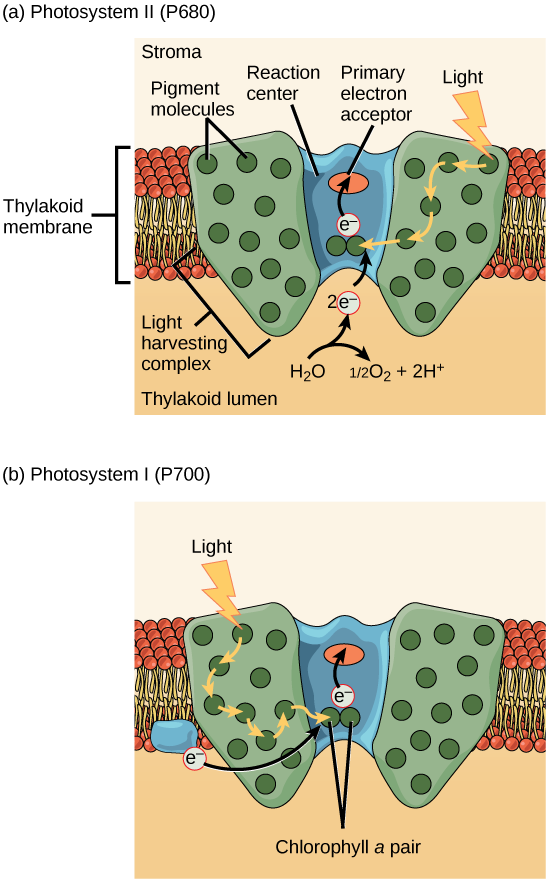
Note:
Chlorophyll plays an important role in making green plants healthy. These also have vitamins, antioxidants, and some properties that benefit our bodies. Mostly chlorophyll can be obtained from the plants or also with some supplements. These supplements are very effective. These are some important facts about chlorophyll.
Complete Answer:
Chlorophyll is a light-absorbing green pigment present in chloroplast along with many other photosynthetic pigments. It is an essential pigment to perform photosynthesis as it can convert light energy into chemical energy (ATP). Other pigments act as accessory pigments because they collect and transfer light energy to chlorophyll-a for photosynthesis.
Photosynthesis is an enzyme-regulated process inside chloroplast to produce glucose from carbon dioxide and water in the presence of sunlight. Stomata are tiny epidermal pores on leaves helping in the entry of carbon dioxide.
The requirement of water is fulfilled from the soil by roots. Light energy is absorbed by photosynthetic pigments and converted into ATP by chlorophyll.
A pigment is a molecule that can absorb light at different wavelengths and thus has a particular color. Chlorophyll absorbs light radiations in blue and red parts of the light spectrum.
Chlorophyll is mostly present in two forms- chlorophyll-a and chlorophyll-b. Chlorophyll absorbs more red wavelengths than violet-blue wavelengths of light while Chlorophyll-b absorbs violet-blue wavelengths more than the red wavelength of light.
Therefore, the essential function of chlorophyll is to perform photosynthesis.
Note:
Chlorophyll plays an important role in making green plants healthy. These also have vitamins, antioxidants, and some properties that benefit our bodies. Mostly chlorophyll can be obtained from the plants or also with some supplements. These supplements are very effective. These are some important facts about chlorophyll.
Recently Updated Pages
Master Class 11 English: Engaging Questions & Answers for Success

Master Class 11 Social Science: Engaging Questions & Answers for Success
Master Class 11 Maths: Engaging Questions & Answers for Success
Master Class 11 Chemistry: Engaging Questions & Answers for Success
Master Class 11 Biology: Engaging Questions & Answers for Success
Master Class 11 Physics: Engaging Questions & Answers for Success
Trending doubts
One Metric ton is equal to kg A 10000 B 1000 C 100 class 11 physics CBSE
Difference Between Prokaryotic Cells and Eukaryotic Cells
Find the value of the expression given below sin 30circ class 11 maths CBSE
1 ton equals to A 100 kg B 1000 kg C 10 kg D 10000 class 11 physics CBSE
Two of the body parts which do not appear in MRI are class 11 biology CBSE
What are hard magnetic materials class 11 physics CBSE