




What is a flower stem called?
Answer
 Verified
536.7k+ views
Hint: A vascular plant's stem is one of two primary structural axes, the other being the root. It maintains leaves, flowers, and fruits, transfers water and dissolved substances between the roots and shoots in the xylem and phloem, stores nutrients, and generates new living tissue in the xylem and phloem.
In most cases, the stem is divided by nodes and internodes:
One or more leaves, as well as buds that can grow into branches (with leaves, conifer cones, or inflorescences), are stored in the nodes (flowers). From the nodes, adventurous roots can be generated.
The internodes are the links between the nodes.
Complete answer:
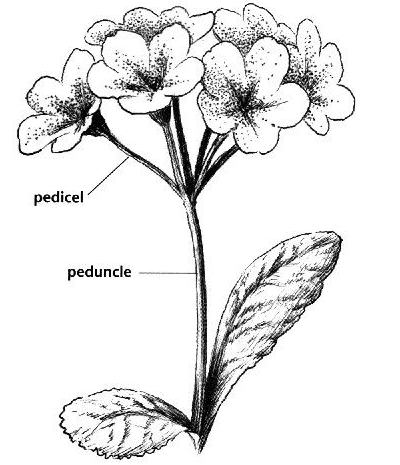
The stem or stalk of a flower or plant is referred to as a peduncle. A peduncle is a stalk or stem of an inflorescence that bears a flower (or fruit). Stems can be used for a variety of purposes. They help to keep the plant alive. They function as the plant's plumbing system, transporting water and nutrients from the roots to the leaves and food in the form of glucose from the leaves to the rest of the plant. The part of celery that we eat, the stalk, is a particular section of the leaf structure called a petiole. A petiole is a tiny stalk that connects a plant's leaf blade to its stem. Each solitary stalk holding a bloom is called a pedicle if the plant has multiple smaller flowers.
Note:
The four main roles of stems are as follows:
1. Support for leaves, flowers, and fruits, as well as their elevation. The stems maintain the leaves in the sun while also providing a home for the plant's blooms and fruits.
2. The xylem and phloem transport fluids between the roots and the shoots.
3. Nutritional storage.
4. The growth of new living tissue. Plant cells have a usual lifespan of one to three years. Meristems are cells found in stem cells that produce new live tissue every year.
In most cases, the stem is divided by nodes and internodes:
One or more leaves, as well as buds that can grow into branches (with leaves, conifer cones, or inflorescences), are stored in the nodes (flowers). From the nodes, adventurous roots can be generated.
The internodes are the links between the nodes.
Complete answer:
The stem or stalk of a flower or plant is referred to as a peduncle. A peduncle is a stalk or stem of an inflorescence that bears a flower (or fruit). Stems can be used for a variety of purposes. They help to keep the plant alive. They function as the plant's plumbing system, transporting water and nutrients from the roots to the leaves and food in the form of glucose from the leaves to the rest of the plant. The part of celery that we eat, the stalk, is a particular section of the leaf structure called a petiole. A petiole is a tiny stalk that connects a plant's leaf blade to its stem. Each solitary stalk holding a bloom is called a pedicle if the plant has multiple smaller flowers.
Note:
The four main roles of stems are as follows:
1. Support for leaves, flowers, and fruits, as well as their elevation. The stems maintain the leaves in the sun while also providing a home for the plant's blooms and fruits.
2. The xylem and phloem transport fluids between the roots and the shoots.
3. Nutritional storage.
4. The growth of new living tissue. Plant cells have a usual lifespan of one to three years. Meristems are cells found in stem cells that produce new live tissue every year.
Recently Updated Pages
Master Class 12 Economics: Engaging Questions & Answers for Success

Master Class 12 English: Engaging Questions & Answers for Success
Master Class 12 Social Science: Engaging Questions & Answers for Success
Master Class 12 Maths: Engaging Questions & Answers for Success
Master Class 12 Physics: Engaging Questions & Answers for Success
Master Class 9 General Knowledge: Engaging Questions & Answers for Success
Trending doubts
One Metric ton is equal to kg A 10000 B 1000 C 100 class 11 physics CBSE
Difference Between Prokaryotic Cells and Eukaryotic Cells
Two of the body parts which do not appear in MRI are class 11 biology CBSE
Find the value of the expression given below sin 30circ class 11 maths CBSE
1 ton equals to A 100 kg B 1000 kg C 10 kg D 10000 class 11 physics CBSE
Draw a diagram of nephron and explain its structur class 11 biology CBSE