




What are non-flowering plants?
Answer
 Verified
524.7k+ views
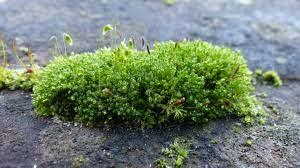
Hint: Non-flowering plants are called as- mosses, ferns, liverworts and some gymnosperms, angiosperms and algae. The plants which do not bear fruits and seeds are termed to be non-flowering plants. Flowers only exist in flowering or higher plants. algae are the members of polyphyletic clades which are from the photosynthetic eukaryotes.
Complete answer-
As we know, algae is one of the non-flowering plants, Algae reproduction is done through regeneration which comes under sexual methods. Usually, algae reproduce by both sexual and asexual methods but the average time algae take to grow is- $30$ days to $4$ weeks.
Algae grow quickly if provided proper nutrients and habitat while sometimes it depends on species to species. Microalgae can grow double to the size of normal algae and in less than $24$ hours. Other algae-like-macroalgae also known as seaweed have normal size in growth.
By providing plant fertilizer in a particular culture where algae are growing, the fertilizer can provide more nutrients in algae growth and also factors like-sunlight, water, chlorophyll, carbon dioxide are needed like any other green plant.
Ferns are also examples of non-flowering plants- In ferns gametes, prothallus and stages of spore formation takes place. The life stages in ferns are when the sporophyte is released and the structure that produces spores turns into sporangia. They have both asexual and sexual mode for reproduction. Spores are produced in both modes.
Note:
The Lifespan of algae is one- two years. Many algae species reproduce by ordinary cellular division; algae which are small in structure and algae which are larger will undergo spore formation for copy. Algae are being grown because they possess high economic importance such as- food sources, fodder in fish farming and even as a fertilizer.
Complete answer-
As we know, algae is one of the non-flowering plants, Algae reproduction is done through regeneration which comes under sexual methods. Usually, algae reproduce by both sexual and asexual methods but the average time algae take to grow is- $30$ days to $4$ weeks.
Algae grow quickly if provided proper nutrients and habitat while sometimes it depends on species to species. Microalgae can grow double to the size of normal algae and in less than $24$ hours. Other algae-like-macroalgae also known as seaweed have normal size in growth.
By providing plant fertilizer in a particular culture where algae are growing, the fertilizer can provide more nutrients in algae growth and also factors like-sunlight, water, chlorophyll, carbon dioxide are needed like any other green plant.
Ferns are also examples of non-flowering plants- In ferns gametes, prothallus and stages of spore formation takes place. The life stages in ferns are when the sporophyte is released and the structure that produces spores turns into sporangia. They have both asexual and sexual mode for reproduction. Spores are produced in both modes.
Note:
The Lifespan of algae is one- two years. Many algae species reproduce by ordinary cellular division; algae which are small in structure and algae which are larger will undergo spore formation for copy. Algae are being grown because they possess high economic importance such as- food sources, fodder in fish farming and even as a fertilizer.
Recently Updated Pages
Master Class 11 English: Engaging Questions & Answers for Success

Master Class 11 Social Science: Engaging Questions & Answers for Success
Master Class 11 Maths: Engaging Questions & Answers for Success
Master Class 11 Chemistry: Engaging Questions & Answers for Success
Master Class 11 Biology: Engaging Questions & Answers for Success
Master Class 11 Physics: Engaging Questions & Answers for Success
Trending doubts
One Metric ton is equal to kg A 10000 B 1000 C 100 class 11 physics CBSE
Difference Between Prokaryotic Cells and Eukaryotic Cells
Find the value of the expression given below sin 30circ class 11 maths CBSE
1 ton equals to A 100 kg B 1000 kg C 10 kg D 10000 class 11 physics CBSE
Two of the body parts which do not appear in MRI are class 11 biology CBSE
Draw a diagram of nephron and explain its structur class 11 biology CBSE