




Water-soluble yellowish pigments present in petals of Dahlia is
(a)Carotene
(b)Xanthophyll
(c)Anthoxanthin
(d)Anthocyanin
Answer
 Verified
591.6k+ views
Hint: Certain pigments are essential for plants to carry out their life processes. Some of these pigments are insoluble in water whereas others are water-soluble. They are of different colours depending on their use and pH.
Complete answer:
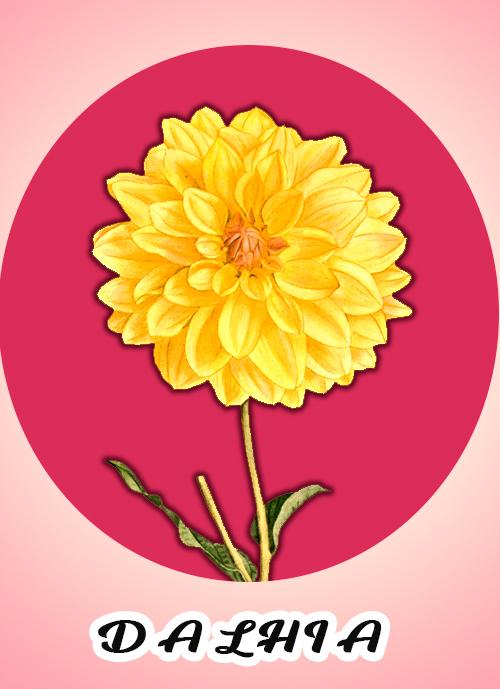
Anthoxanthin is the pigment present in petals of Dahlia. These are flavonoids water-soluble pigments that are colourless, creamy or yellow in colour. These are the pigments that contribute cauliflower, onion, white potatoes and turnips their cream or white colour.
Additional Information: Pigments are coloured substances and used in the colouring of other materials. Plants and animals contain many kinds of organic pigments. Especially plants need the chlorophyll pigment to carry out photosynthesis. Other essential pigments include Anthocyanin, betalains, carotenoids etc.
Let us know more about the other pigments in the question:
-Carotene: It is orange or red pigments which are crystalline in nature. They are mainly found in the chromoplasts and also in a few plant-eating animals.
-Xanthophyll: These are oxygen-containing yellow pigments that are responsible for giving colour to flowers, fruits and vegetables, eggshells, shells and features. Some vegetables that contain Xanthophyll are corn, pepper etc.
-Anthocyanin: These are water-soluble too. Depending on the pH they can be red, blue or purple in colour. Some fruits that contain Anthocyanin are blueberry, raspberry etc.
So, the correct answer is anthoxanthin.
Note: Anthocyanin and Anthoxanthin both are water-soluble in nature. Anthoxanthin is creamy or yellowish in colour whereas Anthocyanin, depending on pH, is found in red, blue and purple colour. anthoxanthin also has a special characteristic. it shows white colour in acidic medium and yellow in an alkaline one.
Complete answer:
Anthoxanthin is the pigment present in petals of Dahlia. These are flavonoids water-soluble pigments that are colourless, creamy or yellow in colour. These are the pigments that contribute cauliflower, onion, white potatoes and turnips their cream or white colour.
Additional Information: Pigments are coloured substances and used in the colouring of other materials. Plants and animals contain many kinds of organic pigments. Especially plants need the chlorophyll pigment to carry out photosynthesis. Other essential pigments include Anthocyanin, betalains, carotenoids etc.
Let us know more about the other pigments in the question:
-Carotene: It is orange or red pigments which are crystalline in nature. They are mainly found in the chromoplasts and also in a few plant-eating animals.
-Xanthophyll: These are oxygen-containing yellow pigments that are responsible for giving colour to flowers, fruits and vegetables, eggshells, shells and features. Some vegetables that contain Xanthophyll are corn, pepper etc.
-Anthocyanin: These are water-soluble too. Depending on the pH they can be red, blue or purple in colour. Some fruits that contain Anthocyanin are blueberry, raspberry etc.
So, the correct answer is anthoxanthin.
Note: Anthocyanin and Anthoxanthin both are water-soluble in nature. Anthoxanthin is creamy or yellowish in colour whereas Anthocyanin, depending on pH, is found in red, blue and purple colour. anthoxanthin also has a special characteristic. it shows white colour in acidic medium and yellow in an alkaline one.
Recently Updated Pages
The magnetic field in a plane electromagnetic wave class 11 physics CBSE

In a plane electromagnetic wave the electric field class 12 physics CBSE
A plane electromagnetic wave travels in vacuum along class 12 physics CBSE
Basicity of sulphurous acid and sulphuric acid are
Master Class 11 Business Studies: Engaging Questions & Answers for Success
Master Class 11 Computer Science: Engaging Questions & Answers for Success
Trending doubts
One Metric ton is equal to kg A 10000 B 1000 C 100 class 11 physics CBSE
What are the examples of C3 and C4 plants class 11 biology CBSE
State and prove Bernoullis theorem class 11 physics CBSE
10 examples of friction in our daily life
A body is said to be in dynamic equilibrium if A When class 11 physics CBSE
Difference Between Prokaryotic Cells and Eukaryotic Cells