




How many walls are there in the human heart?
Answer
 Verified
535.8k+ views
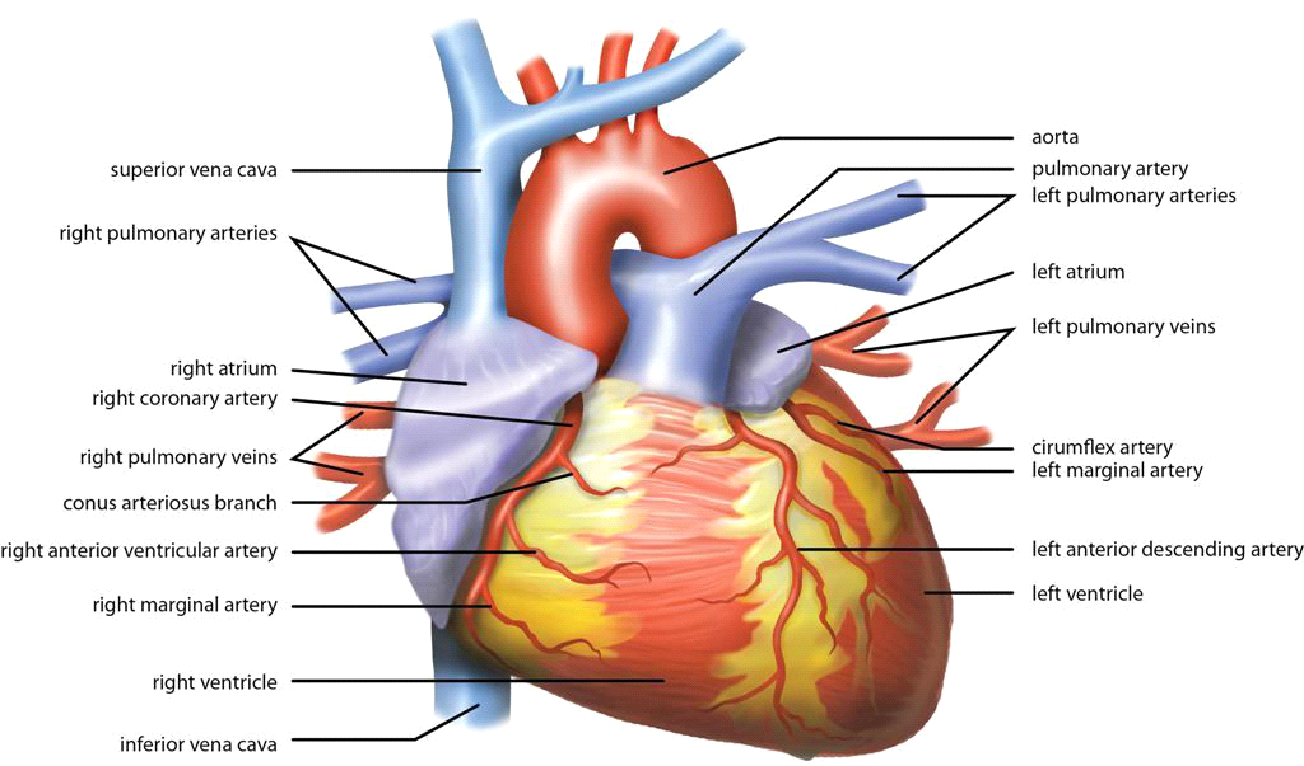
Hint: Heart is a hollow, muscular organ, roughly of the size of one's fist. It is covered by three layers of concentric tissue for its protection. The heart is composed of three layers.
Complete answer:
The heart is a highly modified blood vessel. Its walls is composed of three concentric tissue:-
Epicardium- It is the outer epithelium of thin cells. It is in fact the visceral layer of serous pericardium. Epicardium refers to both the outer layer of the heart and the inner layer of the serous visceral pericardium, which is usually attached to the outer walls of the heart. It is composed of coronary blood vessels, which oxygenates the tissues of the heart with a blood supply from the coronary arteries. It includes a variable amount of fat and it is the layer where the epicardial coronary arteries and its branches usually run.
Myocardium-It is the middle thick layer of cardiac muscle connective tissue. The cardiac muscle consists of short, cylindrical fibers that branch and anastomosis to form a network. This arrangement permits a quick spread of contraction waves and accounts for the rhythmic contractions characteristic of heart muscle. The fibers uninucleate, the nucleus lying at the centre. They lack sarcolemma and contain striated contractile myofilaments and many large mitochondria. They have at the end specialized regions of cell membrane , forming the intercalated discs between adjacent fibers. These discs function as boosters of waves of muscle contraction and permit the transmission of the wave from one fiber to the next. No neurons are found in the wall of the heart.
Endocardium- It is the innermost layer of the heart wall of the endocardium which is composed of endothelial cells that helps in providing a smooth, elastic and non - adherent surface for the blood circulation and for pumping of the blood. They help in regulation of the metabolic waste removal from the heart tissues. They act as a barrier between the blood and the heart muscle and help in controlling the composition of the extracellular fluid in which the cardiomyocytes bathe. It might become infected which is a serious inflammatory condition that is called infective endocarditis.
Note:
The heart keeps on beating throughout life without getting fatigue because it rests for double the time it works. Contraction of the heart is followed by immediate relaxation, but the latter is not followed at once by the next contraction. Before the next contraction there is a period in which there is no activity. The recovery period is about twice the contraction time in which the heart shows activity and does work.
Complete answer:
The heart is a highly modified blood vessel. Its walls is composed of three concentric tissue:-
Epicardium- It is the outer epithelium of thin cells. It is in fact the visceral layer of serous pericardium. Epicardium refers to both the outer layer of the heart and the inner layer of the serous visceral pericardium, which is usually attached to the outer walls of the heart. It is composed of coronary blood vessels, which oxygenates the tissues of the heart with a blood supply from the coronary arteries. It includes a variable amount of fat and it is the layer where the epicardial coronary arteries and its branches usually run.
Myocardium-It is the middle thick layer of cardiac muscle connective tissue. The cardiac muscle consists of short, cylindrical fibers that branch and anastomosis to form a network. This arrangement permits a quick spread of contraction waves and accounts for the rhythmic contractions characteristic of heart muscle. The fibers uninucleate, the nucleus lying at the centre. They lack sarcolemma and contain striated contractile myofilaments and many large mitochondria. They have at the end specialized regions of cell membrane , forming the intercalated discs between adjacent fibers. These discs function as boosters of waves of muscle contraction and permit the transmission of the wave from one fiber to the next. No neurons are found in the wall of the heart.
Endocardium- It is the innermost layer of the heart wall of the endocardium which is composed of endothelial cells that helps in providing a smooth, elastic and non - adherent surface for the blood circulation and for pumping of the blood. They help in regulation of the metabolic waste removal from the heart tissues. They act as a barrier between the blood and the heart muscle and help in controlling the composition of the extracellular fluid in which the cardiomyocytes bathe. It might become infected which is a serious inflammatory condition that is called infective endocarditis.
Note:
The heart keeps on beating throughout life without getting fatigue because it rests for double the time it works. Contraction of the heart is followed by immediate relaxation, but the latter is not followed at once by the next contraction. Before the next contraction there is a period in which there is no activity. The recovery period is about twice the contraction time in which the heart shows activity and does work.
Recently Updated Pages
Master Class 12 Economics: Engaging Questions & Answers for Success

Master Class 12 English: Engaging Questions & Answers for Success
Master Class 12 Social Science: Engaging Questions & Answers for Success
Master Class 12 Maths: Engaging Questions & Answers for Success
Master Class 12 Physics: Engaging Questions & Answers for Success
Master Class 9 General Knowledge: Engaging Questions & Answers for Success
Trending doubts
One Metric ton is equal to kg A 10000 B 1000 C 100 class 11 physics CBSE
Difference Between Prokaryotic Cells and Eukaryotic Cells
Find the value of the expression given below sin 30circ class 11 maths CBSE
Two of the body parts which do not appear in MRI are class 11 biology CBSE
Draw a diagram of nephron and explain its structur class 11 biology CBSE
10 examples of friction in our daily life