




Virtual image can be formed using which of the following mirrors?
A. Convex mirror
B. Convex mirror
C. Plane mirror
D. All the above
Answer
 Verified
634.5k+ views
Hint: Virtual images are always produced behind the mirror with respect to the object. A plane mirror is used in our everyday life since they can form a virtual and erect image with the same size. All other mirrors can be used for various other applications. Since they can form both virtual and real images at specific distances.
Complete step by step answer:
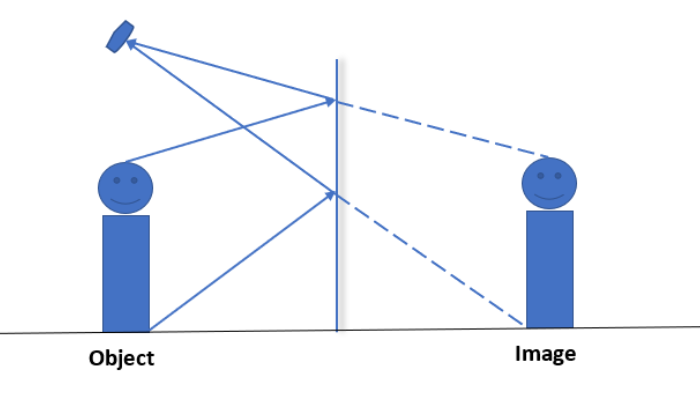
Plane mirror; It always forms a virtual, erect image with the same size at all positions of the object placed. That’s why we are extensively using a plane mirror for household activities. The image formation in the plane mirror has shown here. In that diagram dashed lines represent the virtual image position.
Convex mirror; It is treated as a diverging mirror. It can form virtual, erect and size reduced images.
1. If the object is at infinity, the image will be virtual, erect and smaller than the object.
2. If the object placed between the infinity and the pole, the image will be small, virtual and erect.
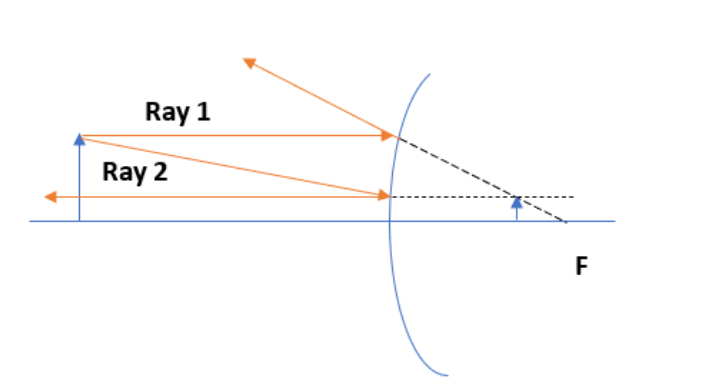
The following diagram represents the virtual image formation of the convex mirror.
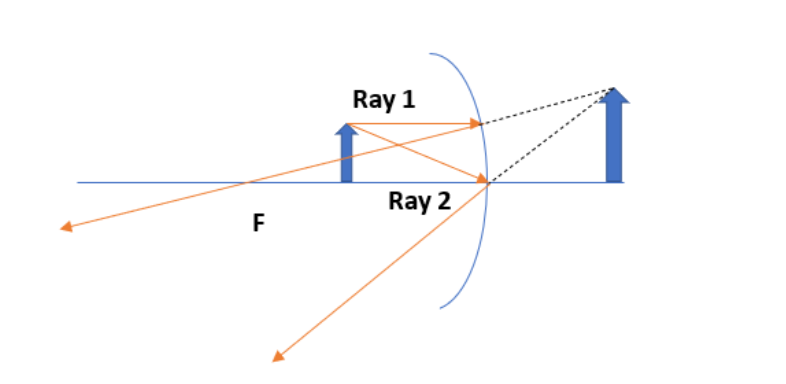
Concave mirror; It is generally known as converging mirror. The image formed by a concave mirror can be real or virtual according to the position of the object. They can also become large or smaller.
1. If the object is infinity, the image will be real and smaller than the object.
2. If the object is placed at the centre of curvature and focus, then the image will form a real image of the same size.
3. If the object is placed between the focus and pole, a virtual and erect image will form.
So all the mirrors can be used to get the virtual image. So the correct option is D.
Note: Only plane mirrors can provide the virtual, erect and with the same sized image. Curved mirrors can provide virtual images only at some specific distances. Concave mirrors are mainly used in automobile headlamps, torch, electronic microscopes and astronomical telescopes. Convex mirrors are used in the side view and rear-view mirror of a vehicle. They are also used in the corners of the road to avoid accidents. Since they provide a wide observation.
Complete step by step answer:
Plane mirror; It always forms a virtual, erect image with the same size at all positions of the object placed. That’s why we are extensively using a plane mirror for household activities. The image formation in the plane mirror has shown here. In that diagram dashed lines represent the virtual image position.
Convex mirror; It is treated as a diverging mirror. It can form virtual, erect and size reduced images.
1. If the object is at infinity, the image will be virtual, erect and smaller than the object.
2. If the object placed between the infinity and the pole, the image will be small, virtual and erect.
The following diagram represents the virtual image formation of the convex mirror.
Concave mirror; It is generally known as converging mirror. The image formed by a concave mirror can be real or virtual according to the position of the object. They can also become large or smaller.
1. If the object is infinity, the image will be real and smaller than the object.
2. If the object is placed at the centre of curvature and focus, then the image will form a real image of the same size.
3. If the object is placed between the focus and pole, a virtual and erect image will form.
So all the mirrors can be used to get the virtual image. So the correct option is D.
Note: Only plane mirrors can provide the virtual, erect and with the same sized image. Curved mirrors can provide virtual images only at some specific distances. Concave mirrors are mainly used in automobile headlamps, torch, electronic microscopes and astronomical telescopes. Convex mirrors are used in the side view and rear-view mirror of a vehicle. They are also used in the corners of the road to avoid accidents. Since they provide a wide observation.
Recently Updated Pages
Master Class 12 Economics: Engaging Questions & Answers for Success

Master Class 12 English: Engaging Questions & Answers for Success
Master Class 12 Social Science: Engaging Questions & Answers for Success
Master Class 12 Maths: Engaging Questions & Answers for Success
Master Class 12 Physics: Engaging Questions & Answers for Success
Master Class 9 General Knowledge: Engaging Questions & Answers for Success
Trending doubts
Explain the Treaty of Vienna of 1815 class 10 social science CBSE
Who Won 36 Oscar Awards? Record Holder Revealed
Why is it 530 pm in india when it is 1200 afternoon class 10 social science CBSE
Make a sketch of the human nerve cell What function class 10 biology CBSE
What is the full form of POSCO class 10 social science CBSE
Define Potential, Developed, Stock and Reserved resources