




the total number of chromosomes in a normal human body cell are
A) 22
B) 23
C) 44
D) 46
E) n
Answer
 Verified
645.3k+ views
Hint: Humans have chromosomes in pairs. The copy of each chromosome is inherited from the female parent and the male parent. Males chromosomes are different from female chromosomes which are known as sex chromosomes. If enough copies of chromosomes will not be inherited then it leads to a serious problem.
Complete step by step answer:
Chromosomes are thread- like structures and carry hereditary information. Chromosomes are made up of protein and one molecule of DNA that contains genetic information that is passed from the parent to the offspring. Humans have 23 pairs of chromosomes. That is a total of 46 no. of chromosomes. The 1 to 22 pairs of a chromosome are called autosomes.
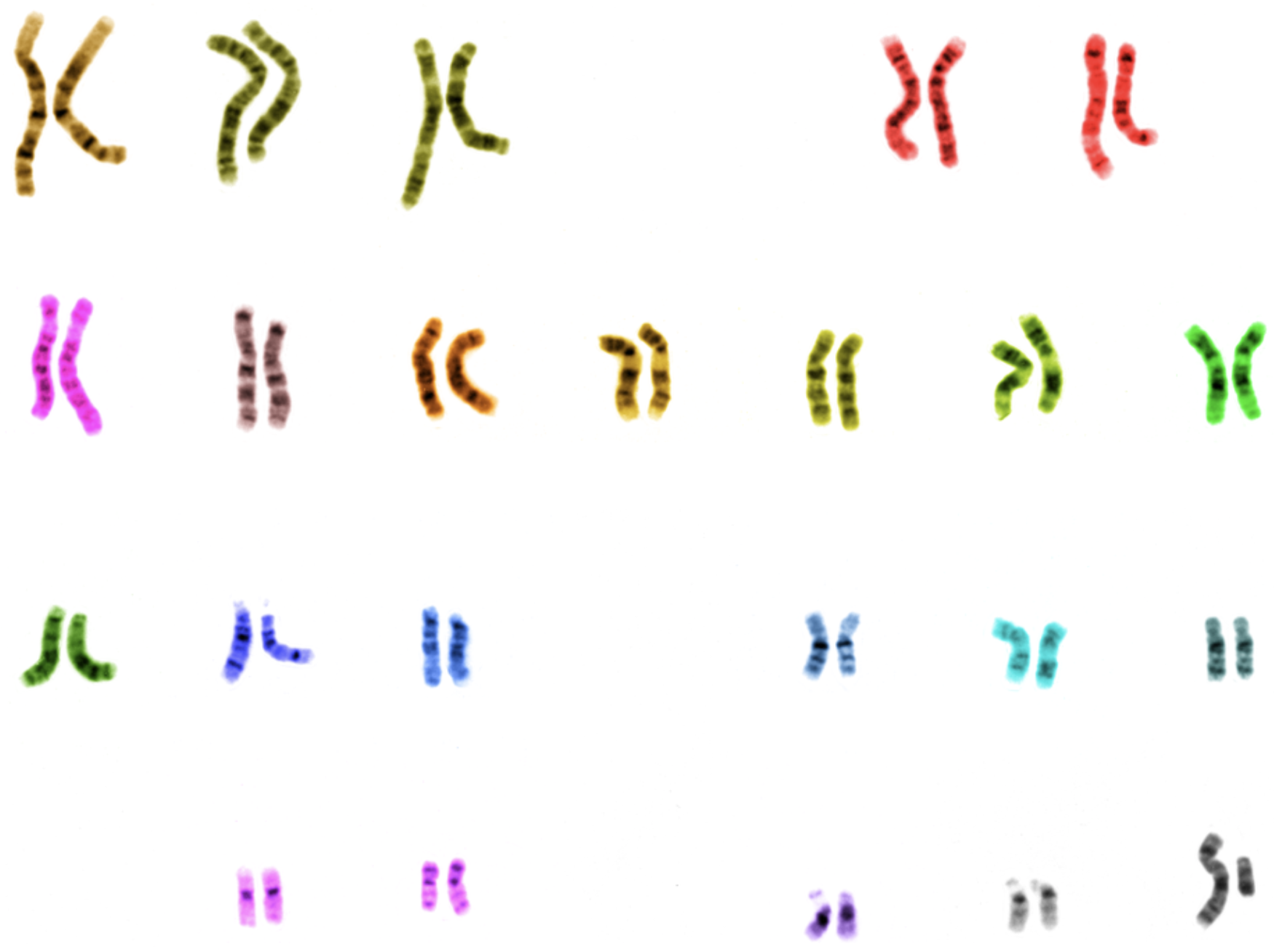
Humans have an additional pair of sex chromosomes called X and Y for a total of 46 chromosomes.
- The combination of X and y chromosomes determines the sex of a person females have two X chromosomes while males have X and Y chromosomes.
Additional information: Autosomes contain genes that are unrelated to the sex of a person. These are similar in males and females.
- One of the X chromosomes in the females is inactivated and known as a Barr body.
- The size of the X chromosome is larger than the Y chromosomes. X chromosomes have more genes as compared to the Y chromosomes.
X chromosomes never determine the sex of a person only the y chromosome has the genes that determine sex.
So, the correct answer is, "46".
Note:
- There are 23 pairs of chromosomes in humans.out of which 22 pairs are autosomes.
- The X and Y chromosomes are deciding the sex of a person. Females have two no. of X chromosomes and males have one X and one Y chromosomes.
- There 20000 to 22000 genes are contained by human chromosomes and many of them have two or more than two alleles.
Complete step by step answer:
Chromosomes are thread- like structures and carry hereditary information. Chromosomes are made up of protein and one molecule of DNA that contains genetic information that is passed from the parent to the offspring. Humans have 23 pairs of chromosomes. That is a total of 46 no. of chromosomes. The 1 to 22 pairs of a chromosome are called autosomes.
Humans have an additional pair of sex chromosomes called X and Y for a total of 46 chromosomes.
- The combination of X and y chromosomes determines the sex of a person females have two X chromosomes while males have X and Y chromosomes.
Additional information: Autosomes contain genes that are unrelated to the sex of a person. These are similar in males and females.
- One of the X chromosomes in the females is inactivated and known as a Barr body.
- The size of the X chromosome is larger than the Y chromosomes. X chromosomes have more genes as compared to the Y chromosomes.
X chromosomes never determine the sex of a person only the y chromosome has the genes that determine sex.
So, the correct answer is, "46".
Note:
- There are 23 pairs of chromosomes in humans.out of which 22 pairs are autosomes.
- The X and Y chromosomes are deciding the sex of a person. Females have two no. of X chromosomes and males have one X and one Y chromosomes.
- There 20000 to 22000 genes are contained by human chromosomes and many of them have two or more than two alleles.
Recently Updated Pages
If x a + bt + ct2 where x is in meters and t is in class 11 physics CBSE

A car covers the first half distance between two places class 11 physics CBSE
The resultant of two vectors overrightarrow P and overrightarrow class 11 physics CBSE
Find the value of cos 135 class 11 maths CBSE
A mass M is held in place by an applied force F and class 11 physics CBSE
A solution of glucose in water is labelled as 10 dfracwv class 11 chemistry CBSE
Trending doubts
One Metric ton is equal to kg A 10000 B 1000 C 100 class 11 physics CBSE
Find the value of the expression given below sin 30circ class 11 maths CBSE
What do you mean by retardation What is its SI uni class 11 physics CBSE
Draw a diagram of nephron and explain its structur class 11 biology CBSE
10 examples of friction in our daily life
Difference between physical and chemical change class 11 chemistry CBSE