




The surface of attachment of the tongue is
(A)Palatine
(B)Sphenoid
(C)Pterygoid
(D)Hyoid apparatus
Answer
 Verified
600.9k+ views
Hint: The surface of the attachment of the tongue is with the help of a U-shaped bone situated at the root of the tongue in the front of the neck and is between the lower jaw and the largest cartilage of the voice box.
Complete answer:
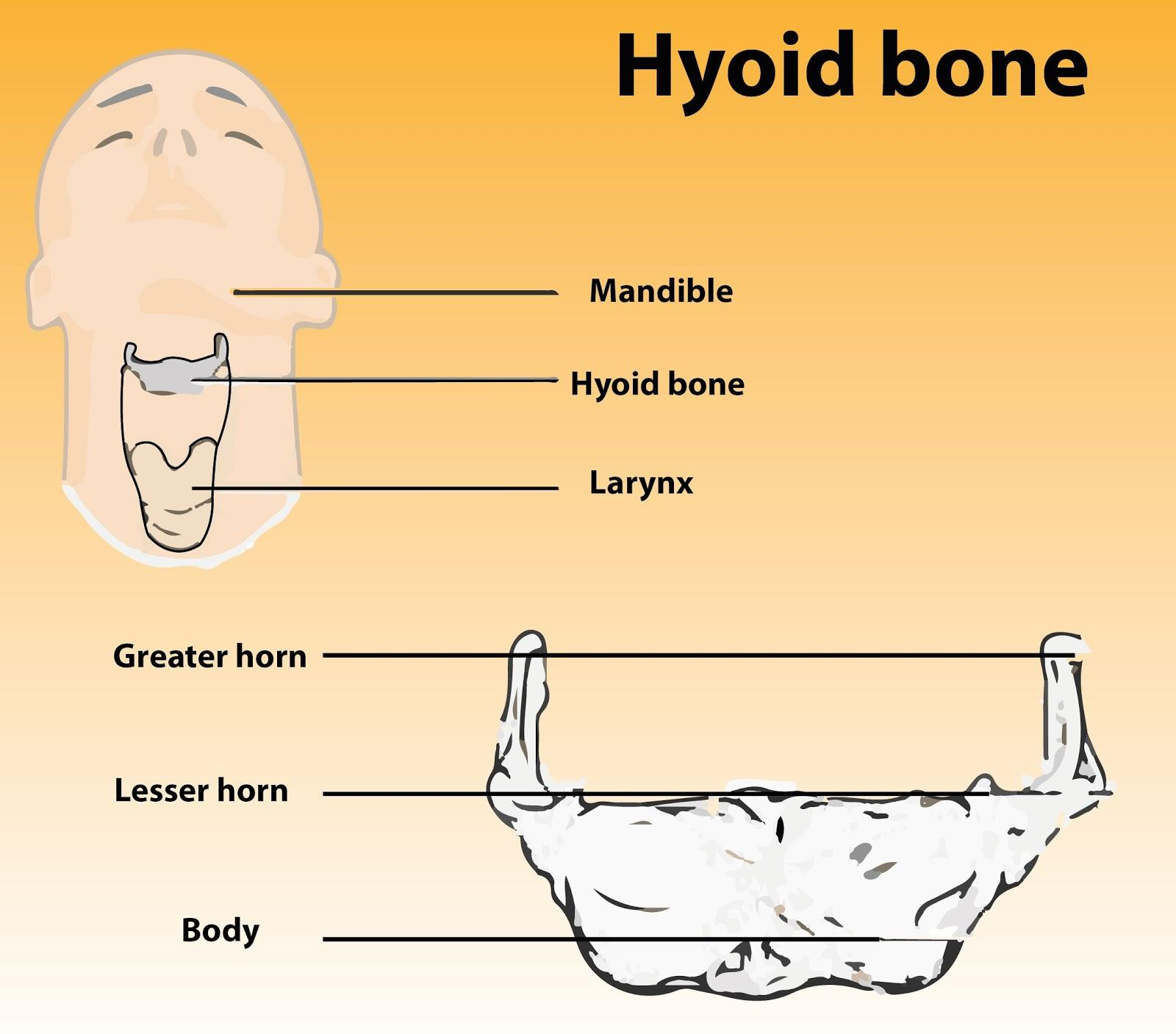
The primary function of the hyoid is to serve as an anchoring structure for the tongue. Therefore, The surface of the attachment of the tongue is the Hyoid apparatus. The hyoid apparatus is the collective term utilized in veterinary anatomy for the bones which suspend the tongue and larynx. They are also referred to as lingual bone or tongue-bone. They’re situated within the anterior midline of the neck between the chin and the thyroid cartilage. They provide attachment to the muscles of the floor of the mouth.
Additional Information: Blood is supplied to the hyoid via the lingual artery, which runs down from the tongue to the greater horns of the bone. They thought to play a key role in keeping the upper airway open during sleep, and intrinsically, the event and treatment of obstructive sleep disorder.
-Palatine bone- The palatine one is two irregular bones of the facial skeleton in many animal species, located above the uvula within the throat.
-Sphenoid bone- A sphenoid is a compound bone that forms the bottom of the cranium, behind the eye, and below the front part of the brain.
- Pterygoid -The pterygoid muscles are the two jaw muscles of mastication located in the head on the inner surface of the mandible
So, the correct answer is ‘Hyoid apparatus’.
Note: The hyoid apparatus resembles the form of a trapeze, or a bent letter "H". The basihyoid bone lies within the muscle at the bottom of the tongue. In humans, the only one hyoid is similar to that of the hyoid apparatus.
Complete answer:
The primary function of the hyoid is to serve as an anchoring structure for the tongue. Therefore, The surface of the attachment of the tongue is the Hyoid apparatus. The hyoid apparatus is the collective term utilized in veterinary anatomy for the bones which suspend the tongue and larynx. They are also referred to as lingual bone or tongue-bone. They’re situated within the anterior midline of the neck between the chin and the thyroid cartilage. They provide attachment to the muscles of the floor of the mouth.
Additional Information: Blood is supplied to the hyoid via the lingual artery, which runs down from the tongue to the greater horns of the bone. They thought to play a key role in keeping the upper airway open during sleep, and intrinsically, the event and treatment of obstructive sleep disorder.
-Palatine bone- The palatine one is two irregular bones of the facial skeleton in many animal species, located above the uvula within the throat.
-Sphenoid bone- A sphenoid is a compound bone that forms the bottom of the cranium, behind the eye, and below the front part of the brain.
- Pterygoid -The pterygoid muscles are the two jaw muscles of mastication located in the head on the inner surface of the mandible
So, the correct answer is ‘Hyoid apparatus’.
Note: The hyoid apparatus resembles the form of a trapeze, or a bent letter "H". The basihyoid bone lies within the muscle at the bottom of the tongue. In humans, the only one hyoid is similar to that of the hyoid apparatus.
Recently Updated Pages
Master Class 11 Social Science: Engaging Questions & Answers for Success

Master Class 11 Physics: Engaging Questions & Answers for Success
Master Class 11 Maths: Engaging Questions & Answers for Success
Master Class 11 Economics: Engaging Questions & Answers for Success
Master Class 11 Computer Science: Engaging Questions & Answers for Success
Master Class 11 Chemistry: Engaging Questions & Answers for Success
Trending doubts
One Metric ton is equal to kg A 10000 B 1000 C 100 class 11 physics CBSE
How many bones are in the spine class 11 biology CBSE
1 Quintal is equal to a 110 kg b 10 kg c 100kg d 1000 class 11 physics CBSE
There are 720 permutations of the digits 1 2 3 4 5 class 11 maths CBSE
State and prove Bernoullis theorem class 11 physics CBSE
Difference Between Prokaryotic Cells and Eukaryotic Cells