




The simplest type of sponge Olynthus is
A. An adult belonging to Calcarea
B. A species of Leucosolenia
C. A transitory in the life history of Sycon
D. None of the above
Answer
 Verified
576.3k+ views
Hint:Sponges are invertebrate animals and belong to phylum Porifera. Phylum Porifera is the simplest organism of the kingdom Animalia. Mostly cellular level organization is seen in phylum porifera and they are multicellular. Porifera means pore bearer, that is the organisms have bodies full of pores and channels allowing water to circulate through the body. Members of this phylum are commonly famous as sponges. These organisms are generally marine and mostly asymmetrical animals. It is the primary organism from invertebrates.
Complete answer:
The Olynthus is the simplest sponge that has the simplest canal system or ascon. It occurs as a temporary stage in the life-history of all calcareous syconoid sponges. In this sponge, gastrula swims and settles down on a rock with blastopore and grows there to form an Olynthus stage which looks like a little sponge.
Salient features and characteristics of phylum porifera
Phylum Porifera includes organisms with holes.
They are immobile animals attached to some solid support.
The body design involves very minimal differentiation and division in tissues.
They are asymmetrical.
Sponges have a water transport system or canal system.
Water enters through minute spores present in the body called ostia and the body wall into a central cavity known as spongocoel, from where it goes out through a big pore on the top of the body, called an osculum.
The pathway for water transport helps in food gathering, respiratory exchange and removal of wastes from the body.
Choanocytes or collar cells are also present on the line in spongocoel and the canals.
The body is supported by a skeleton which is made up of spicules or spongin fibers.
Sexes of these organisms are not separated, that is they are hermaphrodite, eggs and sperms are produced by the same individual.
Sponges reproduce asexually and sexually by fragmentation and by forming gametes respectively.
Fertilization is internal and development is indirect, having a larval stage which is
morphologically distinct from adult.
Thus, the correct answer is option C. A transitory in the life history of Sycon.
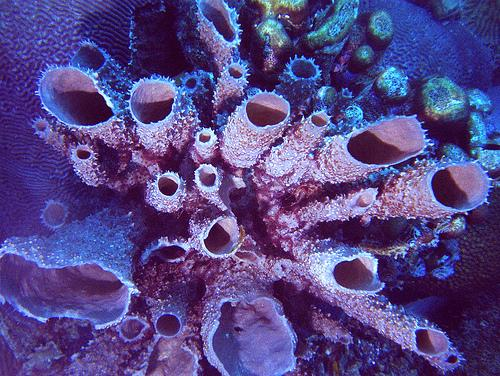
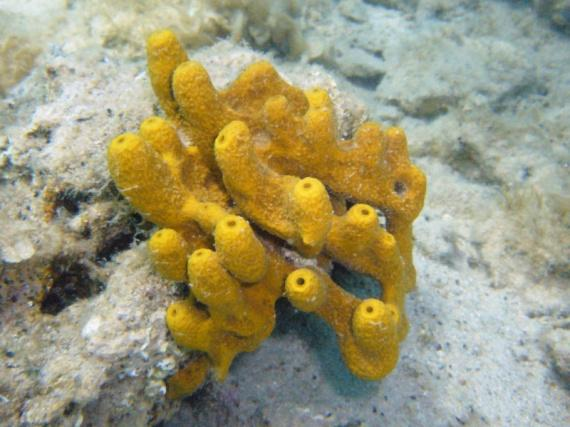
Fig: Sponges: Phylum Porifera
Note: Here are some examples of sponges with their common names and habitats:
Sycon commonly known as urn sponge / scypha.
Euspongia is known as a bath sponge.
Euplectella is known as a venus flower basket.
Cliona is commonly known as a boring sponge and they are harmful to oysters.
Leucosolenia is the smallest of all sponges.
Spongilla is seen only in freshwater sponge.
Hyalonema is known as glass rope sponge.
Complete answer:
The Olynthus is the simplest sponge that has the simplest canal system or ascon. It occurs as a temporary stage in the life-history of all calcareous syconoid sponges. In this sponge, gastrula swims and settles down on a rock with blastopore and grows there to form an Olynthus stage which looks like a little sponge.
Salient features and characteristics of phylum porifera
Phylum Porifera includes organisms with holes.
They are immobile animals attached to some solid support.
The body design involves very minimal differentiation and division in tissues.
They are asymmetrical.
Sponges have a water transport system or canal system.
Water enters through minute spores present in the body called ostia and the body wall into a central cavity known as spongocoel, from where it goes out through a big pore on the top of the body, called an osculum.
The pathway for water transport helps in food gathering, respiratory exchange and removal of wastes from the body.
Choanocytes or collar cells are also present on the line in spongocoel and the canals.
The body is supported by a skeleton which is made up of spicules or spongin fibers.
Sexes of these organisms are not separated, that is they are hermaphrodite, eggs and sperms are produced by the same individual.
Sponges reproduce asexually and sexually by fragmentation and by forming gametes respectively.
Fertilization is internal and development is indirect, having a larval stage which is
morphologically distinct from adult.
Thus, the correct answer is option C. A transitory in the life history of Sycon.
Fig: Sponges: Phylum Porifera
Note: Here are some examples of sponges with their common names and habitats:
Sycon commonly known as urn sponge / scypha.
Euspongia is known as a bath sponge.
Euplectella is known as a venus flower basket.
Cliona is commonly known as a boring sponge and they are harmful to oysters.
Leucosolenia is the smallest of all sponges.
Spongilla is seen only in freshwater sponge.
Hyalonema is known as glass rope sponge.
Recently Updated Pages
Master Class 11 Social Science: Engaging Questions & Answers for Success

Master Class 11 Physics: Engaging Questions & Answers for Success
Master Class 11 Maths: Engaging Questions & Answers for Success
Master Class 11 Economics: Engaging Questions & Answers for Success
Master Class 11 Computer Science: Engaging Questions & Answers for Success
Master Class 11 Chemistry: Engaging Questions & Answers for Success
Trending doubts
One Metric ton is equal to kg A 10000 B 1000 C 100 class 11 physics CBSE
How many bones are in the spine class 11 biology CBSE
1 Quintal is equal to a 110 kg b 10 kg c 100kg d 1000 class 11 physics CBSE
There are 720 permutations of the digits 1 2 3 4 5 class 11 maths CBSE
State and prove Bernoullis theorem class 11 physics CBSE
Difference Between Prokaryotic Cells and Eukaryotic Cells