




The pitch of DNA is 3.4nm
A. True
B. False
Answer
 Verified
632.7k+ views
Hint:
DNA: - Deoxyribose Nucleic Acid.
The famous model of DNA is known as Watson-Crick model. This model says that DNA exists as a double helix. The two strands of the polynucleotide chain are antiparallel, that is they run in opposite directions. The backbone is formed by the sugar-phosphate-sugar chain. The nitrogenous bases are projected more or less perpendicular to this backbone but face inside.
Adenine and guanine of one strand compulsory base pairs with thymine and cytosine respectively, on another strand.
Complete answer:
Each step of ascent is represented by a pair of bases.
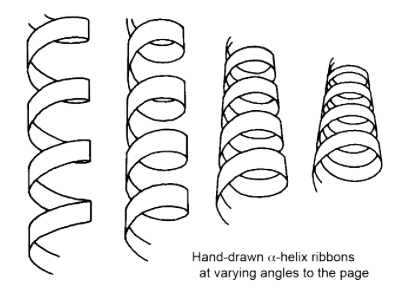
One full turn of the helical strand involves ten steps or ten base pairs. This distance is called pitch. The pitch would be 3.4 nm and the rise per base pair will be 0.34 nm.
So, this is true the option a is correct.
Note: The above stated DNA is a type B-DNA.
- Three major forms of DNA are double stranded and connected by interactions between complementary base pairs. These are terms A-form, B-form, and Z-form DNA.
- There are two types of DNA in the cell – autosomal DNA and mitochondrial DNA. Autosomal DNA (also called nuclear DNA) is packaged into 22 paired chromosomes. In each pair of autosomes, one was inherited from the mother and one was inherited from the father.
- Z-DNA is a form of DNA that has a different structure from the more common B-DNA form. It is a left handed double helix wherein the sugar-phosphate backbone has a zigzag pattern due to the alternate stacking of bases in anti-conformation and syn conformation.
DNA: - Deoxyribose Nucleic Acid.
The famous model of DNA is known as Watson-Crick model. This model says that DNA exists as a double helix. The two strands of the polynucleotide chain are antiparallel, that is they run in opposite directions. The backbone is formed by the sugar-phosphate-sugar chain. The nitrogenous bases are projected more or less perpendicular to this backbone but face inside.
Adenine and guanine of one strand compulsory base pairs with thymine and cytosine respectively, on another strand.
Complete answer:
Each step of ascent is represented by a pair of bases.
One full turn of the helical strand involves ten steps or ten base pairs. This distance is called pitch. The pitch would be 3.4 nm and the rise per base pair will be 0.34 nm.
So, this is true the option a is correct.
Note: The above stated DNA is a type B-DNA.
- Three major forms of DNA are double stranded and connected by interactions between complementary base pairs. These are terms A-form, B-form, and Z-form DNA.
- There are two types of DNA in the cell – autosomal DNA and mitochondrial DNA. Autosomal DNA (also called nuclear DNA) is packaged into 22 paired chromosomes. In each pair of autosomes, one was inherited from the mother and one was inherited from the father.
- Z-DNA is a form of DNA that has a different structure from the more common B-DNA form. It is a left handed double helix wherein the sugar-phosphate backbone has a zigzag pattern due to the alternate stacking of bases in anti-conformation and syn conformation.
Recently Updated Pages
Master Class 11 English: Engaging Questions & Answers for Success

Master Class 11 Social Science: Engaging Questions & Answers for Success
Master Class 11 Maths: Engaging Questions & Answers for Success
Master Class 11 Biology: Engaging Questions & Answers for Success
Master Class 11 Physics: Engaging Questions & Answers for Success
Master Class 11 Chemistry: Engaging Questions & Answers for Success
Trending doubts
One Metric ton is equal to kg A 10000 B 1000 C 100 class 11 physics CBSE
Difference Between Prokaryotic Cells and Eukaryotic Cells
1 ton equals to A 100 kg B 1000 kg C 10 kg D 10000 class 11 physics CBSE
Find the value of the expression given below sin 30circ class 11 maths CBSE
Two of the body parts which do not appear in MRI are class 11 biology CBSE
What are hard magnetic materials class 11 physics CBSE