




The parotid salivary glands are innervated by branches of ……………….. nerve.
(a) Vagus
(b) Spinal accessory
(c) Facial
(d) Glossopharyngeal
Answer
 Verified
600k+ views
Hint: This is a mixed nerve. This nerve innervates with taste buds, soft palate, pharynx, tongue, and muscles of the pharynx.
Complete answer:
The parotid salivary glands are innervated by branches of the glossopharyngeal nerve. This originates from the sides of the medulla oblongata. This a mixed nerve that carries afferent sensory and different motor information.
So, the correct answer is ‘Glossopharyngeal’.
Additional information:
- The tympanic branch of the glossopharyngeal nerve (IX) provides parasympathetic innervation of the parotid gland to ganglion via a petrosal nerve.
- This controls the secretion of saliva, sense of taste, and movement of the pharynx.
- Spinal accessory nerve (XI) is a motor nerve that innervates the muscles of the pharynx, larynx, neck, and shoulder. This controls the movement of these organs.
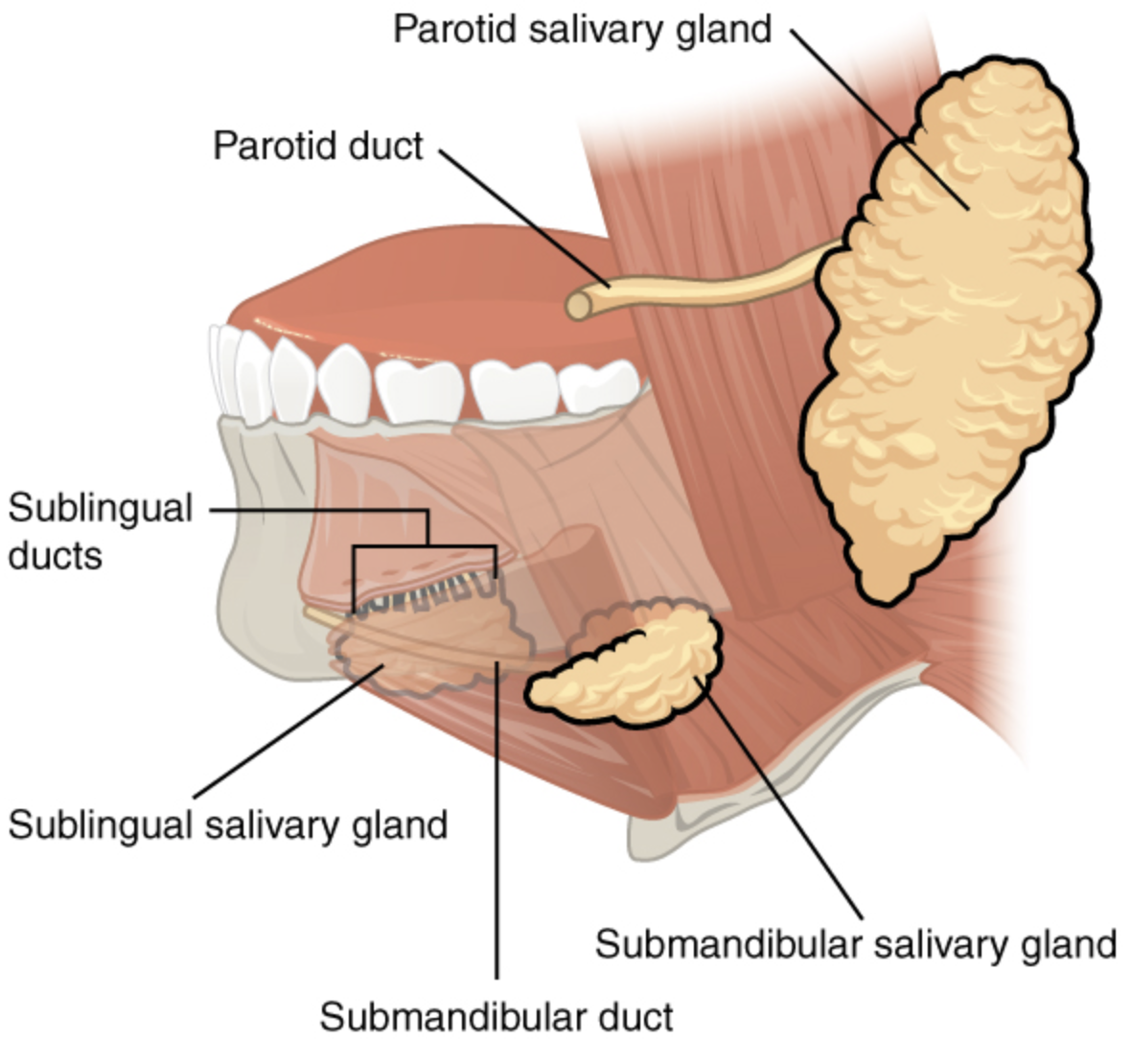
- Facial nerve (VII) is a mixed nerve. This arises from the lower part of the pons Varolii. This has anatomical relation with the parotid salivary glands. This conveys the impulses from the test buds. This nerve controls facial expression.
- Vagus nerve (X) is a mixed nerve. This nerve’s name means ‘wanderer’. This is the only cranial nerve to extend beyond the head and neck into the thorax and abdomen. This innervates the pharynx, larynx, oesophagus, stomach, heart, lungs, and intestines. This controls the visceral sensations and visceral movements.
Note:
- Parotid is the largest salivary gland among all the three salivary glands.
- Accessory nerve was formerly called the spinal accessory nerves.
- Facial nerves bear geniculate ganglion. The geniculate ganglion is a sensory ganglion of the facial nerve.
- Cranial nerves are so named because they pass through various foramina (openings) in the cranial bones.
Complete answer:
The parotid salivary glands are innervated by branches of the glossopharyngeal nerve. This originates from the sides of the medulla oblongata. This a mixed nerve that carries afferent sensory and different motor information.
So, the correct answer is ‘Glossopharyngeal’.
Additional information:
- The tympanic branch of the glossopharyngeal nerve (IX) provides parasympathetic innervation of the parotid gland to ganglion via a petrosal nerve.
- This controls the secretion of saliva, sense of taste, and movement of the pharynx.
- Spinal accessory nerve (XI) is a motor nerve that innervates the muscles of the pharynx, larynx, neck, and shoulder. This controls the movement of these organs.
- Facial nerve (VII) is a mixed nerve. This arises from the lower part of the pons Varolii. This has anatomical relation with the parotid salivary glands. This conveys the impulses from the test buds. This nerve controls facial expression.
- Vagus nerve (X) is a mixed nerve. This nerve’s name means ‘wanderer’. This is the only cranial nerve to extend beyond the head and neck into the thorax and abdomen. This innervates the pharynx, larynx, oesophagus, stomach, heart, lungs, and intestines. This controls the visceral sensations and visceral movements.
Note:
- Parotid is the largest salivary gland among all the three salivary glands.
- Accessory nerve was formerly called the spinal accessory nerves.
- Facial nerves bear geniculate ganglion. The geniculate ganglion is a sensory ganglion of the facial nerve.
- Cranial nerves are so named because they pass through various foramina (openings) in the cranial bones.
Recently Updated Pages
Master Class 11 Social Science: Engaging Questions & Answers for Success

Master Class 11 Physics: Engaging Questions & Answers for Success
Master Class 11 Maths: Engaging Questions & Answers for Success
Master Class 11 Economics: Engaging Questions & Answers for Success
Master Class 11 Computer Science: Engaging Questions & Answers for Success
Master Class 11 Chemistry: Engaging Questions & Answers for Success
Trending doubts
One Metric ton is equal to kg A 10000 B 1000 C 100 class 11 physics CBSE
There are 720 permutations of the digits 1 2 3 4 5 class 11 maths CBSE
1 Quintal is equal to a 110 kg b 10 kg c 100kg d 1000 class 11 physics CBSE
State and prove Bernoullis theorem class 11 physics CBSE
Difference Between Prokaryotic Cells and Eukaryotic Cells
Which among the following are examples of coming together class 11 social science CBSE