




What will be the order of reactivity of the following carbonyl compounds with Grignard’s reagent?
I.

II.

III.

IV.
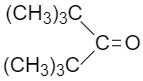
A. I > II > III > IV
B. IV > III > II > I
C. II > I > IV > III
D. III > II > I > IV
Answer
 Verified
513.9k+ views
Hint: With the increase in the alkyl group, the order of reactivity decreases. Carbonyl carbon contains a carbon atom attached to an oxygen atom by a double bond.
Grignard reaction is a type of coupling reaction and the Grignard reaction was discovered by Francois Auguste Victor Grignard.
Complete answer:
A polar carbon-magnesium bond is present in the Grignard reagent, the carbon atom carries a partial negative charge and the metal carries a partial positive charge. As in the Grignard reagent, the carbon atom has a partial negative charge, it bears a resemblance to a carbanion and reacts with electrophilic centers.
The less bulky R –group has a high rate of reaction towards the Grignard reagent. Steric hindrance of carbonyl compound is responsible for the order of reactivity of nucleophile towards the nucleophilic substitution reaction. With the increase in the alkyl group, carbonyl becomes a weak electrophile, and the order of reactivity decreases.
Formaldehyde is least bulky as compared to the other options as the carbonyl group is attached to hydrogen, In the case of Acetaldehyde, the carbonyl group is attached to hydrogen on one side and an R group on another side so acetaldehyde has a bulky group present and the rate of reaction with Grignard’s reagent for acetaldehyde is low as compared to formaldehyde.
Option IV ${(C{H_3})_3}C(CO)C{(C{H_3})_3}$ shows the least reactivity towards Grignard’s reagent because the more number of $C{H_3}$ group decreases the positive charge on carbonyl carbon by +I effect. The nucleophilic attack is favorable with a more positive charge and less hindrance at carbonyl carbon.
There the correct answer is option A.
Note:
The order of Reactivity of alkyl halide with Grignard reagent is $RI > RBr > RCl$. Greater will be the reactivity if the bond energy is low, with the decrease in size of halogen nuclear attraction towards shared electron pair increases (i.e. becomes strong bond) then there is an increase in bond energy that decreases reactivity.
Grignard reaction is a type of coupling reaction and the Grignard reaction was discovered by Francois Auguste Victor Grignard.
Complete answer:
A polar carbon-magnesium bond is present in the Grignard reagent, the carbon atom carries a partial negative charge and the metal carries a partial positive charge. As in the Grignard reagent, the carbon atom has a partial negative charge, it bears a resemblance to a carbanion and reacts with electrophilic centers.
The less bulky R –group has a high rate of reaction towards the Grignard reagent. Steric hindrance of carbonyl compound is responsible for the order of reactivity of nucleophile towards the nucleophilic substitution reaction. With the increase in the alkyl group, carbonyl becomes a weak electrophile, and the order of reactivity decreases.
Formaldehyde is least bulky as compared to the other options as the carbonyl group is attached to hydrogen, In the case of Acetaldehyde, the carbonyl group is attached to hydrogen on one side and an R group on another side so acetaldehyde has a bulky group present and the rate of reaction with Grignard’s reagent for acetaldehyde is low as compared to formaldehyde.
Option IV ${(C{H_3})_3}C(CO)C{(C{H_3})_3}$ shows the least reactivity towards Grignard’s reagent because the more number of $C{H_3}$ group decreases the positive charge on carbonyl carbon by +I effect. The nucleophilic attack is favorable with a more positive charge and less hindrance at carbonyl carbon.
There the correct answer is option A.
Note:
The order of Reactivity of alkyl halide with Grignard reagent is $RI > RBr > RCl$. Greater will be the reactivity if the bond energy is low, with the decrease in size of halogen nuclear attraction towards shared electron pair increases (i.e. becomes strong bond) then there is an increase in bond energy that decreases reactivity.
Recently Updated Pages
Master Class 11 Social Science: Engaging Questions & Answers for Success

Master Class 11 Physics: Engaging Questions & Answers for Success
Master Class 11 Maths: Engaging Questions & Answers for Success
Master Class 11 Economics: Engaging Questions & Answers for Success
Master Class 11 Computer Science: Engaging Questions & Answers for Success
Master Class 11 Chemistry: Engaging Questions & Answers for Success
Trending doubts
One Metric ton is equal to kg A 10000 B 1000 C 100 class 11 physics CBSE
There are 720 permutations of the digits 1 2 3 4 5 class 11 maths CBSE
1 Quintal is equal to a 110 kg b 10 kg c 100kg d 1000 class 11 physics CBSE
State and prove Bernoullis theorem class 11 physics CBSE
Difference Between Prokaryotic Cells and Eukaryotic Cells
Which among the following are examples of coming together class 11 social science CBSE