




The longitudinal muscular folds of inner wall of stomach are called
A. Papilla of vater
B. Rugae
C. Villi
D. Fissure
Answer
 Verified
614.1k+ views
Hint: The wall of an organ that is produced by foldings. The surface area needs more for nutritious absorption. The lining is stretched during the food to enter the stomach and expand the volume of the stomach without the increase of pressure.
Complete answer:Gastric folds provide elasticity to the stomach by expanding the bolus and stretching outward through the action of mechanoreceptors that arise due to increased pressure inside the stomach. And increased pressure helps to absorb more Nutrition inside the stomach. Esophagogastroduodenoscopy is the process in which the gastric folds can be seen. There are two types of layers present in it: the mucosa layer that is released stomach acid and present in the innermost part of the stomach. And the mucosa layer is affected by the histamine hormone that is released during the excess amount of HCL. And on the other side submucosa layer that consists of different vessels in the gastric folds such as adipose tissue, ganglion neurons, and nerves. The submucosa layer is supported by the mucosa layer. With the help of endoscopy, we can observe the thickness of the gastric folds such as gastritis, peptic ulcer disease, menetrier disease, and carcinoma.
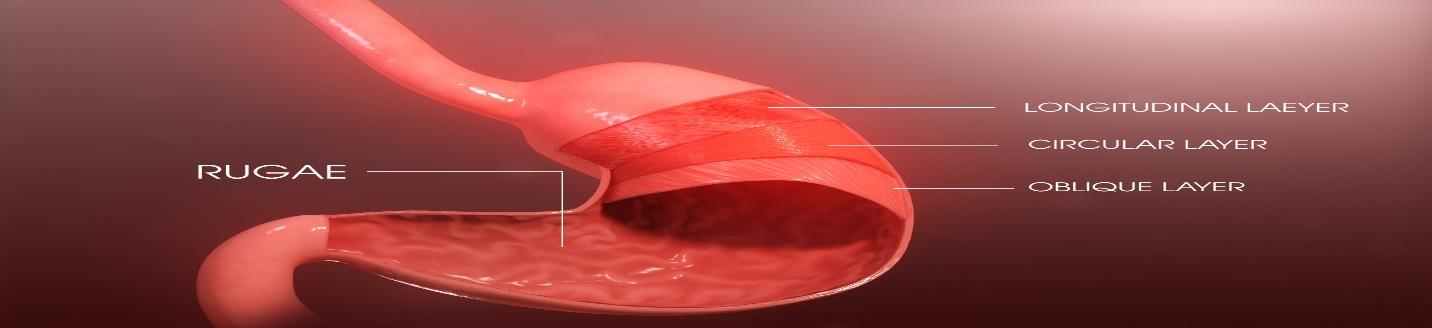
Therefore the correct option is (B).
Note: The inner layer of the stomach that is completely full of gastric folds and allows the stomach stretch in according to the digestion of meal known as the rugae. The submucosal and mucosal layer of the stomach are coiled with tissues also called gastric rugae or gastric folds.
Complete answer:Gastric folds provide elasticity to the stomach by expanding the bolus and stretching outward through the action of mechanoreceptors that arise due to increased pressure inside the stomach. And increased pressure helps to absorb more Nutrition inside the stomach. Esophagogastroduodenoscopy is the process in which the gastric folds can be seen. There are two types of layers present in it: the mucosa layer that is released stomach acid and present in the innermost part of the stomach. And the mucosa layer is affected by the histamine hormone that is released during the excess amount of HCL. And on the other side submucosa layer that consists of different vessels in the gastric folds such as adipose tissue, ganglion neurons, and nerves. The submucosa layer is supported by the mucosa layer. With the help of endoscopy, we can observe the thickness of the gastric folds such as gastritis, peptic ulcer disease, menetrier disease, and carcinoma.
Therefore the correct option is (B).
Note: The inner layer of the stomach that is completely full of gastric folds and allows the stomach stretch in according to the digestion of meal known as the rugae. The submucosal and mucosal layer of the stomach are coiled with tissues also called gastric rugae or gastric folds.
Recently Updated Pages
Master Class 12 Economics: Engaging Questions & Answers for Success

Master Class 12 English: Engaging Questions & Answers for Success
Master Class 12 Social Science: Engaging Questions & Answers for Success
Master Class 12 Maths: Engaging Questions & Answers for Success
Master Class 12 Physics: Engaging Questions & Answers for Success
Master Class 11 Social Science: Engaging Questions & Answers for Success
Trending doubts
One Metric ton is equal to kg A 10000 B 1000 C 100 class 11 physics CBSE
Difference Between Prokaryotic Cells and Eukaryotic Cells
Find the value of the expression given below sin 30circ class 11 maths CBSE
Two of the body parts which do not appear in MRI are class 11 biology CBSE
1 ton equals to A 100 kg B 1000 kg C 10 kg D 10000 class 11 physics CBSE
Draw a diagram of nephron and explain its structur class 11 biology CBSE