




The human alimentary canal is …………………..long.
Answer
 Verified
571.2k+ views
Hint: An alimentary canal is a pathway through which the food enters into the body and the solid wastes get expelled. It consists of various parts which function differently and constitutes the process of digestion.
Complete answer:
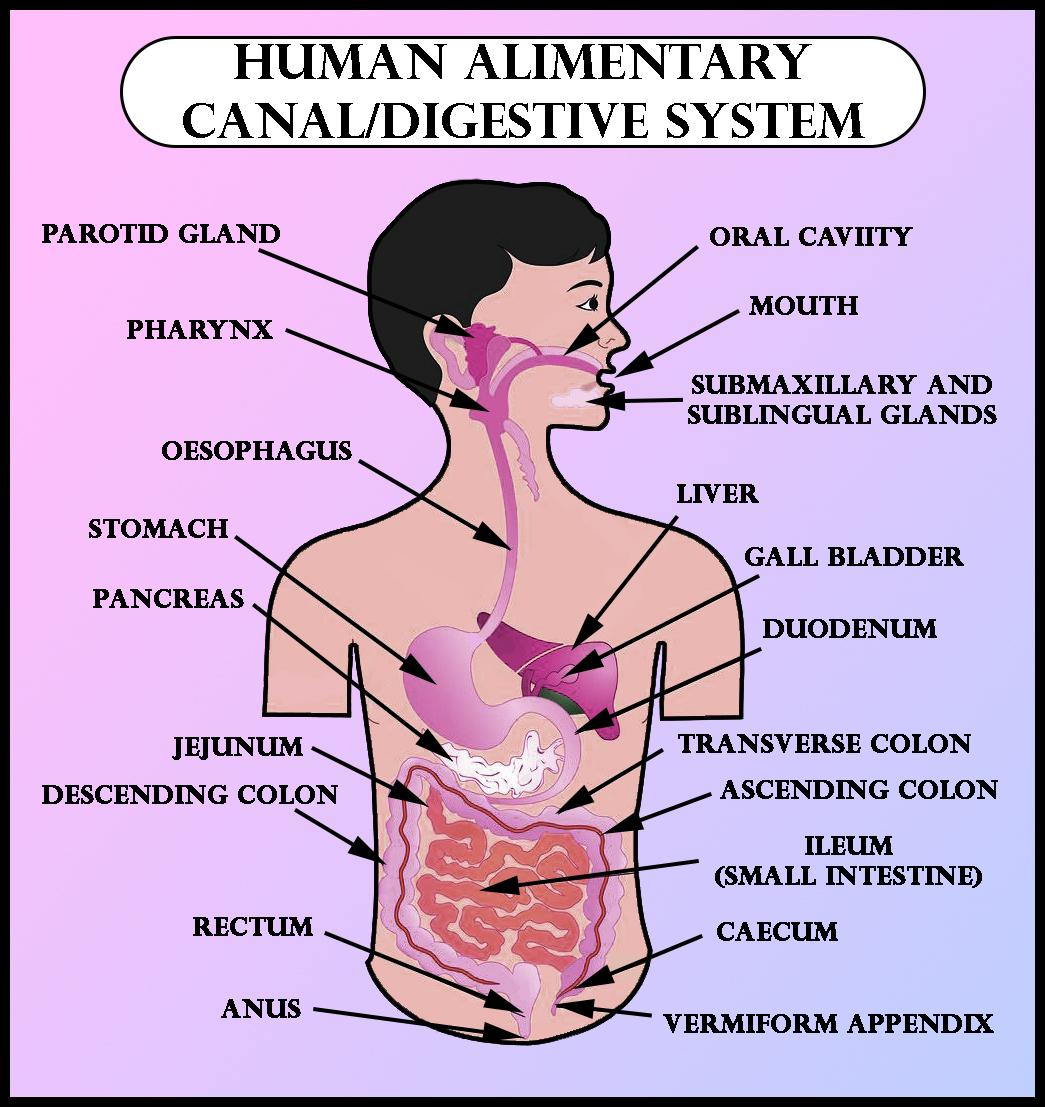
The length of the human alimentary canal is 6-9 meters. An alimentary canal is a long tube through which the food is taken into the body and gets digested. It is a long passage or the digestive tract which starts from the mouth to the anus. It involves the process of digestion which is the breaking down of large food particles into the smaller ones with the water-soluble particle that can be easily absorbed by the blood plasma. The uptake and digestion of food with the process of elimination takes place inside the alimentary canal and it plays an important role in the human digestion and is termed as the digestive tract. It consists of the mouth or the oral cavity, pharynx, esophagus, stomach, small intestine, and large intestine followed by the anus. The first part of the digestive system includes the mouth through which the food is ingested and the food is passed through the common passage for air and food which is the pharynx that consists of epiglottis which prevents the entry of food into the windpipe. The stomach is positioned at the upper left part of the abdominal cavity which is divided into four regions that include the cardiac part, fundus, body, and pyloric sphincter. It is followed by the longest part of the alimentary canal which is the small intestine that comprises three parts which are the duodenum, jejunum, and ileum. The large intestine constitutes three parts which is the caecum, colon, and rectum which opens into the anus.
Additional information:
The food is passed into the stomach which is located below the diaphragm and the cardiac stomach is connected with the esophagus which is guarded by the cardiac sphincter and prevents the food acid from the stomach from a renter into the esophagus. The middle part of the stomach is the fundus and the pyloric stomach is connected with the duodenum which is guarded by the pyloric sphincter that prevents the food from the duodenum from entering the stomach. The small intestine is coiled and folded and the chyme from the stomach is pushed into the duodenum and The breakdown of food occurs in the small intestine. The undigested material is passed into the colon in the long intestine and it is stored in the rectum as fecal matters temporarily. This undigested food leaves the body through the anus by the process of egestion or defecation.
So, the correct answer is '6-9 m'.
Note:
About 2 pints of saliva is produced by an average human every day which is equal to about two cans of soda. The small intestine is 22-23 feet long whereas the long intestine is about five feet long only.
Complete answer:
The length of the human alimentary canal is 6-9 meters. An alimentary canal is a long tube through which the food is taken into the body and gets digested. It is a long passage or the digestive tract which starts from the mouth to the anus. It involves the process of digestion which is the breaking down of large food particles into the smaller ones with the water-soluble particle that can be easily absorbed by the blood plasma. The uptake and digestion of food with the process of elimination takes place inside the alimentary canal and it plays an important role in the human digestion and is termed as the digestive tract. It consists of the mouth or the oral cavity, pharynx, esophagus, stomach, small intestine, and large intestine followed by the anus. The first part of the digestive system includes the mouth through which the food is ingested and the food is passed through the common passage for air and food which is the pharynx that consists of epiglottis which prevents the entry of food into the windpipe. The stomach is positioned at the upper left part of the abdominal cavity which is divided into four regions that include the cardiac part, fundus, body, and pyloric sphincter. It is followed by the longest part of the alimentary canal which is the small intestine that comprises three parts which are the duodenum, jejunum, and ileum. The large intestine constitutes three parts which is the caecum, colon, and rectum which opens into the anus.
Additional information:
The food is passed into the stomach which is located below the diaphragm and the cardiac stomach is connected with the esophagus which is guarded by the cardiac sphincter and prevents the food acid from the stomach from a renter into the esophagus. The middle part of the stomach is the fundus and the pyloric stomach is connected with the duodenum which is guarded by the pyloric sphincter that prevents the food from the duodenum from entering the stomach. The small intestine is coiled and folded and the chyme from the stomach is pushed into the duodenum and The breakdown of food occurs in the small intestine. The undigested material is passed into the colon in the long intestine and it is stored in the rectum as fecal matters temporarily. This undigested food leaves the body through the anus by the process of egestion or defecation.
So, the correct answer is '6-9 m'.
Note:
About 2 pints of saliva is produced by an average human every day which is equal to about two cans of soda. The small intestine is 22-23 feet long whereas the long intestine is about five feet long only.
Recently Updated Pages
Master Class 12 Economics: Engaging Questions & Answers for Success

Master Class 12 English: Engaging Questions & Answers for Success
Master Class 12 Social Science: Engaging Questions & Answers for Success
Master Class 12 Maths: Engaging Questions & Answers for Success
Master Class 12 Physics: Engaging Questions & Answers for Success
Master Class 11 Social Science: Engaging Questions & Answers for Success
Trending doubts
One Metric ton is equal to kg A 10000 B 1000 C 100 class 11 physics CBSE
Difference Between Prokaryotic Cells and Eukaryotic Cells
Find the value of the expression given below sin 30circ class 11 maths CBSE
Two of the body parts which do not appear in MRI are class 11 biology CBSE
Draw a diagram of nephron and explain its structur class 11 biology CBSE
10 examples of friction in our daily life