



The green color of leaves is due to the presence of the pigment
(A)Chlorophyll
(B)Ribosomes
(C)Mitochondria
(D)Chloroplast
Answer
 Verified
633.6k+ views
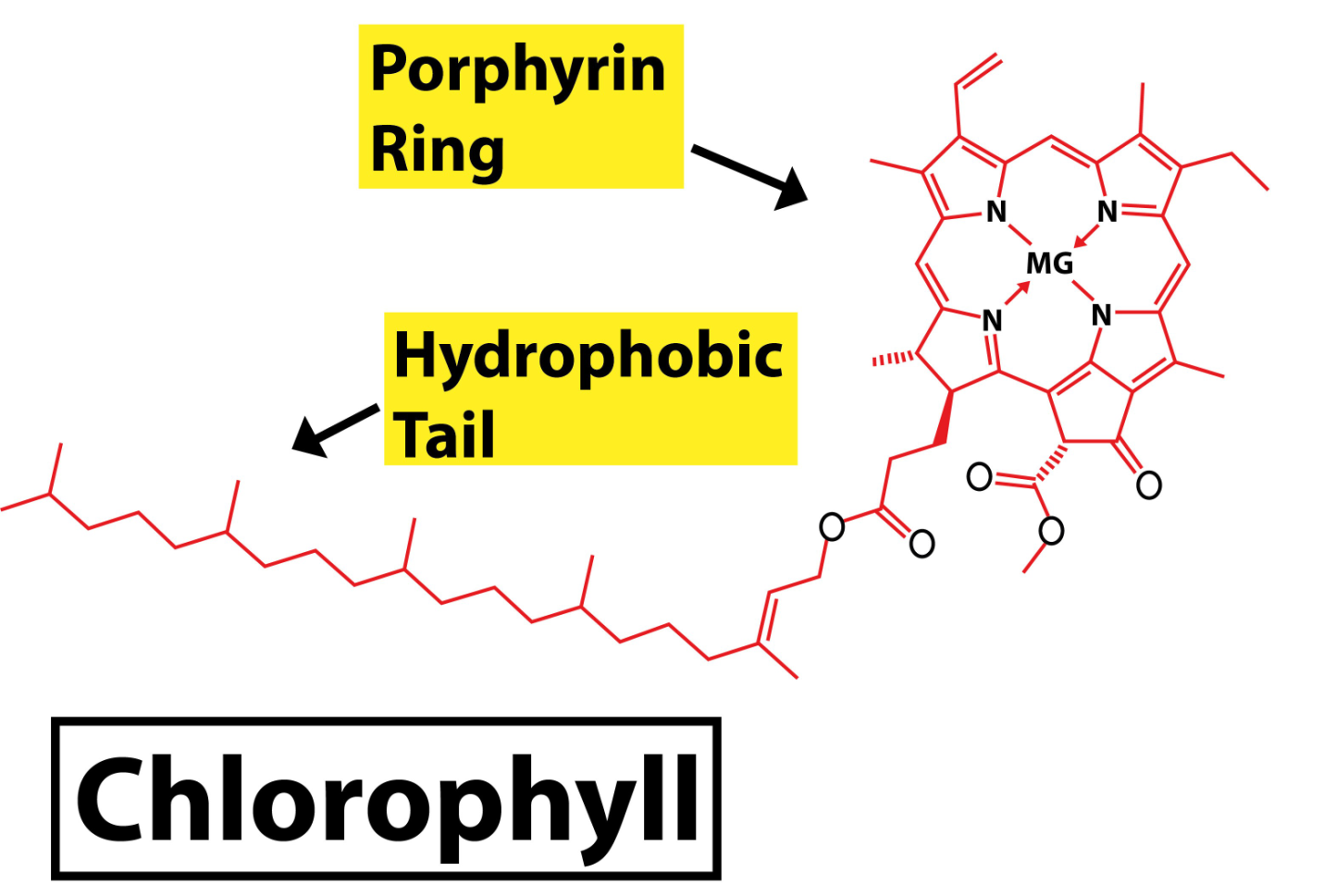
Hint: The green color of leaves is due to the presence of the pigment which has a molecular formula of ${ C }_{ 55 }{ H }_{ 72 }{ O }_{ 5 }{ N }_{ 4 }{ Mg }$. This pigment was first isolated and named by Joseph Bienaimé Caventou and Pierre Joseph Pelletier in 1817.
Complete answer:
The green color of leaves is due to the presence of the pigment Chlorophyll. Chlorophyll is important in photosynthesis, allowing plants to absorb energy from light.
Chlorophyll pigment absorbs light most strongly within the blue portion of the spectrum as well as the red portion.
Additional Information: Chlorophyll is a very important pigment for photosynthesis, which allows plants to absorb energy from light. The chlorophyll molecules are usually arranged in and even around photosystems that are embedded within the thylakoid membranes of the chloroplasts. In these complexes, chlorophyll serves three types of functions.
The function of the chlorophyll (which is present up to many hundred molecules per photosystem) is to absorb light. These same centers execute their second function: the transfer of that light energy by resonance energy transfer to a selected chlorophyll pair within the reaction center of the photosystems. This pair has the effect of the ultimate function of chlorophylls, charge separation, resulting in biosynthesis.
So, the correct answer is ‘Chlorophyll’.
Note: There are four types of chlorophyll present. They are -
-chlorophyll-a, which is found in all higher plants, algae, and cyanobacteria;
-chlorophyll b, which is found in higher plants and green algae;
-chlorophyll c, which is found in diatoms, dinoflagellates, and brown algae; and
-chlorophyll d, which is found only in red algae.
Complete answer:
The green color of leaves is due to the presence of the pigment Chlorophyll. Chlorophyll is important in photosynthesis, allowing plants to absorb energy from light.
Chlorophyll pigment absorbs light most strongly within the blue portion of the spectrum as well as the red portion.
Additional Information: Chlorophyll is a very important pigment for photosynthesis, which allows plants to absorb energy from light. The chlorophyll molecules are usually arranged in and even around photosystems that are embedded within the thylakoid membranes of the chloroplasts. In these complexes, chlorophyll serves three types of functions.
The function of the chlorophyll (which is present up to many hundred molecules per photosystem) is to absorb light. These same centers execute their second function: the transfer of that light energy by resonance energy transfer to a selected chlorophyll pair within the reaction center of the photosystems. This pair has the effect of the ultimate function of chlorophylls, charge separation, resulting in biosynthesis.
So, the correct answer is ‘Chlorophyll’.
Note: There are four types of chlorophyll present. They are -
-chlorophyll-a, which is found in all higher plants, algae, and cyanobacteria;
-chlorophyll b, which is found in higher plants and green algae;
-chlorophyll c, which is found in diatoms, dinoflagellates, and brown algae; and
-chlorophyll d, which is found only in red algae.
Recently Updated Pages
Master Class 11 Social Science: Engaging Questions & Answers for Success

Master Class 11 English: Engaging Questions & Answers for Success
Master Class 11 Accountancy: Engaging Questions & Answers for Success
Master Class 11 Physics: Engaging Questions & Answers for Success
Master Class 11 Computer Science: Engaging Questions & Answers for Success
Master Class 11 Business Studies: Engaging Questions & Answers for Success
Trending doubts
Find the value of the expression given below sin 30circ class 11 maths CBSE
One Metric ton is equal to kg A 10000 B 1000 C 100 class 11 physics CBSE
Draw a diagram of nephron and explain its structur class 11 biology CBSE
10 examples of friction in our daily life
Proton was discovered by A Thomson B Rutherford C Chadwick class 11 chemistry CBSE
The teeth used for biting and cutting food are called class 11 biology CBSE