




The fourth whorl of the flower is called
(a)Sepals
(b)Petals
(c)Stamens
(d)Carpels
Answer
 Verified
619.5k+ views
Hint: The whorl is also known as megasporophyll and is a unit of the female reproductive part of the plant that produces ovules. It is the innermost whorl of a flower.
Complete step-by-step answer:
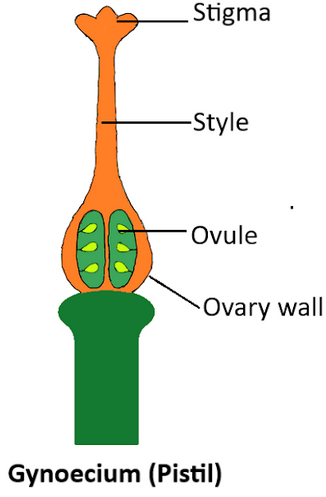
The gynoecium is the fourth whorl of a flower. A unit gynoecium is known as carpel. A carpel contains three different parts, which are ovary, style, and stigma. The gynoecium is the female reproductive organ of a plant. It holds the ovary, which is transformed into fruit after fertilization. The ovule within the ovary is modified into a seed.
Additional Information: -Some features of the calyx are:
1. The outermost whorl of the flower is called the calyx.
2. A calyx is a group of sepals
3. Calyx helps in attracting insects for pollination when it becomes colored or start producing nectar.
4. The main purpose of sepals is the protection of flowers in bud condition.
5. When calyx is free then it is called polysepalous and when they are united then they are called gamosepalous.
-Some features of the corolla are:
1. Corolla is the second whorl of the plant and is present inner to the calyx.
2. Corolla protects the male and female reproductive organs of the flower, which are stamen and carpels.
3. Petals are brightly colored due to the presence of chromoplasts in cells, and help in attracting insects for pollination.
4. When petals are green colored, they are called sepaloid.
- Some features about androecium
1. The androecium is the third whorl of the plant.
2. The anther contains pollen grains that dehiscence and help in reproduction.
3. The two anther lobes are connected via connective.
-A flower is a highly modified shoot and its main purpose is sexual reproduction
-When two outer accessory whorls are not divided into sepals and petals, they are called as perianth.
So, the correct answer is, ‘carpels.’
Note: Carpels are also known as pistil and the ovary is the basal swollen portion of the pistil and the wall of the ovary after fertilization is known as pericarp. Carpels are the innermost whorls of flowers.
Complete step-by-step answer:
The gynoecium is the fourth whorl of a flower. A unit gynoecium is known as carpel. A carpel contains three different parts, which are ovary, style, and stigma. The gynoecium is the female reproductive organ of a plant. It holds the ovary, which is transformed into fruit after fertilization. The ovule within the ovary is modified into a seed.
Additional Information: -Some features of the calyx are:
1. The outermost whorl of the flower is called the calyx.
2. A calyx is a group of sepals
3. Calyx helps in attracting insects for pollination when it becomes colored or start producing nectar.
4. The main purpose of sepals is the protection of flowers in bud condition.
5. When calyx is free then it is called polysepalous and when they are united then they are called gamosepalous.
-Some features of the corolla are:
1. Corolla is the second whorl of the plant and is present inner to the calyx.
2. Corolla protects the male and female reproductive organs of the flower, which are stamen and carpels.
3. Petals are brightly colored due to the presence of chromoplasts in cells, and help in attracting insects for pollination.
4. When petals are green colored, they are called sepaloid.
- Some features about androecium
1. The androecium is the third whorl of the plant.
2. The anther contains pollen grains that dehiscence and help in reproduction.
3. The two anther lobes are connected via connective.
-A flower is a highly modified shoot and its main purpose is sexual reproduction
-When two outer accessory whorls are not divided into sepals and petals, they are called as perianth.
So, the correct answer is, ‘carpels.’
Note: Carpels are also known as pistil and the ovary is the basal swollen portion of the pistil and the wall of the ovary after fertilization is known as pericarp. Carpels are the innermost whorls of flowers.
Recently Updated Pages
Master Class 11 Social Science: Engaging Questions & Answers for Success

Master Class 11 English: Engaging Questions & Answers for Success
Master Class 11 Maths: Engaging Questions & Answers for Success
Master Class 11 Chemistry: Engaging Questions & Answers for Success
Master Class 11 Biology: Engaging Questions & Answers for Success
Class 11 Question and Answer - Your Ultimate Solutions Guide
Trending doubts
One Metric ton is equal to kg A 10000 B 1000 C 100 class 11 physics CBSE
Difference Between Prokaryotic Cells and Eukaryotic Cells
Find the value of the expression given below sin 30circ class 11 maths CBSE
1 ton equals to A 100 kg B 1000 kg C 10 kg D 10000 class 11 physics CBSE
Two of the body parts which do not appear in MRI are class 11 biology CBSE
Draw a diagram of nephron and explain its structur class 11 biology CBSE