




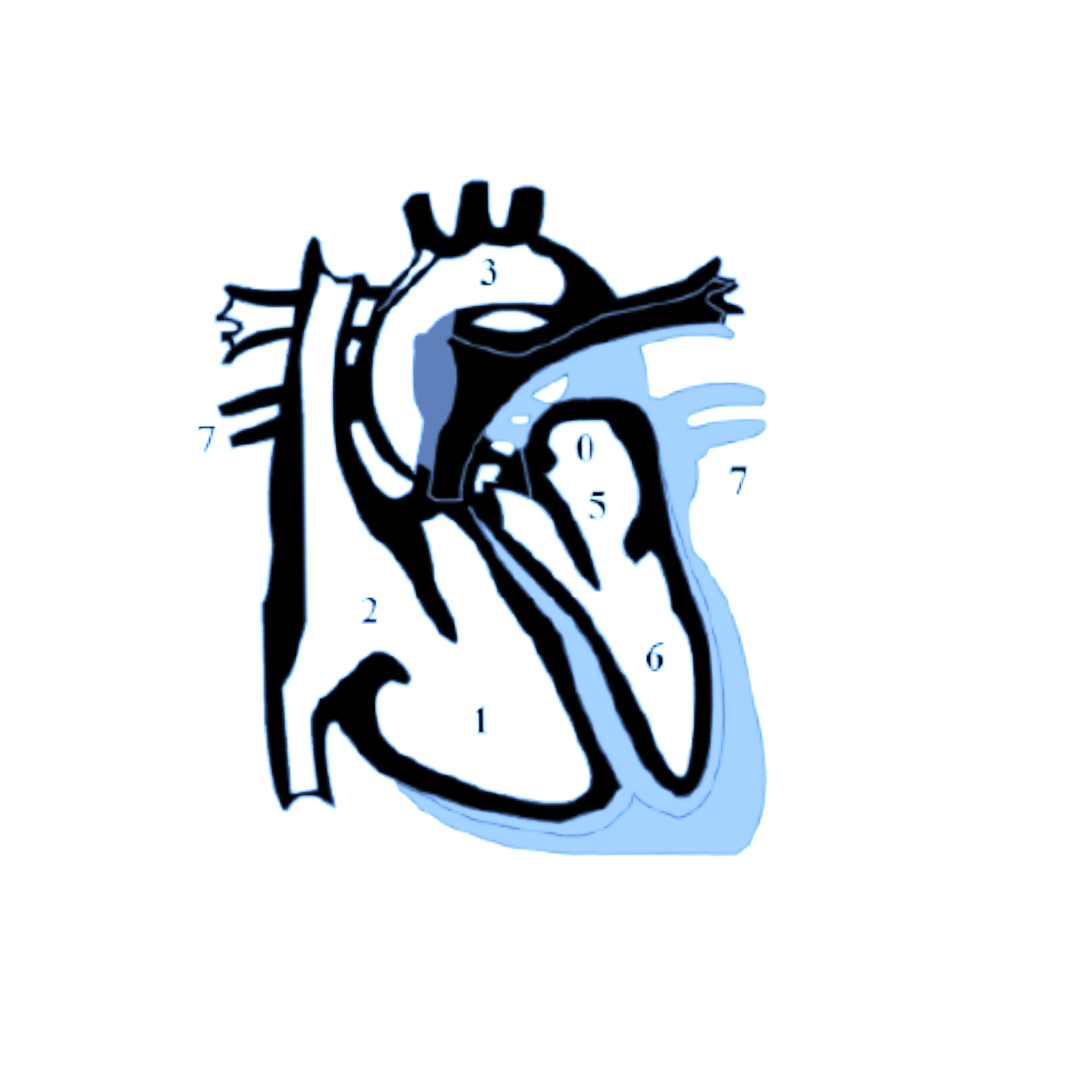
The following questions refer to the diagram of the adult human heart. Chambers or vessels that carry oxygenated blood include which of the following?
A) 3 only
B) 1 and 2 only
C) 5 and 6 only
D) 1, 2 and 3
E) 3, 5 and 6
Answer
 Verified
599.7k+ views
Hint: The human heart consists of four chambers or compartments which are: the right atrium; the right ventricle; the left atrium and the left ventricle. The blood comes into the heart via the atria(the smaller chambers) and is pumped out of the heart via the ventricles (the larger chambers).
Complete answer:
There is a total separation of deoxygenated and oxygenated blood in an adult human heart. The left side of the heart holds the oxygenated blood while the right part of the adult human heart holds the deoxygenated blood. The left auricle (5) collects oxygenated blood from the pulmonary vein. This oxygenated blood is then passed on to the left ventricle (6) which is enclosed by the mitral valve. The left ventricle pumps the oxygenated blood to the different body parts through the aorta (3). Chambers or vessels that carry oxygenated blood include The left auricle (label no. 5), the left ventricle (label no. 6), and the aorta (label no. 3).
So, the correct answer is option E.
Additional Information: The cardiac cycle is the sequence of events that includes the contraction and relaxation of the heart with each heartbeat. The small period of time when the ventricles contract and the blood is forced out into the aorta and main pulmonary artery is called the systole. While the time period during which the ventricles relax and are refilled with the blood is called diastole.
Note: Sinus rhythm or the normal resting heart rate is created and sustained by the sinoatrial node. SA node is a group of pacemaking cells which are found in the wall of the right atrium. The human adult resting heart rate can range from 60 to 100 bpm (beats per minute). The resting heart rate of a new-born can be about 129 beats per minute (bpm) and it gradually decreases up to maturity.
Complete answer:
There is a total separation of deoxygenated and oxygenated blood in an adult human heart. The left side of the heart holds the oxygenated blood while the right part of the adult human heart holds the deoxygenated blood. The left auricle (5) collects oxygenated blood from the pulmonary vein. This oxygenated blood is then passed on to the left ventricle (6) which is enclosed by the mitral valve. The left ventricle pumps the oxygenated blood to the different body parts through the aorta (3). Chambers or vessels that carry oxygenated blood include The left auricle (label no. 5), the left ventricle (label no. 6), and the aorta (label no. 3).
So, the correct answer is option E.
Additional Information: The cardiac cycle is the sequence of events that includes the contraction and relaxation of the heart with each heartbeat. The small period of time when the ventricles contract and the blood is forced out into the aorta and main pulmonary artery is called the systole. While the time period during which the ventricles relax and are refilled with the blood is called diastole.
Note: Sinus rhythm or the normal resting heart rate is created and sustained by the sinoatrial node. SA node is a group of pacemaking cells which are found in the wall of the right atrium. The human adult resting heart rate can range from 60 to 100 bpm (beats per minute). The resting heart rate of a new-born can be about 129 beats per minute (bpm) and it gradually decreases up to maturity.
Recently Updated Pages
Master Class 12 Economics: Engaging Questions & Answers for Success

Master Class 12 English: Engaging Questions & Answers for Success
Master Class 12 Social Science: Engaging Questions & Answers for Success
Master Class 12 Maths: Engaging Questions & Answers for Success
Master Class 12 Physics: Engaging Questions & Answers for Success
Master Class 9 General Knowledge: Engaging Questions & Answers for Success
Trending doubts
One Metric ton is equal to kg A 10000 B 1000 C 100 class 11 physics CBSE
Difference Between Prokaryotic Cells and Eukaryotic Cells
Two of the body parts which do not appear in MRI are class 11 biology CBSE
1 ton equals to A 100 kg B 1000 kg C 10 kg D 10000 class 11 physics CBSE
Draw a diagram of nephron and explain its structur class 11 biology CBSE
10 examples of friction in our daily life