




The blood constituents that remain unchanged in quantity, after circulating through the kidney are:
(a) Urea and glucose
(b) Glucose and proteins
(c) Urea and proteins
(d) Urea and uric acid
Answer
 Verified
574.5k+ views
Hint: They are processed in the kidney daily in a particular quantity that remains unchanged throughout. One of these constituents are composed of carbohydrates while the other is made up of amino acids.
Complete answer:
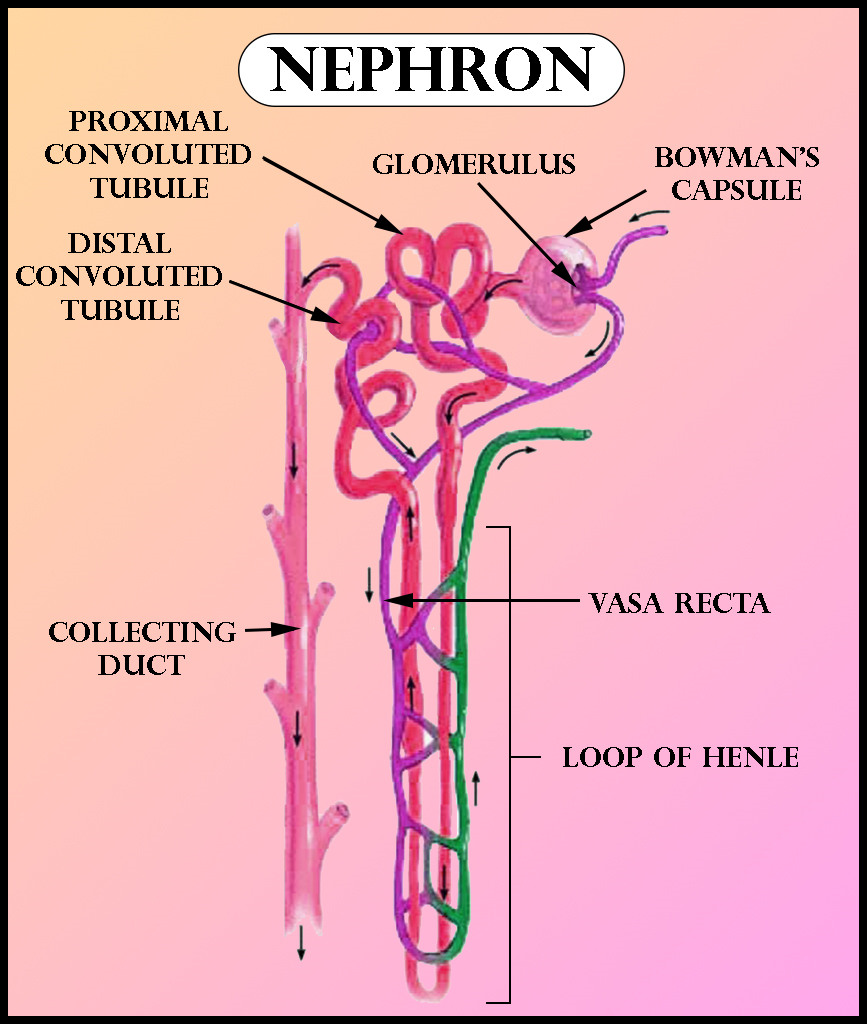
The process of diffusion of blood along with the plasma through the barrier between the glomerulus and Bowman's capsule. The red blood cells and the plasma protein cannot pass through the ultrafiltration membrane due to the presence of their big size.
The first step of urine formation is carried out in the glomerulus and hence it is known as glomerular filtration. The blood is filtered through the glomerulus which then forms the water and soluble filtrate in Bowman's capsule. The waste products include various salts, urea, and uric acid. The protein molecules are larger in size called macromolecules thus it’s difficult for them to get filtered while on the other hand glucose molecules are also completely reabsorbed in the proximal convoluted tubule and thus send back to the blood plasma. Therefore, both the proteins and the glucose molecules retain completely in the blood plasma. Then the filtrate undergoes renal circulation as it enters the renal tubule while the blood supply occurs in the glomerulus.
Every day 180 liters of filtrate are formed in the kidneys but only 1.5 liters of urine are released out from the body. This is because our body has mechanisms to reduce the amount of water loss through urine. This is important because if 180 liters of water were to be lost from our body each day, then we would have to constantly keep drinking water to make up for the water loss. Urine is concentrated by tubular reabsorption in which the renal tubules absorb up to $99\%$ of the filtrate formed. Substances like glucose, amino acids, sodium ions are actively absorbed whereas nitrogenous wastes like urea are passively diffused back.
So, the correct answer is ‘Glucose and proteins’.
Note:
70-$80\%$ of reabsorption of all electrolytes and water occurs in the proximal convoluted tubule (PCT) of the nephron. The amount of urine formed is less than the amount of filtrate formed because the most amount of the filtrate ($99\%$) is reabsorbed by the renal tubules through active and passive transport.
Complete answer:
The process of diffusion of blood along with the plasma through the barrier between the glomerulus and Bowman's capsule. The red blood cells and the plasma protein cannot pass through the ultrafiltration membrane due to the presence of their big size.
The first step of urine formation is carried out in the glomerulus and hence it is known as glomerular filtration. The blood is filtered through the glomerulus which then forms the water and soluble filtrate in Bowman's capsule. The waste products include various salts, urea, and uric acid. The protein molecules are larger in size called macromolecules thus it’s difficult for them to get filtered while on the other hand glucose molecules are also completely reabsorbed in the proximal convoluted tubule and thus send back to the blood plasma. Therefore, both the proteins and the glucose molecules retain completely in the blood plasma. Then the filtrate undergoes renal circulation as it enters the renal tubule while the blood supply occurs in the glomerulus.
Every day 180 liters of filtrate are formed in the kidneys but only 1.5 liters of urine are released out from the body. This is because our body has mechanisms to reduce the amount of water loss through urine. This is important because if 180 liters of water were to be lost from our body each day, then we would have to constantly keep drinking water to make up for the water loss. Urine is concentrated by tubular reabsorption in which the renal tubules absorb up to $99\%$ of the filtrate formed. Substances like glucose, amino acids, sodium ions are actively absorbed whereas nitrogenous wastes like urea are passively diffused back.
So, the correct answer is ‘Glucose and proteins’.
Note:
70-$80\%$ of reabsorption of all electrolytes and water occurs in the proximal convoluted tubule (PCT) of the nephron. The amount of urine formed is less than the amount of filtrate formed because the most amount of the filtrate ($99\%$) is reabsorbed by the renal tubules through active and passive transport.
Recently Updated Pages
Master Class 12 Economics: Engaging Questions & Answers for Success

Master Class 12 English: Engaging Questions & Answers for Success
Master Class 12 Social Science: Engaging Questions & Answers for Success
Master Class 12 Maths: Engaging Questions & Answers for Success
Master Class 12 Physics: Engaging Questions & Answers for Success
Master Class 11 Social Science: Engaging Questions & Answers for Success
Trending doubts
One Metric ton is equal to kg A 10000 B 1000 C 100 class 11 physics CBSE
Difference Between Prokaryotic Cells and Eukaryotic Cells
Find the value of the expression given below sin 30circ class 11 maths CBSE
Two of the body parts which do not appear in MRI are class 11 biology CBSE
1 ton equals to A 100 kg B 1000 kg C 10 kg D 10000 class 11 physics CBSE
Draw a diagram of nephron and explain its structur class 11 biology CBSE