




The amino ketone shown undergoes a spontaneous cyclization on standing. What is the major product of this intramolecular reaction?
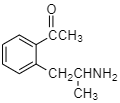
A.
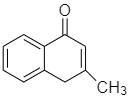
B.
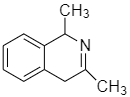
C.
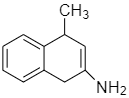
D.
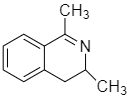
Answer
 Verified
539.7k+ views
Hint: Organic compounds that carry an amine functional group, as well as ketone functional group, are known as Aminoketone and Cyclization is any reaction that brings about the formation of a ring.
A reaction between two or more atoms in the same reactant molecule is involved in an intramolecular reaction but covalency changes occur in two separate molecules in an intermolecular reaction. Intramolecular reaction particularly leads to the formation of 5 and 6 membered rings and are quick in contrast to an analogous intermolecular process.
Complete Step By Step Answer:
Step 1: Amino ketone undergoes intramolecular reaction and thus leading to cyclization when the electron-withdrawing draws the electron from the carbon atom (carbon atom that is attached to benzene and O) thereby making a carbocation which is further attacked by the lone pair of the nitrogen atom.

After the first step, the product obtained is shown in the given below figure.

Step 2: Now the hydrogen atom is released by $ NH_2^ \oplus $ while this released hydrogen atom is accepted by the $ {O^ - } $ atom forming $ OH $ .
The product obtained from step 2 is as follows:
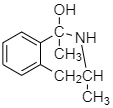
Now, this product again repeats step 1 leading to the formation of
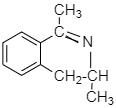
Therefore the correct answer is option D.
Note:
For 3 and 4 members, at the transition state, the slow rate is an outcome of angle strain. Even if 3 membered rings are more strained, aziridine formation is faster than azetidine formation because of the proximity of the nucleophile and leaving group that increases the probability to meet in a reactive conformation.
A reaction between two or more atoms in the same reactant molecule is involved in an intramolecular reaction but covalency changes occur in two separate molecules in an intermolecular reaction. Intramolecular reaction particularly leads to the formation of 5 and 6 membered rings and are quick in contrast to an analogous intermolecular process.
Complete Step By Step Answer:
Step 1: Amino ketone undergoes intramolecular reaction and thus leading to cyclization when the electron-withdrawing draws the electron from the carbon atom (carbon atom that is attached to benzene and O) thereby making a carbocation which is further attacked by the lone pair of the nitrogen atom.
After the first step, the product obtained is shown in the given below figure.
Step 2: Now the hydrogen atom is released by $ NH_2^ \oplus $ while this released hydrogen atom is accepted by the $ {O^ - } $ atom forming $ OH $ .
The product obtained from step 2 is as follows:
Now, this product again repeats step 1 leading to the formation of
Therefore the correct answer is option D.
Note:
For 3 and 4 members, at the transition state, the slow rate is an outcome of angle strain. Even if 3 membered rings are more strained, aziridine formation is faster than azetidine formation because of the proximity of the nucleophile and leaving group that increases the probability to meet in a reactive conformation.
Recently Updated Pages
Master Class 11 English: Engaging Questions & Answers for Success

Master Class 11 Social Science: Engaging Questions & Answers for Success
Master Class 11 Maths: Engaging Questions & Answers for Success
Master Class 11 Biology: Engaging Questions & Answers for Success
Master Class 11 Physics: Engaging Questions & Answers for Success
Master Class 11 Chemistry: Engaging Questions & Answers for Success
Trending doubts
One Metric ton is equal to kg A 10000 B 1000 C 100 class 11 physics CBSE
What is cell theory Who formulated it class 11 biology CBSE
Phyllotaxy is the arrangement of ALeaflets BLeaves class 11 biology CBSE
Difference Between Prokaryotic Cells and Eukaryotic Cells
The symbiotic association of fungi and algae is called class 11 biology CBSE
Cell theory was formulated by A Schleiden and Schwann class 11 biology CBSE