




The adjoining diagram shows the view through the eyepiece of a prism spectrometer with its slit illuminated by the source of light emitting three wavelengths corresponding to yellow (Y), Green (G) and unknown color (X). The color at X may be:

A) Red
B) Orange
C) Pink
D) Blue
Answer
 Verified
590.1k+ views
Hint:The sequence of a prism spectrometer or the spectrum is violet, indigo, blue, green, yellow, orange, red, or (VIBGYOR). Following the sequence we can say that it must be violet, indigo, or blue. Options help us find the solution.
Step by step solution:
Step 1:
The refractive index of many materials (such as glass) varies with the wavelength or color of the light used, a phenomenon known as dispersion. This causes light of different colors to be refracted differently and to leave the prism at different angles, creating an effect similar to a rainbow.
A prism spectrometer may be used to measure the refractive index of a material if the wavelengths of the light used are known. The calibration of a prism spectrometer is carried out with known spectral lines from vapor lamps or laser light.
Step 2:
Before answering we need to know about the sequence of spectrums.
Most light sources can be classified into three main types: continuous, absorption, and emission. A hot, opaque object, like the filament in an incandescent light bulb, emits a continuous spectrum, having light of all wavelengths. The lines occur where atoms of the gas have absorbed specific wavelengths of light.
To understand the spectrum we have an image of it.
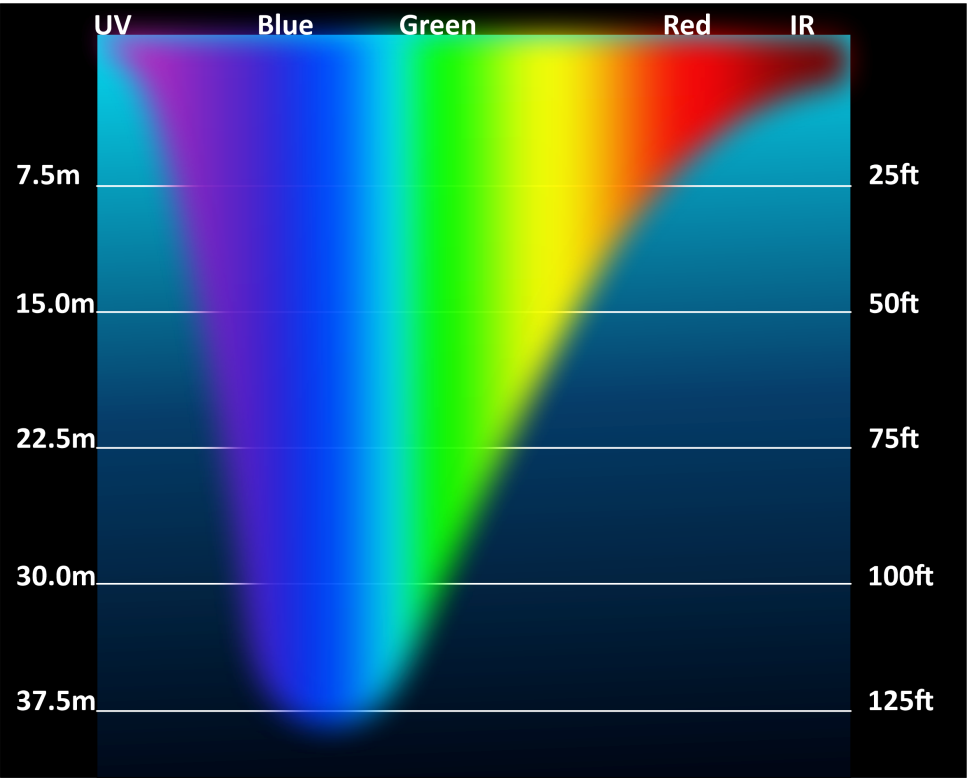
VIBGYOR (Violet–Indigo–Blue–Green–Yellow–Orange–Red) is a popular mnemonic device used for memorizing the traditional optical spectrum
The sequence of colors in the spectrum is violet, indigo, blue, green, and yellow, orange, red.
From the options, the only possible color of X is blue
Hence option C is correct.
Note:
The common way to remember it is the rainbow we see during the sunlight and rain. It causes total internal reflection in the droplets of rain. The pattern may consist of VIBGYOR or ROYGBIV. Just read the question carefully and the answer will be simple to do.
Step by step solution:
Step 1:
The refractive index of many materials (such as glass) varies with the wavelength or color of the light used, a phenomenon known as dispersion. This causes light of different colors to be refracted differently and to leave the prism at different angles, creating an effect similar to a rainbow.
A prism spectrometer may be used to measure the refractive index of a material if the wavelengths of the light used are known. The calibration of a prism spectrometer is carried out with known spectral lines from vapor lamps or laser light.
Step 2:
Before answering we need to know about the sequence of spectrums.
Most light sources can be classified into three main types: continuous, absorption, and emission. A hot, opaque object, like the filament in an incandescent light bulb, emits a continuous spectrum, having light of all wavelengths. The lines occur where atoms of the gas have absorbed specific wavelengths of light.
To understand the spectrum we have an image of it.
VIBGYOR (Violet–Indigo–Blue–Green–Yellow–Orange–Red) is a popular mnemonic device used for memorizing the traditional optical spectrum
The sequence of colors in the spectrum is violet, indigo, blue, green, and yellow, orange, red.
From the options, the only possible color of X is blue
Hence option C is correct.
Note:
The common way to remember it is the rainbow we see during the sunlight and rain. It causes total internal reflection in the droplets of rain. The pattern may consist of VIBGYOR or ROYGBIV. Just read the question carefully and the answer will be simple to do.
Recently Updated Pages
Basicity of sulphurous acid and sulphuric acid are

Master Class 12 English: Engaging Questions & Answers for Success
Master Class 12 Social Science: Engaging Questions & Answers for Success
Master Class 12 Maths: Engaging Questions & Answers for Success
Master Class 12 Economics: Engaging Questions & Answers for Success
Master Class 12 Physics: Engaging Questions & Answers for Success
Trending doubts
Which are the Top 10 Largest Countries of the World?
Draw a labelled sketch of the human eye class 12 physics CBSE
Draw ray diagrams each showing i myopic eye and ii class 12 physics CBSE
Give 10 examples of unisexual and bisexual flowers
Give simple chemical tests to distinguish between the class 12 chemistry CBSE
Define Vant Hoff factor How is it related to the degree class 12 chemistry CBSE