




The 5th cranial nerve of a frog is called
(a) Optic nerve
(b) Vagus nerve
(c) Trigeminal nerve
(d) Olfactory nerve
Answer
 Verified
608.4k+ views
Hint: Frog's nervous system contains 10 pairs of cranial nerves that serve different purposes. These past direct messages from the outside to the brain. With the cranial ones, they also have 10 pairs of spinal nerves to pass information through the spinal cord.
Complete step by step answer:
The fifth cranial nerve of the frog is called the trigeminal nerve which arises from the lateral side of the medulla. The vagus is the 10th cranial nerve and regulates respiration and heart rate and digestive activities. The second nerve is known as the optic which is used for bringing the secondary message from the nose. The first sensory nerve Olfactory brings the message of smell to the nose.
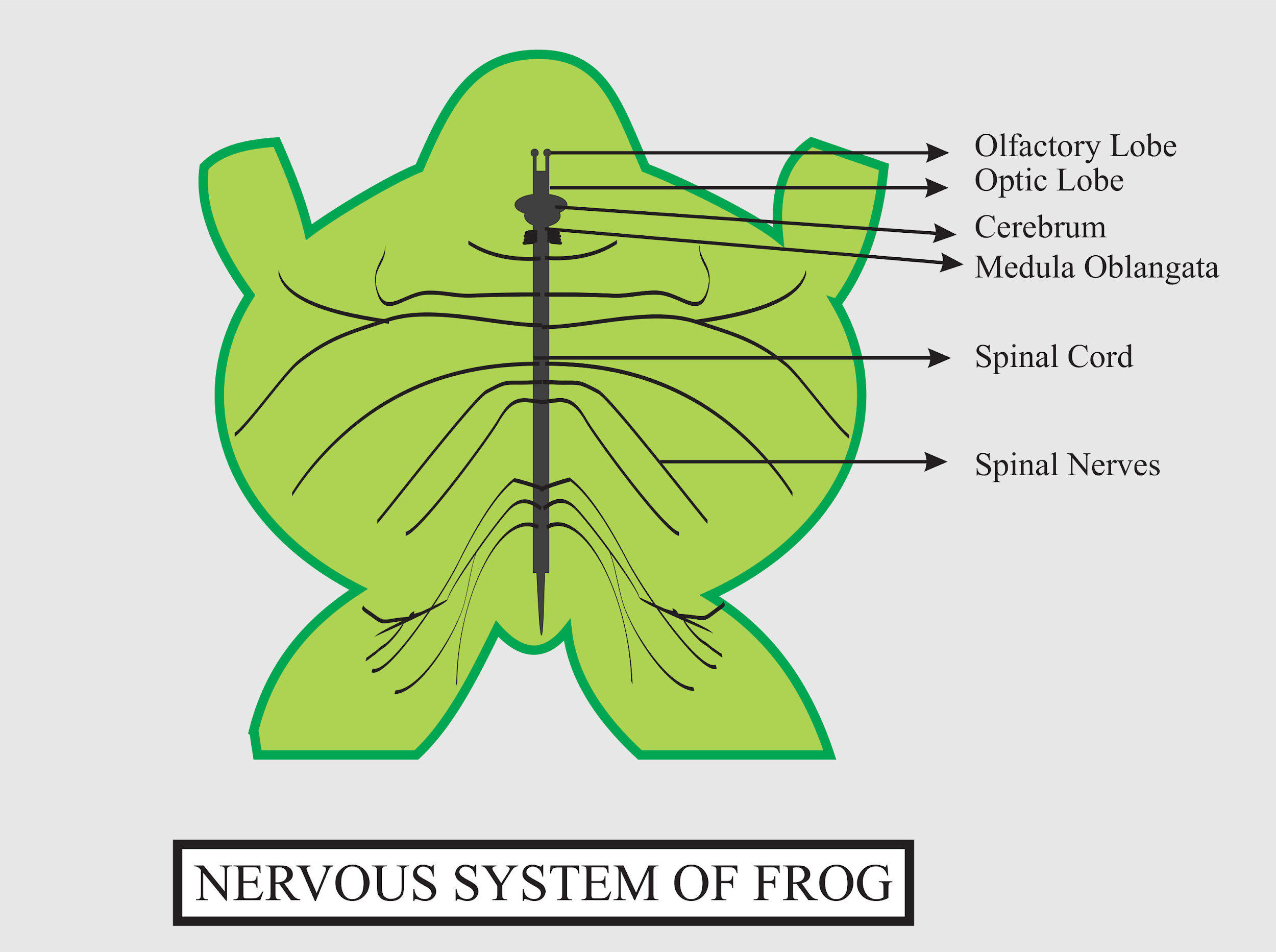
So, the correct answer is ‘Trigeminal’.
Additional Information: The frog’s nervous system has many resemblances with that of the human and is a highly developed system consisting of the brain, nerves, and spinal cord. The brain contains 2 Olfactory lobes, 2 cerebral hemispheres, 1 pineal body, 1 cerebellum, 2 optic lobes, and 1 medulla oblongata. The cerebellum of the hindbrain controls muscular activities and posture whereas the medulla oblongata, the stem-like structure of the brainstem, controls respiration, digestion, etc.
They have 10 pairs of cranial nerves and 10 pairs of spinal nerves and all of them have different roles in different sensory activities.
Note: The cranial nerve pairs of frogs are named below with their origin:
Complete step by step answer:
The fifth cranial nerve of the frog is called the trigeminal nerve which arises from the lateral side of the medulla. The vagus is the 10th cranial nerve and regulates respiration and heart rate and digestive activities. The second nerve is known as the optic which is used for bringing the secondary message from the nose. The first sensory nerve Olfactory brings the message of smell to the nose.
So, the correct answer is ‘Trigeminal’.
Additional Information: The frog’s nervous system has many resemblances with that of the human and is a highly developed system consisting of the brain, nerves, and spinal cord. The brain contains 2 Olfactory lobes, 2 cerebral hemispheres, 1 pineal body, 1 cerebellum, 2 optic lobes, and 1 medulla oblongata. The cerebellum of the hindbrain controls muscular activities and posture whereas the medulla oblongata, the stem-like structure of the brainstem, controls respiration, digestion, etc.
They have 10 pairs of cranial nerves and 10 pairs of spinal nerves and all of them have different roles in different sensory activities.
Note: The cranial nerve pairs of frogs are named below with their origin:
| Nerve | Origin |
| 0.Terminal | Forebrain |
| 1.Olfactory | Olfactory lobe |
| 2.Optic | Diencephalon |
| 3.Oculomotor | Midbrain |
| 4.Trochlear | Midbrain |
| 5.Trigeminal | Medulla |
| 6.Abducens | Medulla |
| 7.Facial | Medulla |
| 8.Auditory | Medulla |
| 9.Glossopharyngeal | Medulla |
Recently Updated Pages
Master Class 12 Economics: Engaging Questions & Answers for Success

Master Class 12 English: Engaging Questions & Answers for Success
Master Class 12 Social Science: Engaging Questions & Answers for Success
Master Class 12 Maths: Engaging Questions & Answers for Success
Master Class 12 Physics: Engaging Questions & Answers for Success
Master Class 9 General Knowledge: Engaging Questions & Answers for Success
Trending doubts
1 ton equals to A 100 kg B 1000 kg C 10 kg D 10000 class 11 physics CBSE
How do I convert ms to kmh Give an example class 11 physics CBSE
Mention the important general characters of Urocho class 11 biology CBSE
Define pneumatic bones class 11 biology CBSE
10 examples of diffusion in everyday life
The relation between molarity M and molality m is given class 11 chemistry CBSE