




What is the significance of the juxtaglomerular apparatus (JGA) in kidney function?
Answer
 Verified
610.5k+ views
Hint: The juxtaglomerular apparatus is a structure that is present in the kidney that regulates the function of every nephron, the functional units of the kidney. The juxtaglomerular apparatus is known because it's next to the glomerulus.
Complete answer:
Juxtaglomerular apparatus is an apparatus consisting of a couple of cells of the glomerulus, distal tubule, and afferent and efferent arterioles it's involved in maintaining the glomerular filtration rate within the kidney. JGA is found to be located in a very specialized region of a nephron, where the afferent arteriole and also the distal convoluted tubule are in direct contact with one another. The juxtaglomerular apparatus consists of certain specialized cells of the afferent arteriole. These cells are referred to as juxtaglomerular cells and that they contain the enzyme renin which will sense vital signs.
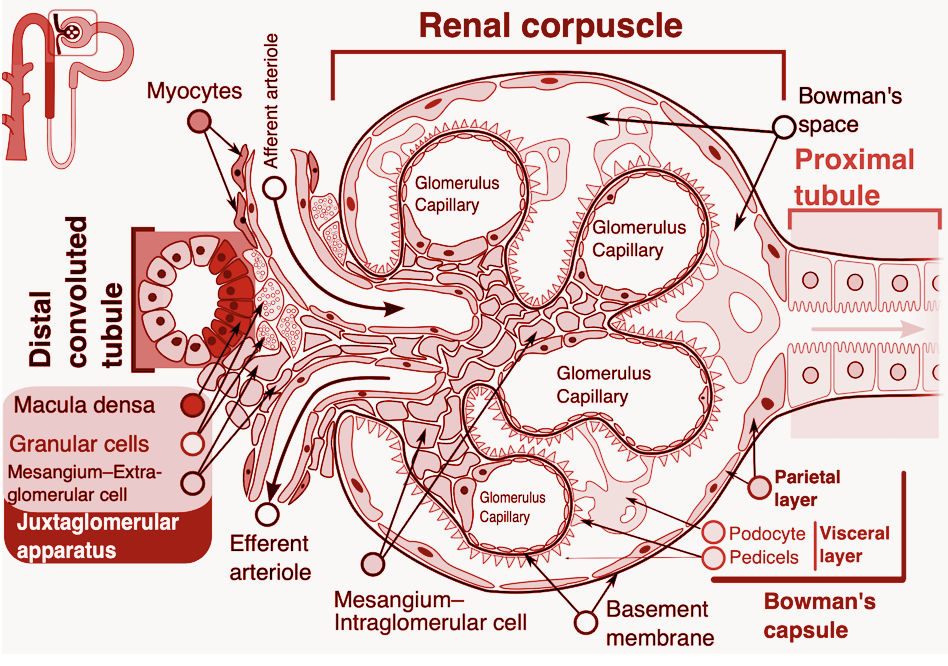
When there's a decrease within the glomerular filtration rate, the juxtaglomerular cells get activated and release renin which functions to convert the angiotensinogen within the blood into angiotensin I and further into angiotensin II. angiotensin II may be a powerful vasoconstrictor which will increase the glomerular filtration rate or glomerular vital sign. angiotensin II further stimulates the cortex of the adrenal to supply aldosterone which increases the speed of absorption of sodium ions and water from the distal convoluted tubule and therefore the collecting duct. Later on, it results in a rise in the blood pressure and glomerular filtration rate. This mechanism is understood because the renin-angiotensin mechanism ultimately results in increased blood pressure. Juxtaglomerular apparatus plays a crucial role within the renin-angiotensin mechanism.
Note: Excess secretion of renin by the juxtaglomerular cells can cause excess activity of the renin-angiotensin system, hypertension, and a rise in blood volume. One reason behind this may be increased renin production because of the narrowing of the renal artery, or a tumor of juxtaglomerular cells that produces renin.
Complete answer:
Juxtaglomerular apparatus is an apparatus consisting of a couple of cells of the glomerulus, distal tubule, and afferent and efferent arterioles it's involved in maintaining the glomerular filtration rate within the kidney. JGA is found to be located in a very specialized region of a nephron, where the afferent arteriole and also the distal convoluted tubule are in direct contact with one another. The juxtaglomerular apparatus consists of certain specialized cells of the afferent arteriole. These cells are referred to as juxtaglomerular cells and that they contain the enzyme renin which will sense vital signs.
When there's a decrease within the glomerular filtration rate, the juxtaglomerular cells get activated and release renin which functions to convert the angiotensinogen within the blood into angiotensin I and further into angiotensin II. angiotensin II may be a powerful vasoconstrictor which will increase the glomerular filtration rate or glomerular vital sign. angiotensin II further stimulates the cortex of the adrenal to supply aldosterone which increases the speed of absorption of sodium ions and water from the distal convoluted tubule and therefore the collecting duct. Later on, it results in a rise in the blood pressure and glomerular filtration rate. This mechanism is understood because the renin-angiotensin mechanism ultimately results in increased blood pressure. Juxtaglomerular apparatus plays a crucial role within the renin-angiotensin mechanism.
Note: Excess secretion of renin by the juxtaglomerular cells can cause excess activity of the renin-angiotensin system, hypertension, and a rise in blood volume. One reason behind this may be increased renin production because of the narrowing of the renal artery, or a tumor of juxtaglomerular cells that produces renin.
Recently Updated Pages
Master Class 12 Economics: Engaging Questions & Answers for Success

Master Class 12 English: Engaging Questions & Answers for Success
Master Class 12 Social Science: Engaging Questions & Answers for Success
Master Class 12 Maths: Engaging Questions & Answers for Success
Master Class 12 Physics: Engaging Questions & Answers for Success
Master Class 11 Social Science: Engaging Questions & Answers for Success
Trending doubts
One Metric ton is equal to kg A 10000 B 1000 C 100 class 11 physics CBSE
Difference Between Prokaryotic Cells and Eukaryotic Cells
Find the value of the expression given below sin 30circ class 11 maths CBSE
1 ton equals to A 100 kg B 1000 kg C 10 kg D 10000 class 11 physics CBSE
Two of the body parts which do not appear in MRI are class 11 biology CBSE
Draw a diagram of nephron and explain its structur class 11 biology CBSE