




Seminal plasma, the fluid part of semen, is contributed by
(i) seminal vesicle
(ii) prostate
(iii) urethra
(iv) bulbourethral gland
(a) (i) and (ii)
(b) (i) ,(ii) and (iv)
(c) (ii) ,(iii) and (iv)
(d) (i) and (iv)
Answer
 Verified
612.9k+ views
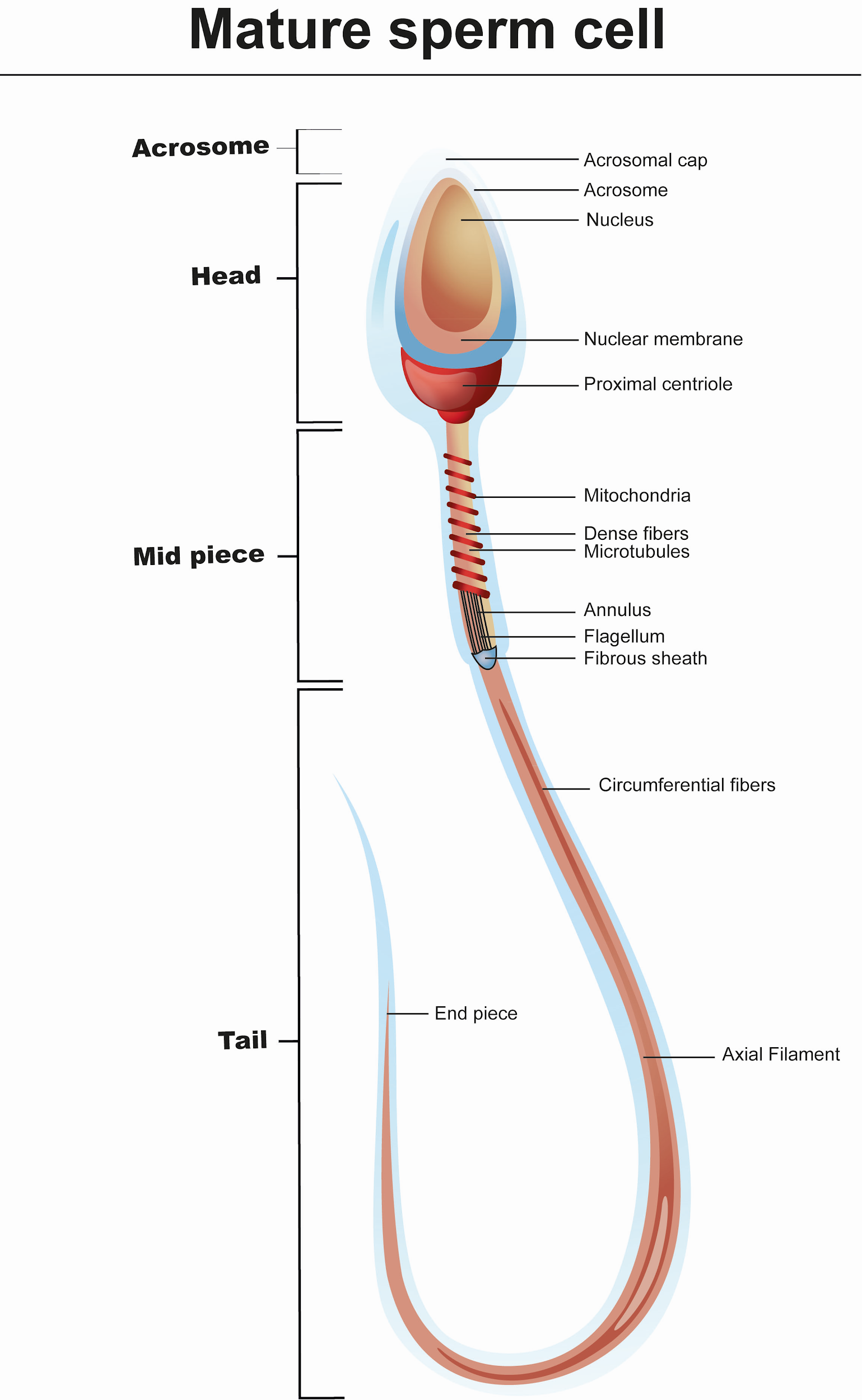
Hint: Seminal plasma acts as a means to carry, protect, and nurture spermatozoa after the process of ejaculation for fertilization. Sperm and seminal plasma together form semen. Sperm cells are motile cells and have a head, midpiece and tail part.
Complete Step by Step Answer:
The fluid part of semen (seminal plasma), is secreted by seminal vesicles, prostate gland and bulbourethral glands. Fructose, citric acid and supplementary nutrients are secreted by seminal vesicles. Seminal vesicle also contributes by secreting fibrinogen and prostaglandin. The alkalinity is provided by the prostate gland which secretes calcium ions and phosphate ions.
So, the correct answer is '(i) , (ii) and (iv)'.
Additional information:
- Bulbourethral glands secrete alkaline mucus which is important for the lubrication of the penis also activates and augments the sperm motility.
- Seminal plasma coats the sperm cells with capacitation inhibitors and also fluidizes the ejaculate after 10 to 15 minutes.
- The prostate gland is a walnut- sized gland situated among the bladder and the penis. Inflammation and tumour growth in the prostate is common among men during old age.
- The bulbourethral glands are also known as the Cowper's glands which are a couple of pea- shaped exocrine glands sited posteriorly to the urethra. They provide volume to semen by supplying a lubricating mucus secretion.
Note:
- Numerous proteins and fructose secreted by seminal gland act as an energy source for sperm motility and also contribute to the major percentage of the alkaline buffer.
- Protease secreted by the prostate, aids in fluidizing the ejaculate, which in turn provides the mobility and ensures maturation of the spermatozoa.
- The sperm contains a top cap which contains enzymes for rupturing the outer layers of egg and fertilizing the egg, which is called acrosome. The tail part of the sperm helps in motility.
Complete Step by Step Answer:
The fluid part of semen (seminal plasma), is secreted by seminal vesicles, prostate gland and bulbourethral glands. Fructose, citric acid and supplementary nutrients are secreted by seminal vesicles. Seminal vesicle also contributes by secreting fibrinogen and prostaglandin. The alkalinity is provided by the prostate gland which secretes calcium ions and phosphate ions.
So, the correct answer is '(i) , (ii) and (iv)'.
Additional information:
- Bulbourethral glands secrete alkaline mucus which is important for the lubrication of the penis also activates and augments the sperm motility.
- Seminal plasma coats the sperm cells with capacitation inhibitors and also fluidizes the ejaculate after 10 to 15 minutes.
- The prostate gland is a walnut- sized gland situated among the bladder and the penis. Inflammation and tumour growth in the prostate is common among men during old age.
- The bulbourethral glands are also known as the Cowper's glands which are a couple of pea- shaped exocrine glands sited posteriorly to the urethra. They provide volume to semen by supplying a lubricating mucus secretion.
Note:
- Numerous proteins and fructose secreted by seminal gland act as an energy source for sperm motility and also contribute to the major percentage of the alkaline buffer.
- Protease secreted by the prostate, aids in fluidizing the ejaculate, which in turn provides the mobility and ensures maturation of the spermatozoa.
- The sperm contains a top cap which contains enzymes for rupturing the outer layers of egg and fertilizing the egg, which is called acrosome. The tail part of the sperm helps in motility.
Recently Updated Pages
Master Class 12 Economics: Engaging Questions & Answers for Success

Master Class 12 English: Engaging Questions & Answers for Success
Master Class 12 Social Science: Engaging Questions & Answers for Success
Master Class 12 Maths: Engaging Questions & Answers for Success
Master Class 12 Physics: Engaging Questions & Answers for Success
Master Class 9 General Knowledge: Engaging Questions & Answers for Success
Trending doubts
One Metric ton is equal to kg A 10000 B 1000 C 100 class 11 physics CBSE
Difference Between Prokaryotic Cells and Eukaryotic Cells
Find the value of the expression given below sin 30circ class 11 maths CBSE
Two of the body parts which do not appear in MRI are class 11 biology CBSE
1 ton equals to A 100 kg B 1000 kg C 10 kg D 10000 class 11 physics CBSE
Draw a diagram of nephron and explain its structur class 11 biology CBSE