




Seismonasty occurs in
(a) Samanea saman
(b) Albizia lebbeck
(c) Hibiscus rosa- sinensis
(d) Mimosa pudica
Answer
 Verified
609k+ views
Hint: This is also known as Makahiya, Sensitive plant, or Touch- me. Leaves of this plant are bipinnately compound, with 1 or 2 pinnaepairs and 10- 26 leaflets per pinna. Pedunculated pale pink or purple flower heads arise from leaf axils.
Complete step by step answer:
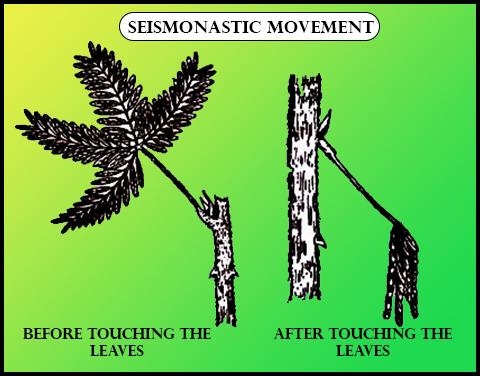
Thighmonasty or seismonasty is defined as nasty movement that is caused by the stimulus of touch.
Example: the closing of Mimosa Pudica when touched.
- Hygroscopic movement:
This is the movement of part of a plant that is caused by the influence of the change of the water level from its cells so happens non- homogeneous wrinkling.
- Exogenous movement or etionom/esionom:
It is plant movement that is caused by external stimuli. External stimuli such as, light, gravity, water, touch and chemical substances.
Example:
The breaking of dried Kalanchoe Pinnata fruit.
The opening of sporangium in fern as the cause of wrinkling annulus cells.
- The various kind of exogenous movement in plants:
1) Tropism movement
- Phototropism: It is a tropism movement that is caused by the stimulus of light.
Examples of the tip of plants that lie in the room will bend to the direction of incident of light.
- Geotropism: It is a tropism movement that follows earth gravitational force.
Positive geotropism: The geotropism movement that its direction is downwards.
Negative geotropism: The geotropism movement that its direction is upwards.
- Chemotropism: Tropism movement that is caused by the action of chemical substances stimulus.
Example: The movement of roots toward the presence of fertilizer in the soil.
- Hydrotropism: It is the movement of the plant root that is influenced by reservation of soil water.
2) Nastic movement
Nastic movement: In this plant movement to stimulus, that its direction is not determined by stimulus but by plant itself. Kinds of nastic movements:
- Photonasty : Nasty movement caused by the stimulus of light.
Example: The opening of Mirabilis Jalapa flower at a certain time.
- Nictinasty : Nasty movement that is caused by dark conditions.
Example: The closing of compound leaves of Leucaena Leucocephala during night.
- Thigmonasty: Nasty movement that is caused by the stimulus of touch.
Example: the closing of Mimosa Pudica when touched
- Thermonasty: The nasty movement that is caused by temperature stimulus.
Example: tulip flowers will bloom if the temperature rises.
- Complex nasty: The nasty movement caused by several factors all together.
Example: The opening and closing of stomata is influenced by light, chemical substances , and water.
3) Taxis movement
Transfer of movement of all parts of plants to stimulus that its direction is determined by stimulus. The different kinds of taxis movements:
- Photo taxis: Taxis movement that is caused by the stimulus of light.
Example: The movement of the chlorophyll to the surface of the leaves to absorb the light.
- Chemotaxis: Taxis movement that is caused by chemical substance stimulus.
Example: The movement of spermatozoa of moss and fern to ovum that is found in archegonium attached to the sugar or protein that is produced by archegonium .
So, the correct answer is, ‘(d) Mimosa pudica.’
Note:
- Endogenous movement (autonomic)
It is a movement that is not known yet but it is caused suddenly but predicted that this motion is caused by stimulus that comes from the body of the plant itself.
Example:
The flowing movement of cytoplasm in the cell.
The blending movement of leaf bid because of the difference of growth velocity.
Complete step by step answer:
Thighmonasty or seismonasty is defined as nasty movement that is caused by the stimulus of touch.
Example: the closing of Mimosa Pudica when touched.
- Hygroscopic movement:
This is the movement of part of a plant that is caused by the influence of the change of the water level from its cells so happens non- homogeneous wrinkling.
- Exogenous movement or etionom/esionom:
It is plant movement that is caused by external stimuli. External stimuli such as, light, gravity, water, touch and chemical substances.
Example:
The breaking of dried Kalanchoe Pinnata fruit.
The opening of sporangium in fern as the cause of wrinkling annulus cells.
- The various kind of exogenous movement in plants:
1) Tropism movement
- Phototropism: It is a tropism movement that is caused by the stimulus of light.
Examples of the tip of plants that lie in the room will bend to the direction of incident of light.
- Geotropism: It is a tropism movement that follows earth gravitational force.
Positive geotropism: The geotropism movement that its direction is downwards.
Negative geotropism: The geotropism movement that its direction is upwards.
- Chemotropism: Tropism movement that is caused by the action of chemical substances stimulus.
Example: The movement of roots toward the presence of fertilizer in the soil.
- Hydrotropism: It is the movement of the plant root that is influenced by reservation of soil water.
2) Nastic movement
Nastic movement: In this plant movement to stimulus, that its direction is not determined by stimulus but by plant itself. Kinds of nastic movements:
- Photonasty : Nasty movement caused by the stimulus of light.
Example: The opening of Mirabilis Jalapa flower at a certain time.
- Nictinasty : Nasty movement that is caused by dark conditions.
Example: The closing of compound leaves of Leucaena Leucocephala during night.
- Thigmonasty: Nasty movement that is caused by the stimulus of touch.
Example: the closing of Mimosa Pudica when touched
- Thermonasty: The nasty movement that is caused by temperature stimulus.
Example: tulip flowers will bloom if the temperature rises.
- Complex nasty: The nasty movement caused by several factors all together.
Example: The opening and closing of stomata is influenced by light, chemical substances , and water.
3) Taxis movement
Transfer of movement of all parts of plants to stimulus that its direction is determined by stimulus. The different kinds of taxis movements:
- Photo taxis: Taxis movement that is caused by the stimulus of light.
Example: The movement of the chlorophyll to the surface of the leaves to absorb the light.
- Chemotaxis: Taxis movement that is caused by chemical substance stimulus.
Example: The movement of spermatozoa of moss and fern to ovum that is found in archegonium attached to the sugar or protein that is produced by archegonium .
So, the correct answer is, ‘(d) Mimosa pudica.’
Note:
- Endogenous movement (autonomic)
It is a movement that is not known yet but it is caused suddenly but predicted that this motion is caused by stimulus that comes from the body of the plant itself.
Example:
The flowing movement of cytoplasm in the cell.
The blending movement of leaf bid because of the difference of growth velocity.
Recently Updated Pages
Master Class 11 English: Engaging Questions & Answers for Success

Master Class 11 Maths: Engaging Questions & Answers for Success
Class 11 Question and Answer - Your Ultimate Solutions Guide
Master Class 11 Biology: Engaging Questions & Answers for Success
Master Class 11 Physics: Engaging Questions & Answers for Success
Master Class 11 Accountancy: Engaging Questions & Answers for Success
Trending doubts
Explain the Treaty of Vienna of 1815 class 10 social science CBSE
Who Won 36 Oscar Awards? Record Holder Revealed
What is the median of the first 10 natural numbers class 10 maths CBSE
Why is it 530 pm in india when it is 1200 afternoon class 10 social science CBSE
Select the word that is correctly spelled a Twelveth class 10 english CBSE
Why is there a time difference of about 5 hours between class 10 social science CBSE