




Sac like structures that help in the synthesis and storage of many substances is:
A. Endoplasmic reticulum
B. Nucleus
C. Mitochondria
D. Golgi bodies
Answer
 Verified
495.3k+ views
Hint: Cell organelles are the cellular components. These cell organelles include membrane-bound and non-membrane-bound organelles that are present within the cells and have different shapes and activities. For the cell's proper functioning, they coordinate and operate effectively. A handful of them serve to form and maintain the cell, while others are engaged in cell movement and reproduction. Organelles are found throughout the cell and are divided into three types based on whether or not they have a membrane.
Step by step answer:
Eukaryotic cells are big and sophisticated creatures having a nucleus contained within the nuclear membrane. Eukaryotic cells can be found in protozoa, fungi, plants, and mammals. Eukaryota is the kingdom in which they are categorized. They can sustain several habitats in a single cell, allowing them to carry out a variety of metabolic activities.
Eukaryotic cells have the following characteristics:
1. The nucleus of eukaryotic cells is contained inside the nuclear membrane.
2. Mitochondria are found in cells.
3. A eukaryotic cell's locomotory organs are flagella and cilia.
4. The cell wall is the eukaryotic cell's outermost layer.
5. Mitosis is the process through which cells divide.
6. A cytoskeletal structure is seen in eukaryotic cells.
7. A single, linear DNA strand conveys all of the genetic information in the nucleus.
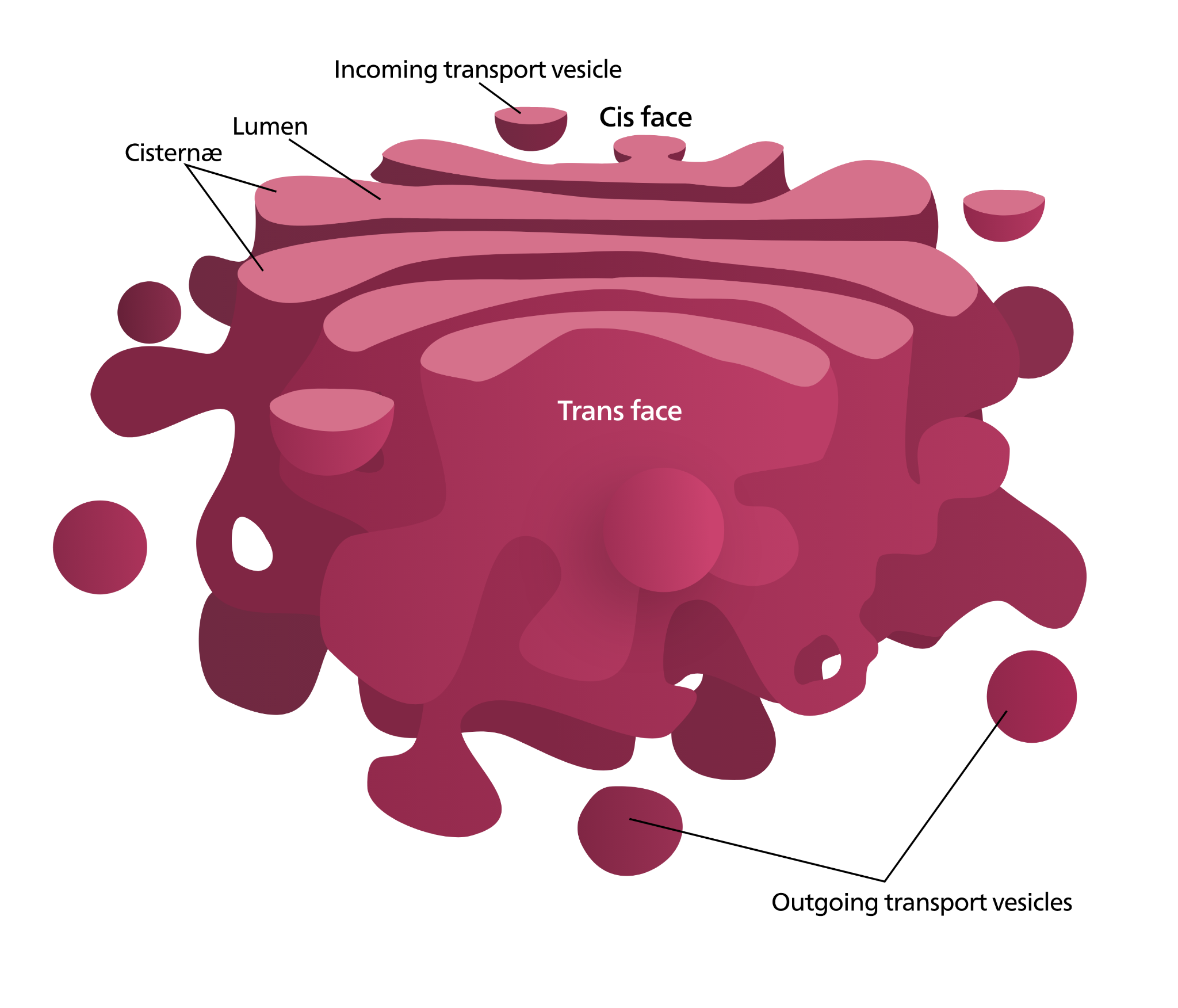
A Golgi body, also known as a Golgi apparatus, is a cell organelle that assists in the processing and packaging of proteins and lipid molecules, particularly those intended for cell export. The Golgi body is a collection of stacked membranes named after its discoverer, Camillo Golgi.
So, The Golgi body aids in the production of chemicals such as enzymes, which aid in the cell's normal metabolic functioning.
Thus, the answer is option D: Golgi bodies.
Note:
The Golgi apparatus is a collection of fused, flattened membrane-enclosed disks known as cisternae (singular: cisterna, sometimes termed "dictyosomes") that originate from vesicular clusters that bud off the endoplasmic reticulum in most eukaryotes.
Step by step answer:
Eukaryotic cells are big and sophisticated creatures having a nucleus contained within the nuclear membrane. Eukaryotic cells can be found in protozoa, fungi, plants, and mammals. Eukaryota is the kingdom in which they are categorized. They can sustain several habitats in a single cell, allowing them to carry out a variety of metabolic activities.
Eukaryotic cells have the following characteristics:
1. The nucleus of eukaryotic cells is contained inside the nuclear membrane.
2. Mitochondria are found in cells.
3. A eukaryotic cell's locomotory organs are flagella and cilia.
4. The cell wall is the eukaryotic cell's outermost layer.
5. Mitosis is the process through which cells divide.
6. A cytoskeletal structure is seen in eukaryotic cells.
7. A single, linear DNA strand conveys all of the genetic information in the nucleus.
A Golgi body, also known as a Golgi apparatus, is a cell organelle that assists in the processing and packaging of proteins and lipid molecules, particularly those intended for cell export. The Golgi body is a collection of stacked membranes named after its discoverer, Camillo Golgi.
So, The Golgi body aids in the production of chemicals such as enzymes, which aid in the cell's normal metabolic functioning.
Thus, the answer is option D: Golgi bodies.
Note:
The Golgi apparatus is a collection of fused, flattened membrane-enclosed disks known as cisternae (singular: cisterna, sometimes termed "dictyosomes") that originate from vesicular clusters that bud off the endoplasmic reticulum in most eukaryotes.
Recently Updated Pages
Master Class 11 Social Science: Engaging Questions & Answers for Success

Master Class 11 Physics: Engaging Questions & Answers for Success
Master Class 11 Maths: Engaging Questions & Answers for Success
Master Class 11 Economics: Engaging Questions & Answers for Success
Master Class 11 Computer Science: Engaging Questions & Answers for Success
Master Class 11 Chemistry: Engaging Questions & Answers for Success
Trending doubts
One Metric ton is equal to kg A 10000 B 1000 C 100 class 11 physics CBSE
There are 720 permutations of the digits 1 2 3 4 5 class 11 maths CBSE
1 Quintal is equal to a 110 kg b 10 kg c 100kg d 1000 class 11 physics CBSE
State and prove Bernoullis theorem class 11 physics CBSE
Difference Between Prokaryotic Cells and Eukaryotic Cells
Which among the following are examples of coming together class 11 social science CBSE