




Right atrium receives blood from
(a)Sinus venosus
(b)Pulmonary veins
(c)Inferior vena cava
(d)Superior and inferior vena cava
Answer
 Verified
604.2k+ views
Hint: These are thin and large veins which carry blood from the lower half of the body (legs, back, abdomen and pelvis) and the upper half of the body (neck, chest, head, and arms) respectively.
Complete answer:
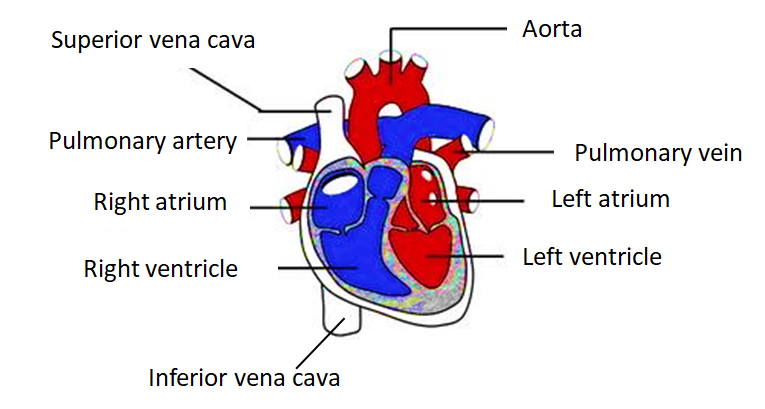
Right atrium receives blood from the superior and inferior vena cava. The circulatory system of humans (higher vertebrates) is divided into two separate systems of circuits, the systemic circuit, and the pulmonary circuit. Each of these systems consists of a similar sequence of blood vessels.
The circulation of oxygenated blood starts from the left auricle followed by the left ventricle. Blood is pumped out of the heart into arterioles through arteries (blood vessels which are muscular tubes lined by smooth tissue) of decreasing size, which merge before reaching the sites of exchange with the capillaries. Blood leaving the capillaries is gathered into venules, veins, and superior and inferior vena cava brings deoxygenated blood from the entire body and drains into the heart this process is known as systemic circulation.
Also, the left side (left auricle and left ventricle) provides pressure to propel blood to the entire body. The left atrium receives oxygenated blood from the left and right pulmonary veins in the pulmonary circuit.
So, the correct answer is 'superior and inferior vena cava'.
Note: Very tiny blood vessels that help to connect arteries and veins are known as capillaries and their primary function is to facilitate the exchange of elements between your blood and tissues. A very small blood vessel, especially one collecting blood from the capillaries is known as venule. They range from 7μm to 1mm in diameter and it allows blood to return from the capillary beds to drain into the veins.
Complete answer:
Right atrium receives blood from the superior and inferior vena cava. The circulatory system of humans (higher vertebrates) is divided into two separate systems of circuits, the systemic circuit, and the pulmonary circuit. Each of these systems consists of a similar sequence of blood vessels.
The circulation of oxygenated blood starts from the left auricle followed by the left ventricle. Blood is pumped out of the heart into arterioles through arteries (blood vessels which are muscular tubes lined by smooth tissue) of decreasing size, which merge before reaching the sites of exchange with the capillaries. Blood leaving the capillaries is gathered into venules, veins, and superior and inferior vena cava brings deoxygenated blood from the entire body and drains into the heart this process is known as systemic circulation.
Also, the left side (left auricle and left ventricle) provides pressure to propel blood to the entire body. The left atrium receives oxygenated blood from the left and right pulmonary veins in the pulmonary circuit.
So, the correct answer is 'superior and inferior vena cava'.
Note: Very tiny blood vessels that help to connect arteries and veins are known as capillaries and their primary function is to facilitate the exchange of elements between your blood and tissues. A very small blood vessel, especially one collecting blood from the capillaries is known as venule. They range from 7μm to 1mm in diameter and it allows blood to return from the capillary beds to drain into the veins.
Recently Updated Pages
Master Class 11 Social Science: Engaging Questions & Answers for Success

Master Class 11 Physics: Engaging Questions & Answers for Success
Master Class 11 Maths: Engaging Questions & Answers for Success
Master Class 11 Economics: Engaging Questions & Answers for Success
Master Class 11 Computer Science: Engaging Questions & Answers for Success
Master Class 11 Chemistry: Engaging Questions & Answers for Success
Trending doubts
One Metric ton is equal to kg A 10000 B 1000 C 100 class 11 physics CBSE
There are 720 permutations of the digits 1 2 3 4 5 class 11 maths CBSE
1 Quintal is equal to a 110 kg b 10 kg c 100kg d 1000 class 11 physics CBSE
State and prove Bernoullis theorem class 11 physics CBSE
Difference Between Prokaryotic Cells and Eukaryotic Cells
Which among the following are examples of coming together class 11 social science CBSE