




Retrogressive metamorphosis is observed in
(a)Balanoglossus
(b)Branchiostoma
(c)Herdsmania (Urochordata)
(d)All the above
Answer
 Verified
639.9k+ views
Hint: It is also called sea squirts and is generally barrel-shaped. They are observed in marine environments. The chordate characteristics will be lost in the adult animal, as they attach themselves to a hard surface, they will eventually lose the tail, the nervous system, and therefore these animals cannot move.
Complete answer:
Retrogressive metamorphosis is a characteristic observed in Urochordata. In these organisms, the notochord which will be present in the larval stage will degenerate in the adult organisms. Thus, the non-chordate adult organism cannot move. This is called retrogressive metamorphosis. The advanced characteristics of the animal present in the larval stage will be lost in the adult organism.
Additional Information
Urochordata
-Urochordata is observed in the marine environment.
-Urochordata is also called tunicates because of the leathery sheath which surrounds their body possesses tuncin (a type of cellulose).
-They cannot move and they are filter-feeders. Filter feeders are a group of animals that will feed by filtering the ocean water and will eat the small particles.
-Since these animals will not move, the tail and the nervous system is reduced in the adult animals.
-They respire by gills and possess an open circulatory system.
-The notochord will be present in the larval stage but they will disappear in the adult animals. This process is called retrogressive metamorphosis.
-These animals lack the excretory system.
-Reproduction: Asexual reproduction via budding.
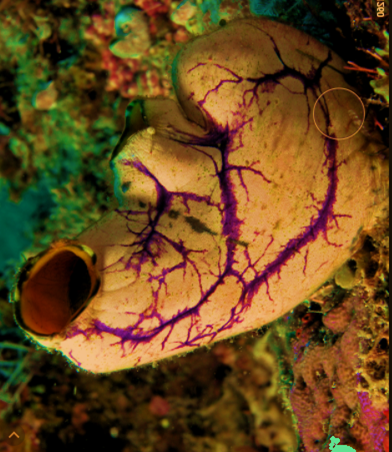
The above image represents the Urochordata image.
So, the correct answer is ‘Herdsmania (Urochordata)’.
Note:
The invertebrate organisms that closely resemble vertebrates are classified as protochordata. The protochordate is divided into hemichordata, Urochordata, and Cephalochordata. In this question given, Balanoglossus is a hemichordate, whereas Branchiostoma is a cephalochordate animal.
Complete answer:
Retrogressive metamorphosis is a characteristic observed in Urochordata. In these organisms, the notochord which will be present in the larval stage will degenerate in the adult organisms. Thus, the non-chordate adult organism cannot move. This is called retrogressive metamorphosis. The advanced characteristics of the animal present in the larval stage will be lost in the adult organism.
Additional Information
Urochordata
-Urochordata is observed in the marine environment.
-Urochordata is also called tunicates because of the leathery sheath which surrounds their body possesses tuncin (a type of cellulose).
-They cannot move and they are filter-feeders. Filter feeders are a group of animals that will feed by filtering the ocean water and will eat the small particles.
-Since these animals will not move, the tail and the nervous system is reduced in the adult animals.
-They respire by gills and possess an open circulatory system.
-The notochord will be present in the larval stage but they will disappear in the adult animals. This process is called retrogressive metamorphosis.
-These animals lack the excretory system.
-Reproduction: Asexual reproduction via budding.
The above image represents the Urochordata image.
So, the correct answer is ‘Herdsmania (Urochordata)’.
Note:
The invertebrate organisms that closely resemble vertebrates are classified as protochordata. The protochordate is divided into hemichordata, Urochordata, and Cephalochordata. In this question given, Balanoglossus is a hemichordate, whereas Branchiostoma is a cephalochordate animal.
Recently Updated Pages
Basicity of sulphurous acid and sulphuric acid are

Master Class 11 English: Engaging Questions & Answers for Success
Master Class 11 Physics: Engaging Questions & Answers for Success
Master Class 11 Computer Science: Engaging Questions & Answers for Success
Master Class 11 Chemistry: Engaging Questions & Answers for Success
Master Class 11 Social Science: Engaging Questions & Answers for Success
Trending doubts
Difference Between Prokaryotic Cells and Eukaryotic Cells
Two of the body parts which do not appear in MRI are class 11 biology CBSE
One Metric ton is equal to kg A 10000 B 1000 C 100 class 11 physics CBSE
10 examples of friction in our daily life
Draw a diagram of nephron and explain its structur class 11 biology CBSE
What will happen if the mucus is not secreted by the class 11 biology CBSE