




What removes ammonia from the body?
Answer
 Verified
523.5k+ views
Hint: Ammonia is a nitrogen and hydrogen compound. Ammonia is a colorless gas with a distinct pungent odor. It is a stable binary hydride and the simplest pnictogen hydride. Too much ammonia in the body can lead to psychological issues such as confusion, exhaustion, and even coma or death. Seizures, breathing problems, a slowed response, and even death can occur when a child is exposed to too much ammonia.
Complete answer:
Excretion is a process of removal of metabolic waste from the body. During cellular respiration, many chemical reactions occur which are known as metabolism. These chemical reactions produce excretory materials like carbon dioxide, water, salt, urea, etc. If this waste gets accumulated in the body it becomes very harmful.
In mammals, the urine is passed through the urethra which is a part of the excretory system. Green plants produce carbon dioxide and water as respiratory products. During the process of photosynthesis Oxygen is released as a by-product.
In animals carbon dioxide, ammonia, urea and uric acid, creatine and guanine are the excretory products. In aquatic animals, they usually excrete ammonia to the external environment which is highly soluble in water. Birds excrete their waste in the form of uric acid which is more efficient for retention of water. In insects, malpighian tubules excrete the metabolic waste. The waste is released from the fecal matter.
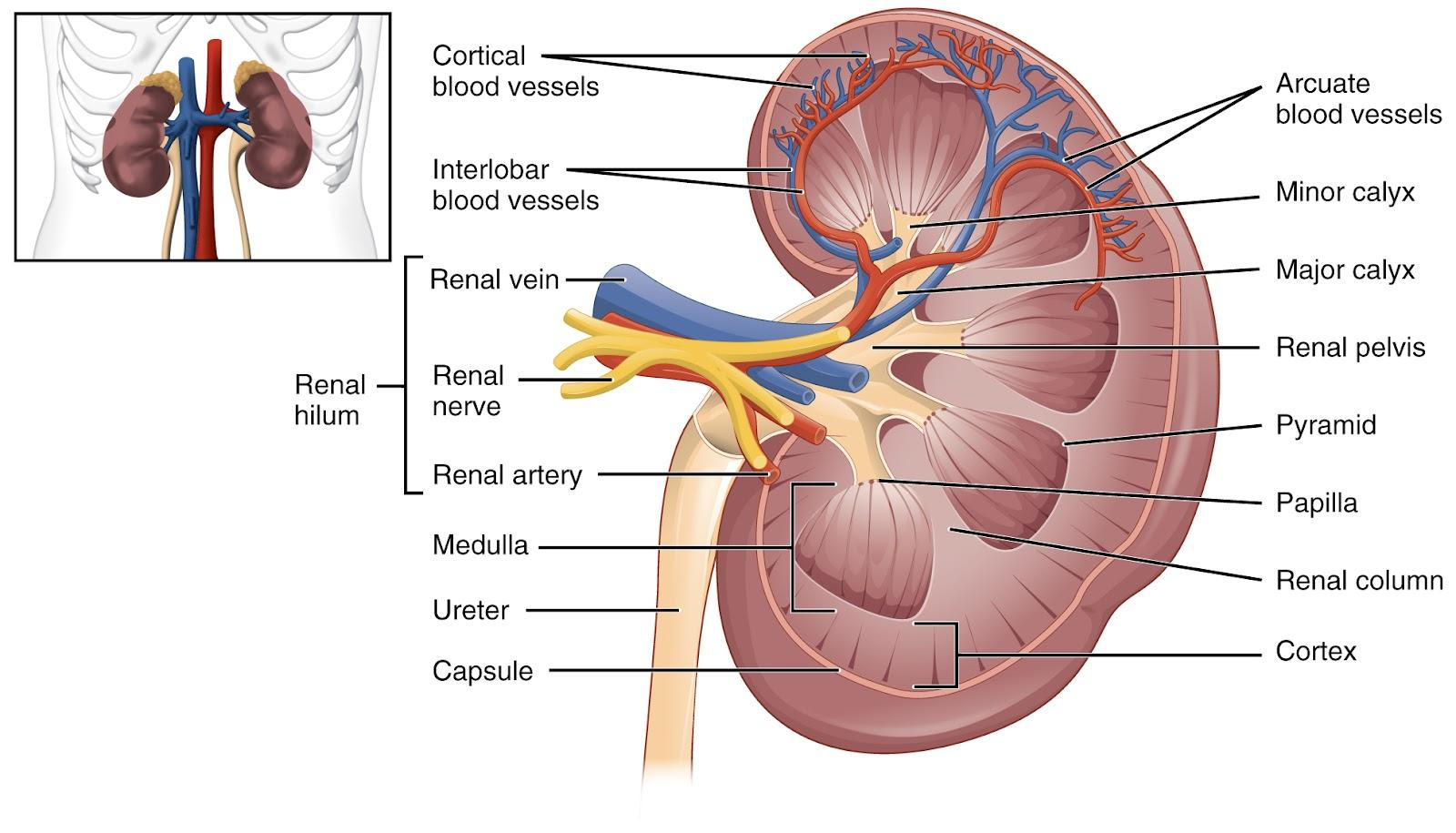
A nitrogenous waste compound known as ammonia is excreted through the urine. Increase in the ammonia in blood shows the accumulation of ammonia in blood. This shows the kidney or liver is not working properly in the body. Ammonia can be poisonous to the cells and increased ammonia can be harmful to the whole body. Our body treats ammonia as an excretory product which is removed by the liver.
Note:
Hyperammonemia causes elevated ammonia levels in the brain, resulting in cerebral dysfunction with a variety of neuropsychiatric and neurological symptoms (impaired memory, shortened attention span, sleep-wake inversions, brain edema, intracranial hypertension, seizures, ataxia and coma).
Complete answer:
Excretion is a process of removal of metabolic waste from the body. During cellular respiration, many chemical reactions occur which are known as metabolism. These chemical reactions produce excretory materials like carbon dioxide, water, salt, urea, etc. If this waste gets accumulated in the body it becomes very harmful.
In mammals, the urine is passed through the urethra which is a part of the excretory system. Green plants produce carbon dioxide and water as respiratory products. During the process of photosynthesis Oxygen is released as a by-product.
In animals carbon dioxide, ammonia, urea and uric acid, creatine and guanine are the excretory products. In aquatic animals, they usually excrete ammonia to the external environment which is highly soluble in water. Birds excrete their waste in the form of uric acid which is more efficient for retention of water. In insects, malpighian tubules excrete the metabolic waste. The waste is released from the fecal matter.
A nitrogenous waste compound known as ammonia is excreted through the urine. Increase in the ammonia in blood shows the accumulation of ammonia in blood. This shows the kidney or liver is not working properly in the body. Ammonia can be poisonous to the cells and increased ammonia can be harmful to the whole body. Our body treats ammonia as an excretory product which is removed by the liver.
Note:
Hyperammonemia causes elevated ammonia levels in the brain, resulting in cerebral dysfunction with a variety of neuropsychiatric and neurological symptoms (impaired memory, shortened attention span, sleep-wake inversions, brain edema, intracranial hypertension, seizures, ataxia and coma).
Recently Updated Pages
Master Class 12 Economics: Engaging Questions & Answers for Success

Master Class 12 English: Engaging Questions & Answers for Success
Master Class 12 Social Science: Engaging Questions & Answers for Success
Master Class 12 Maths: Engaging Questions & Answers for Success
Master Class 12 Physics: Engaging Questions & Answers for Success
Master Class 9 General Knowledge: Engaging Questions & Answers for Success
Trending doubts
One Metric ton is equal to kg A 10000 B 1000 C 100 class 11 physics CBSE
Difference Between Prokaryotic Cells and Eukaryotic Cells
Find the value of the expression given below sin 30circ class 11 maths CBSE
Two of the body parts which do not appear in MRI are class 11 biology CBSE
Draw a diagram of nephron and explain its structur class 11 biology CBSE
10 examples of friction in our daily life