




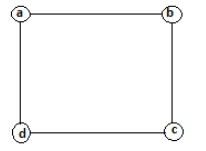
Put four different numbers in the circles so that when you add the numbers at the end of the line you always get a square.
Answer
 Verified
656.4k+ views
Hint: The values of the two circles, when added up, must give a number, which is square, whether horizontally or vertically. To solve the puzzle start substituting any number in the upper-left corner then put a number in the upper-right corner so that both numbers of the upper line of the square give a number, which is a square when added up.
Now put another number to the left bottom of the square so that the numbers of the left side vertically of the square give a square number.
Now also put a number to the bottom right corner of the square so that when the number is added with the number vertically or horizontally gives a square number.
Complete step by step answer:
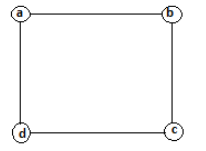
Let a, b, c, and d be the numbers of corner elements.
Where \[a + b, b + c, c + d, d + a\] gives a square number
By hit and trial, method put the values of a, b, c, and d and check whether their sum gives a square number or not.
If we put
\[a = 1 \\
b = 3 \\
c = 46 \\
d = 35 \\\]
Then,
\[a + b = 1 + 3 = 4 = {2^2} \\
b + c = 3 + 46 = 49 = {7^2} \\
c + d = 46 + 35 = 81 = {9^2} \\
d + a = 35 + 1 = 36 = {6^2} \\\]
We get square numbers. Alternatively, if we put
\[a = 5 \\
b = 4 \\
c = 117 \\
d = 139 \\\]
Then,
\[a + b = 5 + 4 = 9 = {3^2} \\
b + c = 4 + 117 = 121 = {11^2} \\
c + d = 117 + 139 = 256 = {16^2} \\
d + a = 139 + 5 = 144 = {12^2} \\\]
Note: Students must note that when any two numbers are added, whether vertically or horizontally, in the square, the results should be a square number. In the question two geometrical shapes' names have been used i.e., circle and square, we need to put the numbers in the circle and keep the circle at the vertex of the square and the vice-versa does not hold true for this.
Now put another number to the left bottom of the square so that the numbers of the left side vertically of the square give a square number.
Now also put a number to the bottom right corner of the square so that when the number is added with the number vertically or horizontally gives a square number.
Complete step by step answer:
Let a, b, c, and d be the numbers of corner elements.
Where \[a + b, b + c, c + d, d + a\] gives a square number
By hit and trial, method put the values of a, b, c, and d and check whether their sum gives a square number or not.
If we put
\[a = 1 \\
b = 3 \\
c = 46 \\
d = 35 \\\]
Then,
\[a + b = 1 + 3 = 4 = {2^2} \\
b + c = 3 + 46 = 49 = {7^2} \\
c + d = 46 + 35 = 81 = {9^2} \\
d + a = 35 + 1 = 36 = {6^2} \\\]
We get square numbers. Alternatively, if we put
\[a = 5 \\
b = 4 \\
c = 117 \\
d = 139 \\\]
Then,
\[a + b = 5 + 4 = 9 = {3^2} \\
b + c = 4 + 117 = 121 = {11^2} \\
c + d = 117 + 139 = 256 = {16^2} \\
d + a = 139 + 5 = 144 = {12^2} \\\]
Note: Students must note that when any two numbers are added, whether vertically or horizontally, in the square, the results should be a square number. In the question two geometrical shapes' names have been used i.e., circle and square, we need to put the numbers in the circle and keep the circle at the vertex of the square and the vice-versa does not hold true for this.
Recently Updated Pages
A Paragraph on Pollution in about 100-150 Words

What is BLO What is the full form of BLO class 8 social science CBSE
10 examples of friction in our daily life
Draw a diagram of nephron and explain its structur class 11 biology CBSE
Write structures of the following compounds i 2 Chloro3methylpentane class 11 chemistry CBSE
XIX+XXX A 49 B 51 C 55 D 44 class 5 maths CBSE
Trending doubts
Explain the Treaty of Vienna of 1815 class 10 social science CBSE
1 GB equals how many MB?
10 examples of evaporation in daily life with explanations
What is the full form of POSCO class 10 social science CBSE
Which is the hottest planet in the Solar system A Earth class 10 social science CBSE
Name any four life processes in living things class 10 biology CBSE