




Pseudopodia are produced by
(a) Plasma cell
(b) Mast cell
(c) Adipose cell
(d) Fibroblast cell
Answer
 Verified
615k+ views
Hint: Pseudopodia are long membrane extensions produced by a type of cell which is long and spindle- shaped. It is one of the common types of connective tissue and it secretes a protein that is the most abundant protein in the animal world.
Complete answer:
Pseudopodia is a type of locomotory apparatus that is usually observed in the protozoans belonging to the group of Sarcodina or Rhizopoda. These are temporary membranous extensions of the cell membrane for locomotion or for the ingestion of food. The fibroblast cells along with the help of microtubules and microfilaments in the cytoplasm produce these cytoplasmic extensions. A fibroblast cell is a large, spindle-shaped cell, and a part of connective tissue. It secrets collagen which forms the bulk of the extracellular matrix in any tissue. Fibroblast cells are also involved in tissue repair and maintenance.
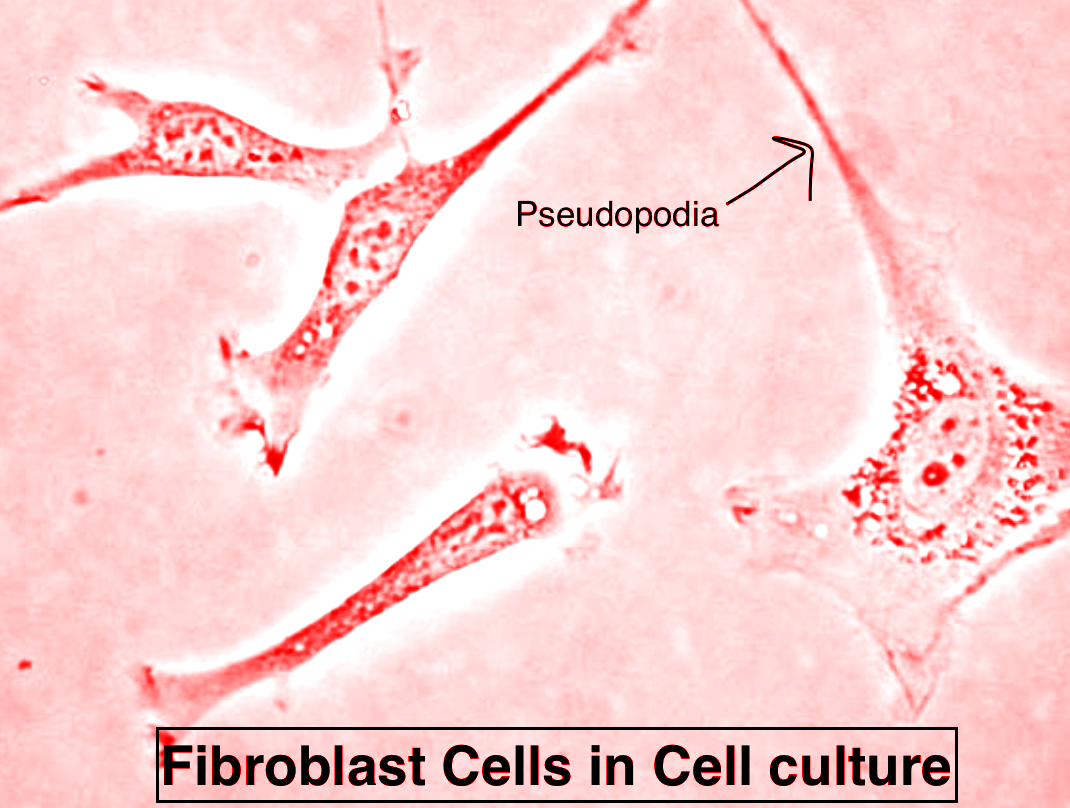
So, the correct answer is ‘Fibroblast cell.’
Additional Information:
- A mast cell is a type of white blood cell. Their cytoplasm is filled with minute granules containing histamine. They, along with basophils, play a major role in the regulation of allergic responses.
- Adipose cells are single membrane- bound fat- containing cells. It is a type of connective tissue that is specialized in the synthesis and storage of fat globules.
- Plasma cells are sub-species of B-lymphocytes, which in turn, are a type of leukocytes or WBCs responsible for the production of antibodies against a foreign antigen.
- Microtubules and microfilaments are cytoskeletal apparatus that deals with the maintenance of the structural framework of a cell while also helping the cell organelles to suspend in the cytoplasm.
Note:
- Protozoan protists are classified into four groups based on the type of locomotion exhibited by its members: Mastigophora, Sarcodina, Sporozoan, and Ciliates.
- Mastigophora possesses flagella as their locomotory apparatus. Sarcodina locomotion by pseudopodia. Sporozoans are non- motile and Ciliates bear numerous minute projections called cilia as their locomotion apparatus.
Complete answer:
Pseudopodia is a type of locomotory apparatus that is usually observed in the protozoans belonging to the group of Sarcodina or Rhizopoda. These are temporary membranous extensions of the cell membrane for locomotion or for the ingestion of food. The fibroblast cells along with the help of microtubules and microfilaments in the cytoplasm produce these cytoplasmic extensions. A fibroblast cell is a large, spindle-shaped cell, and a part of connective tissue. It secrets collagen which forms the bulk of the extracellular matrix in any tissue. Fibroblast cells are also involved in tissue repair and maintenance.
So, the correct answer is ‘Fibroblast cell.’
Additional Information:
- A mast cell is a type of white blood cell. Their cytoplasm is filled with minute granules containing histamine. They, along with basophils, play a major role in the regulation of allergic responses.
- Adipose cells are single membrane- bound fat- containing cells. It is a type of connective tissue that is specialized in the synthesis and storage of fat globules.
- Plasma cells are sub-species of B-lymphocytes, which in turn, are a type of leukocytes or WBCs responsible for the production of antibodies against a foreign antigen.
- Microtubules and microfilaments are cytoskeletal apparatus that deals with the maintenance of the structural framework of a cell while also helping the cell organelles to suspend in the cytoplasm.
Note:
- Protozoan protists are classified into four groups based on the type of locomotion exhibited by its members: Mastigophora, Sarcodina, Sporozoan, and Ciliates.
- Mastigophora possesses flagella as their locomotory apparatus. Sarcodina locomotion by pseudopodia. Sporozoans are non- motile and Ciliates bear numerous minute projections called cilia as their locomotion apparatus.
Recently Updated Pages
Master Class 11 English: Engaging Questions & Answers for Success

Master Class 11 Social Science: Engaging Questions & Answers for Success
Master Class 11 Maths: Engaging Questions & Answers for Success
Master Class 11 Biology: Engaging Questions & Answers for Success
Master Class 11 Physics: Engaging Questions & Answers for Success
Master Class 11 Chemistry: Engaging Questions & Answers for Success
Trending doubts
One Metric ton is equal to kg A 10000 B 1000 C 100 class 11 physics CBSE
Difference Between Prokaryotic Cells and Eukaryotic Cells
1 ton equals to A 100 kg B 1000 kg C 10 kg D 10000 class 11 physics CBSE
Find the value of the expression given below sin 30circ class 11 maths CBSE
Two of the body parts which do not appear in MRI are class 11 biology CBSE
What are hard magnetic materials class 11 physics CBSE