




Why is proinsulin so called? How is insulin different from it?
Answer
 Verified
600k+ views
Hint: Proinsulin is an insulin prohormone precursor produced in the beta cells of the specialised regions of the pancreas of the islets of Langerhans. In humans, the INS gene encodes proinsulin. Just between 1 and 3 percent of proinsulin intact is secreted by the islets of Langerhans.
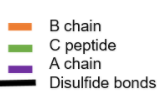
Complete answer: Insulin is a small protein hormone that the pancreas releases to control the concentration of sugar. 51 amino acids make up the human insulin protein. It is an A-chain dimer and a B-chain that are bound together by disulfide bonds. Pancreatic cells first generate pro-insulin in humans, which is then subjected to post-translational modification to create the final, functional insulin. There is an extra stretch called the C-peptide in Proinsulin. In mature insulin, the C-peptide is not present and is eliminated during maturation into insulin.
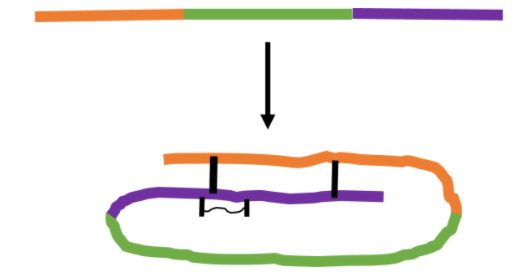
Additionally, although there are structural variations between proinsulin and insulin, proinsulin does show some affinity for the insulin receptor. Due to the comparative similarities in structure, proinsulin can create between 5% and 10% of the metabolic activity alike induced by insulin.
Note: Proinsulin consists of 81 residues (in cows, 86 in humans), and three separate chains are formed. The A chain, the B chain, the C peptide, and the region linking the two. For the proper folding of mature insulin, the correct structure of proinsulin is important, as the positioning of the C peptide sets the molecule up to establish correctly placed disulfide bonds in and between the chains A and B. There are three disulfide bonds that are required to provide the right structure for mature insulin.
Complete answer: Insulin is a small protein hormone that the pancreas releases to control the concentration of sugar. 51 amino acids make up the human insulin protein. It is an A-chain dimer and a B-chain that are bound together by disulfide bonds. Pancreatic cells first generate pro-insulin in humans, which is then subjected to post-translational modification to create the final, functional insulin. There is an extra stretch called the C-peptide in Proinsulin. In mature insulin, the C-peptide is not present and is eliminated during maturation into insulin.
Additionally, although there are structural variations between proinsulin and insulin, proinsulin does show some affinity for the insulin receptor. Due to the comparative similarities in structure, proinsulin can create between 5% and 10% of the metabolic activity alike induced by insulin.
Note: Proinsulin consists of 81 residues (in cows, 86 in humans), and three separate chains are formed. The A chain, the B chain, the C peptide, and the region linking the two. For the proper folding of mature insulin, the correct structure of proinsulin is important, as the positioning of the C peptide sets the molecule up to establish correctly placed disulfide bonds in and between the chains A and B. There are three disulfide bonds that are required to provide the right structure for mature insulin.
Recently Updated Pages
Master Class 11 Social Science: Engaging Questions & Answers for Success

Master Class 11 English: Engaging Questions & Answers for Success
Master Class 11 Maths: Engaging Questions & Answers for Success
Master Class 11 Chemistry: Engaging Questions & Answers for Success
Master Class 11 Biology: Engaging Questions & Answers for Success
Master Class 11 Physics: Engaging Questions & Answers for Success
Trending doubts
One Metric ton is equal to kg A 10000 B 1000 C 100 class 11 physics CBSE
Difference Between Prokaryotic Cells and Eukaryotic Cells
How many of the following diseases can be studied with class 11 biology CBSE
Two of the body parts which do not appear in MRI are class 11 biology CBSE
Which of the following enzymes is used for carboxylation class 11 biology CBSE
Explain zero factorial class 11 maths CBSE