




Plants respire through
(a) Stomata
(b) Cells
(c) Leaves
(d) Cell membrane
Answer
 Verified
570.3k+ views
Hint: Exchange of gases between the plant and its environment takes place at different organs of plants like leaves, stems, and roots. Each of these plant parts has a specialized structure for the uptake of respiratory gases.
Complete answer:
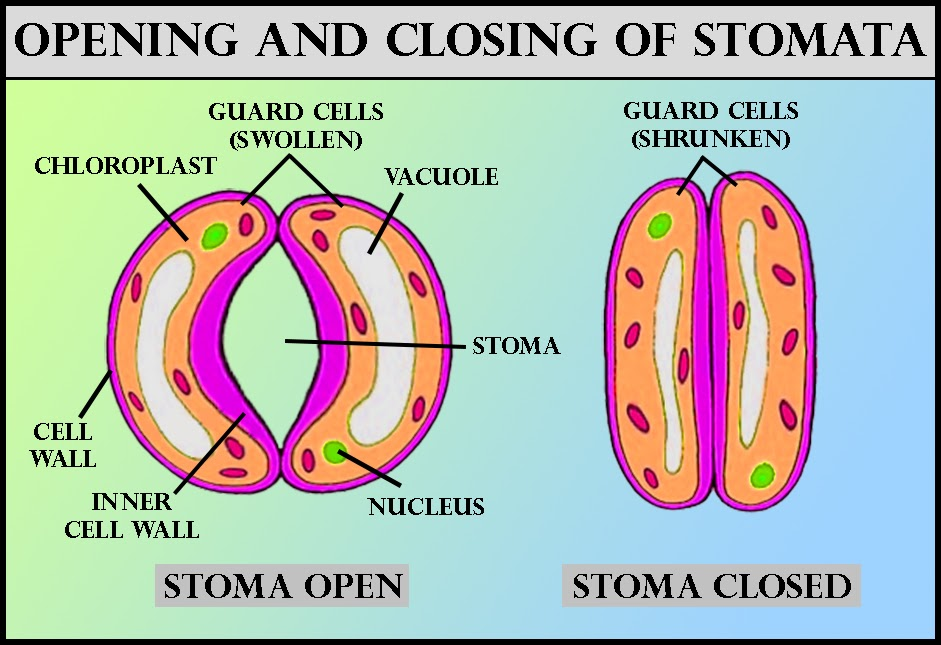
-Plants do not breathe like humans and animals, but they do require oxygen for their energy requirement and survival. This oxygen requirement of the plant is met through the process of cellular respiration. Plants respire through stomata. Stomata are the small openings (pores) present on the leaves, stems, and other organs of a plant. The small opening of the stomata is guarded by two guard cells that help in opening and closing stomata for gaseous exchange with the atmosphere. Similar to human and animal respiration plants also take up oxygen and release carbon dioxide during respiration.
Additional information:
-Respiration is of two types they are:
(a) Aerobic respiration: occurs only in living cells, this consists of oxygen, the end products are carbon-di-oxide and water.
(b)Anaerobic respiration: occurs only in microbes example (bacteria and fungi) this does not require oxygen. The end products are carbon-di-oxide and alcohol.
-Plants take up only aerobic cellular respiration. Cellular respiration does not involve breathing.
-Photosynthesis is a process to synthesize food and does not involve respiration. Photosynthesis involves the uptake of Light and carbon dioxide to produce glucose and oxygen as end products.
-Whereas respiration in plants involves the uptake of oxygen for utilizing glucose and releasing carbon dioxide and water.
So, the correct answer is ‘Stomata’.
Note:
Plant also respires through roots, where the roots of the plant absorb the trapped air between the soil particles. Although stems of plants have stomata as a specialized structure for respiration, in higher plants the exchange of respiratory gases takes place through lenticels. Also, it’s important to remember respiration and photosynthesis are two different processes, involving different start and end products.
Complete answer:
-Plants do not breathe like humans and animals, but they do require oxygen for their energy requirement and survival. This oxygen requirement of the plant is met through the process of cellular respiration. Plants respire through stomata. Stomata are the small openings (pores) present on the leaves, stems, and other organs of a plant. The small opening of the stomata is guarded by two guard cells that help in opening and closing stomata for gaseous exchange with the atmosphere. Similar to human and animal respiration plants also take up oxygen and release carbon dioxide during respiration.
Additional information:
-Respiration is of two types they are:
(a) Aerobic respiration: occurs only in living cells, this consists of oxygen, the end products are carbon-di-oxide and water.
(b)Anaerobic respiration: occurs only in microbes example (bacteria and fungi) this does not require oxygen. The end products are carbon-di-oxide and alcohol.
-Plants take up only aerobic cellular respiration. Cellular respiration does not involve breathing.
-Photosynthesis is a process to synthesize food and does not involve respiration. Photosynthesis involves the uptake of Light and carbon dioxide to produce glucose and oxygen as end products.
-Whereas respiration in plants involves the uptake of oxygen for utilizing glucose and releasing carbon dioxide and water.
So, the correct answer is ‘Stomata’.
Note:
Plant also respires through roots, where the roots of the plant absorb the trapped air between the soil particles. Although stems of plants have stomata as a specialized structure for respiration, in higher plants the exchange of respiratory gases takes place through lenticels. Also, it’s important to remember respiration and photosynthesis are two different processes, involving different start and end products.
Recently Updated Pages
Master Class 11 Social Science: Engaging Questions & Answers for Success

Master Class 11 English: Engaging Questions & Answers for Success
Master Class 11 Accountancy: Engaging Questions & Answers for Success
Master Class 11 Physics: Engaging Questions & Answers for Success
Master Class 11 Computer Science: Engaging Questions & Answers for Success
Master Class 11 Business Studies: Engaging Questions & Answers for Success
Trending doubts
One Metric ton is equal to kg A 10000 B 1000 C 100 class 11 physics CBSE
Find the value of the expression given below sin 30circ class 11 maths CBSE
Draw a diagram of nephron and explain its structur class 11 biology CBSE
10 examples of friction in our daily life
Proton was discovered by A Thomson B Rutherford C Chadwick class 11 chemistry CBSE
The teeth used for biting and cutting food are called class 11 biology CBSE