




phosphorylation of glucose with the help of ATP and hexokinase produces
A)Glucose 1- phosphate
B)Glucose 6-phosphate
C)Glucose 1,6-bisphosphate
D)Fructose 1,6-bisphosphate
Answer
 Verified
638.4k+ views
Hint: It is a product of gluconeogenesis and also serves as a substitute for glucose 6 phosphatase in the liver. It is the intracellular form of blood glucose. They are expressed in high levels in the liver and kidney.
Complete answer:
Glycolysis involves 9 reactions that convert glucose into pyruvate. Glucose is found in blood and it is a six-membered ring molecule and usually formed by the breakdown of carbohydrate and sugar.
-It enters the cell through a transporter protein. All the glycolytic enzymes are found in the cytosol.
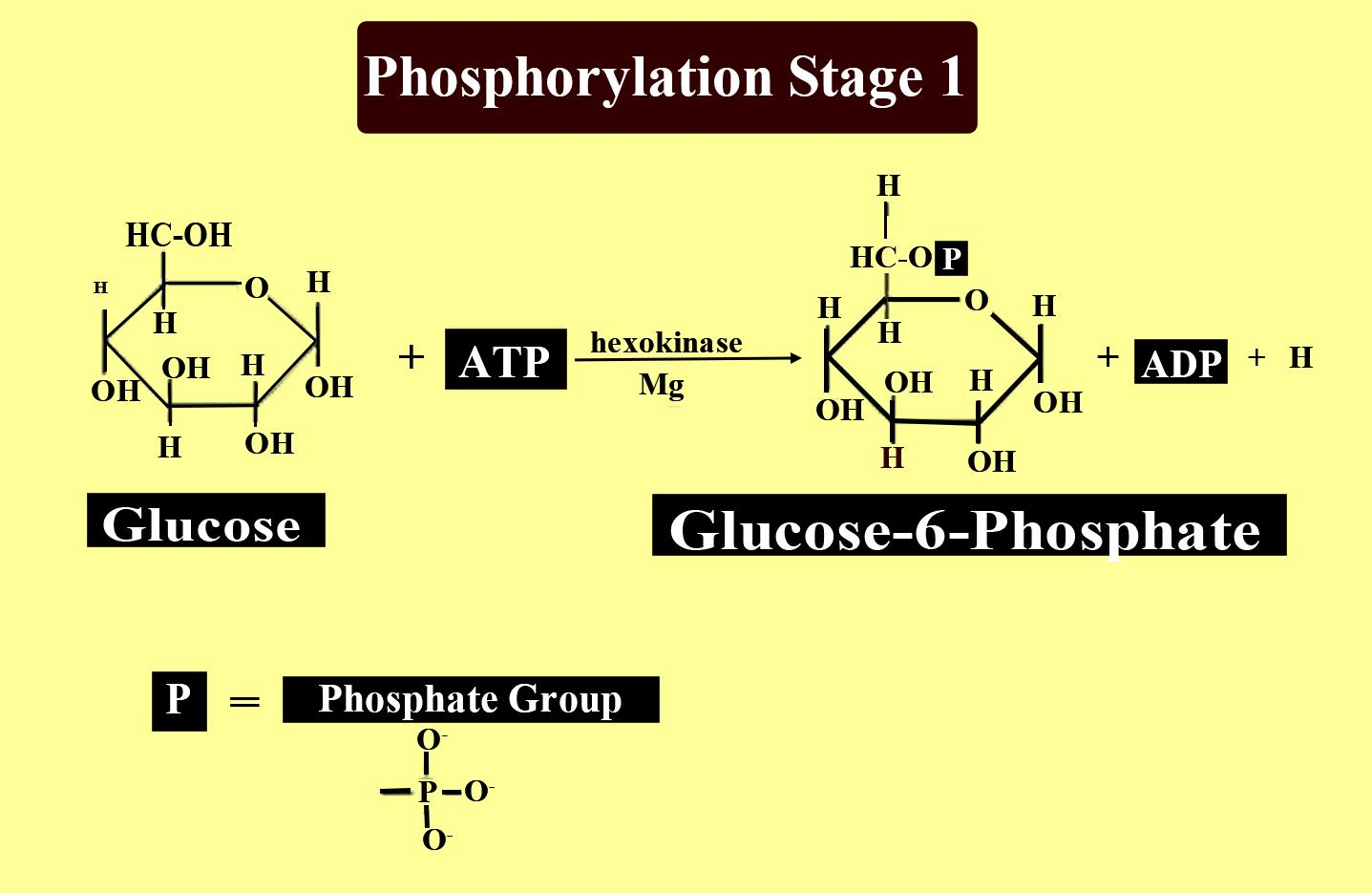
-Glucose ring is phosphorylated in the first step of glycolysis. The process of the addition of a phosphate group to a molecule that is derived from the ATP is called Phosphorylation. So, one molecule of ATP has been already consumed at this point in the glycolysis process. Hexokinase acts as a catalyst in this reaction.
-Hexokinase as suggested is an enzyme that accelerates the process of the addition of phosphate of glucose. The final product of this process is a molecule called glucose -6- phosphate. The name it gets is due to the 6th carbon of the glucose across the phosphate group.
Additional Information: -The next step of glycolysis comprises the change of glucose 6 phosphate to fructose 6 phosphate and phosphoglucose isomerase enzyme acts as a catalyst for this reaction.
-The third step involves the conversion of fructose 6 phosphate to fructose 1 6 by phosphate which is similar to the reaction of step 1 of glycolysis. This second molecule of ATP gives the phosphate group and is added onto the F6P molecule.
So, the correct answer is, "Glucose 6-phosphate".
Note: -The initial process occurs in the cytosol of cells and requires glucose as well as an ATP molecule for the energy to begin the process of glycolysis.
-Hexokinases require divalent magnesium ions as a cofactor for the catalysis of reaction.
Complete answer:
Glycolysis involves 9 reactions that convert glucose into pyruvate. Glucose is found in blood and it is a six-membered ring molecule and usually formed by the breakdown of carbohydrate and sugar.
-It enters the cell through a transporter protein. All the glycolytic enzymes are found in the cytosol.
-Glucose ring is phosphorylated in the first step of glycolysis. The process of the addition of a phosphate group to a molecule that is derived from the ATP is called Phosphorylation. So, one molecule of ATP has been already consumed at this point in the glycolysis process. Hexokinase acts as a catalyst in this reaction.
-Hexokinase as suggested is an enzyme that accelerates the process of the addition of phosphate of glucose. The final product of this process is a molecule called glucose -6- phosphate. The name it gets is due to the 6th carbon of the glucose across the phosphate group.
Additional Information: -The next step of glycolysis comprises the change of glucose 6 phosphate to fructose 6 phosphate and phosphoglucose isomerase enzyme acts as a catalyst for this reaction.
-The third step involves the conversion of fructose 6 phosphate to fructose 1 6 by phosphate which is similar to the reaction of step 1 of glycolysis. This second molecule of ATP gives the phosphate group and is added onto the F6P molecule.
So, the correct answer is, "Glucose 6-phosphate".
Note: -The initial process occurs in the cytosol of cells and requires glucose as well as an ATP molecule for the energy to begin the process of glycolysis.
-Hexokinases require divalent magnesium ions as a cofactor for the catalysis of reaction.
Recently Updated Pages
Master Class 11 Social Science: Engaging Questions & Answers for Success

Master Class 11 English: Engaging Questions & Answers for Success
Master Class 11 Accountancy: Engaging Questions & Answers for Success
Master Class 11 Physics: Engaging Questions & Answers for Success
Master Class 11 Computer Science: Engaging Questions & Answers for Success
Master Class 11 Business Studies: Engaging Questions & Answers for Success
Trending doubts
Find the value of the expression given below sin 30circ class 11 maths CBSE
One Metric ton is equal to kg A 10000 B 1000 C 100 class 11 physics CBSE
10 examples of friction in our daily life
Draw a diagram of nephron and explain its structur class 11 biology CBSE
The teeth used for biting and cutting food are called class 11 biology CBSE
Proton was discovered by A Thomson B Rutherford C Chadwick class 11 chemistry CBSE