




Nucleus pulposus occurs in
(a) Brain
(b) Liver
(c) Kidney
(d) Intervertebral disc
Answer
 Verified
608.7k+ views
Hint: They are the cartilages whose main function is to allow the movement in the backbone area of the body and also to join their bones together to provide movement which will also protect the backbone from any jerk.
Complete answer:
Nucleus pulposus occurs in the intervertebral disc of the body. It is the inner part of the vertebral disc that is jelly- like in appearance and acts as a shock absorber. It is mainly composed of a large amount of water and collagen fibers that form the network of loosely connected tissues. They help the organism to move and support the body.
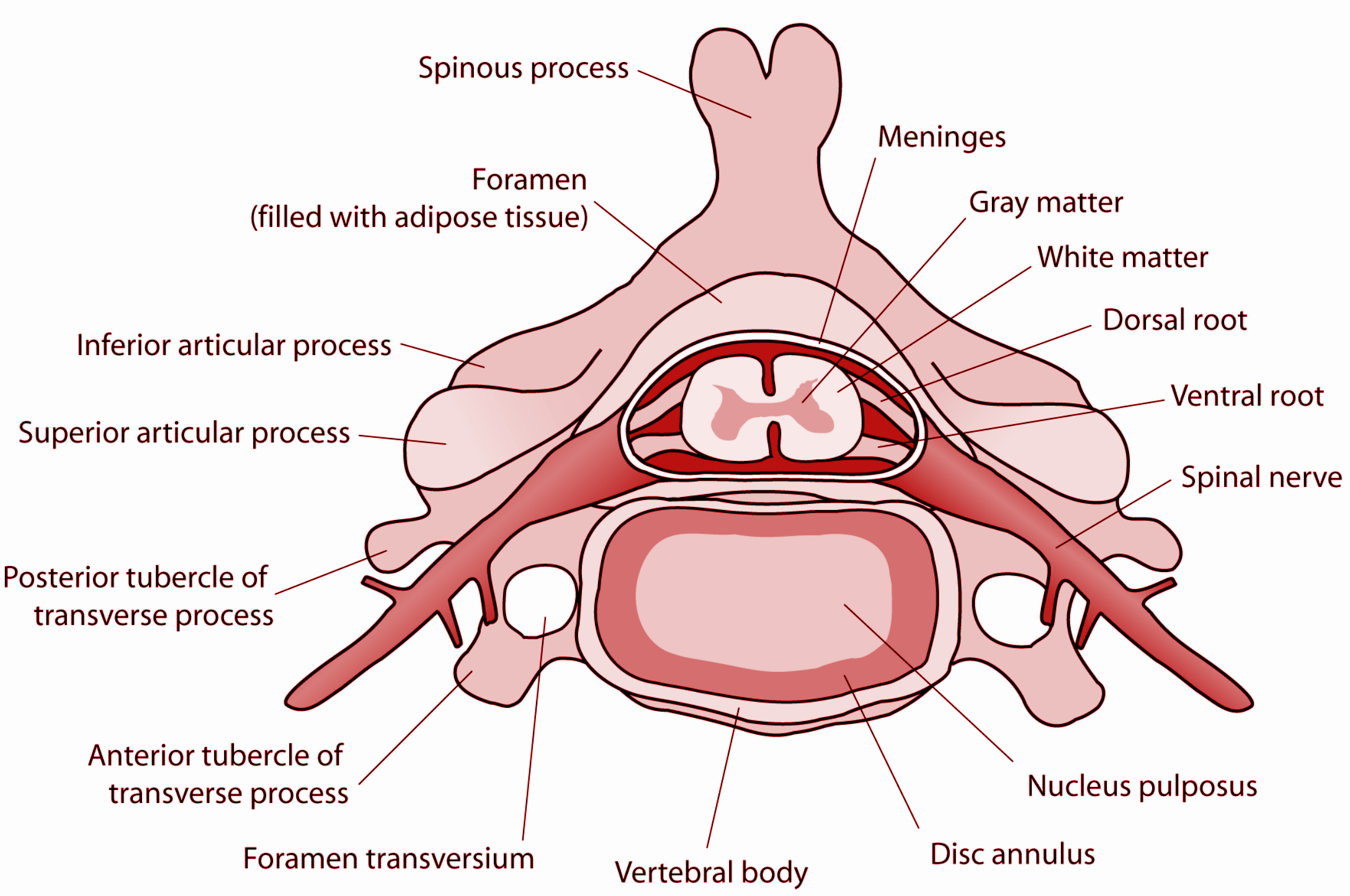
- The intervertebral disc is the substance present between the two adjacent vertebrae inside the vertebral column.
- They act as a ligament that keeps the vertebrae in place and forms a symbiosis that helps the vertebrae to move to form a fibrocartilaginous joint.
- The vertebral disc is composed of two parts, the outer part is surrounded by the fibrous tissues while the inner layer is present inside it called the nucleus pulposus.
- The outer fibrous tissue provides strength to the body to withstand even at a greater force and during the process of torsion in certain organisms.
- They protect the vertebral column from any type of damage that may cause it to rupture
- The remains of the notochord are the nucleus pulposus that helps the vertebrae to remain separated and withstand any kind of shock.
- A single intervertebral column is present between each pair of vertebrae except the first pair of vertebrae.
- The function of the nucleus pulposus is to distribute the tension and stress in all the parts of the vertebral column in balance so as to protect them from damage.
So, the correct answer is ‘(d) Intervertebral disc’.
Note: The nucleus pulposus can be regenerated by the cells when they produce a large amount of proteoglycan- rich matrix. The change in nucleus pulposus may cause certain diseases including herniated nucleus pulposus where the nucleus pulposus is forced through the intervertebral disc that leads to the back pain and the irritation in the root nerve.
Complete answer:
Nucleus pulposus occurs in the intervertebral disc of the body. It is the inner part of the vertebral disc that is jelly- like in appearance and acts as a shock absorber. It is mainly composed of a large amount of water and collagen fibers that form the network of loosely connected tissues. They help the organism to move and support the body.
- The intervertebral disc is the substance present between the two adjacent vertebrae inside the vertebral column.
- They act as a ligament that keeps the vertebrae in place and forms a symbiosis that helps the vertebrae to move to form a fibrocartilaginous joint.
- The vertebral disc is composed of two parts, the outer part is surrounded by the fibrous tissues while the inner layer is present inside it called the nucleus pulposus.
- The outer fibrous tissue provides strength to the body to withstand even at a greater force and during the process of torsion in certain organisms.
- They protect the vertebral column from any type of damage that may cause it to rupture
- The remains of the notochord are the nucleus pulposus that helps the vertebrae to remain separated and withstand any kind of shock.
- A single intervertebral column is present between each pair of vertebrae except the first pair of vertebrae.
- The function of the nucleus pulposus is to distribute the tension and stress in all the parts of the vertebral column in balance so as to protect them from damage.
So, the correct answer is ‘(d) Intervertebral disc’.
Note: The nucleus pulposus can be regenerated by the cells when they produce a large amount of proteoglycan- rich matrix. The change in nucleus pulposus may cause certain diseases including herniated nucleus pulposus where the nucleus pulposus is forced through the intervertebral disc that leads to the back pain and the irritation in the root nerve.
Recently Updated Pages
Master Class 11 Social Science: Engaging Questions & Answers for Success

Master Class 11 English: Engaging Questions & Answers for Success
Master Class 11 Maths: Engaging Questions & Answers for Success
Master Class 11 Chemistry: Engaging Questions & Answers for Success
Master Class 11 Biology: Engaging Questions & Answers for Success
Master Class 11 Physics: Engaging Questions & Answers for Success
Trending doubts
One Metric ton is equal to kg A 10000 B 1000 C 100 class 11 physics CBSE
Difference Between Prokaryotic Cells and Eukaryotic Cells
How many of the following diseases can be studied with class 11 biology CBSE
Two of the body parts which do not appear in MRI are class 11 biology CBSE
Which of the following enzymes is used for carboxylation class 11 biology CBSE
Explain zero factorial class 11 maths CBSE