



Napiform roots are recorded from
(a) Radish
(b) Carrot
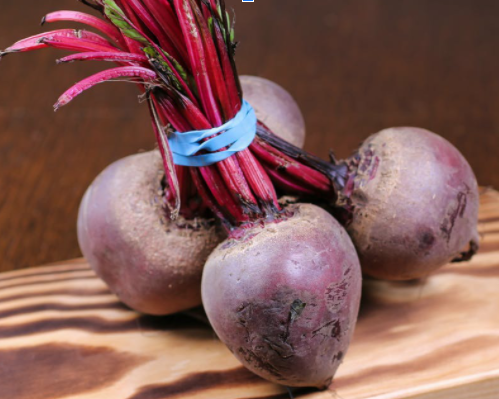
(c) Beet
(d) Sweet potato
Answer
 Verified
643.5k+ views
Hint: The lower end of such plants is elongated into a thread-like structure giving out small fine rootlets. It is a rich source of fibers and fructans (short-chain carbohydrate molecules). These fructans are classified as FODMAPs.
Complete answer
Napiform roots are recorded from the beet.
- Napiform roots are the modifications of taproot which become swollen and spherical at the upper end while their lower end is tapered like a thread. Some examples of napiform roots are- turnip (Brassica rapa), sugar beet.
- The napiform roots are responsible for the absorption of water and nutrients from the soil, anchoring of the body of the plant to the ground and providing support to it, storage of food and nutrients, and they are also involved in vegetative reproduction
Additional Information:
Plants are classified into three types of root systems:
- Taproot- It is the central and dominant root. It has a thick and slender root that grows straight into the soil. It further gives rise to secondary and tertiary roots. The upper growing part of the root called the meristematic zone also possesses root hairs meant for increasing the surface area of the roots to increase absorption.
- Fibrous root- It is divided into a fine tuft of branches.
- Adventitious root- It arises from the parts of the plant other than the base of the stem. It includes roots coming out from the nodes of the stem (stolon), leaves (bryophyllum), etc.
So, the correct answer is beet.
Note: The other modifications of taproot are as follows-
- Conical root: It is conical in shape. It is widest at the top and tapering steadily towards the bottom, for example, carrot.
- Fusiform root: This type of root is widest in the middle and they taper towards the top and the bottom, for example, radish.
Complete answer
Napiform roots are recorded from the beet.
- Napiform roots are the modifications of taproot which become swollen and spherical at the upper end while their lower end is tapered like a thread. Some examples of napiform roots are- turnip (Brassica rapa), sugar beet.
- The napiform roots are responsible for the absorption of water and nutrients from the soil, anchoring of the body of the plant to the ground and providing support to it, storage of food and nutrients, and they are also involved in vegetative reproduction
Additional Information:
Plants are classified into three types of root systems:
- Taproot- It is the central and dominant root. It has a thick and slender root that grows straight into the soil. It further gives rise to secondary and tertiary roots. The upper growing part of the root called the meristematic zone also possesses root hairs meant for increasing the surface area of the roots to increase absorption.
- Fibrous root- It is divided into a fine tuft of branches.
- Adventitious root- It arises from the parts of the plant other than the base of the stem. It includes roots coming out from the nodes of the stem (stolon), leaves (bryophyllum), etc.
So, the correct answer is beet.
Note: The other modifications of taproot are as follows-
- Conical root: It is conical in shape. It is widest at the top and tapering steadily towards the bottom, for example, carrot.
- Fusiform root: This type of root is widest in the middle and they taper towards the top and the bottom, for example, radish.
Recently Updated Pages
Master Class 11 Social Science: Engaging Questions & Answers for Success

Master Class 11 English: Engaging Questions & Answers for Success
Master Class 11 Accountancy: Engaging Questions & Answers for Success
Master Class 11 Physics: Engaging Questions & Answers for Success
Master Class 11 Computer Science: Engaging Questions & Answers for Success
Master Class 11 Business Studies: Engaging Questions & Answers for Success
Trending doubts
Find the value of the expression given below sin 30circ class 11 maths CBSE
One Metric ton is equal to kg A 10000 B 1000 C 100 class 11 physics CBSE
10 examples of friction in our daily life
Draw a diagram of nephron and explain its structur class 11 biology CBSE
The teeth used for biting and cutting food are called class 11 biology CBSE
Proton was discovered by A Thomson B Rutherford C Chadwick class 11 chemistry CBSE