




Name the three kinds of blood vessels of the human circulatory system. Write the function of each.
Answer
 Verified
614.1k+ views
Hint: The human circulatory system consists of three blood vessels which play a very significant and particular role in the process of human circulation.
Complete Answer step-by-step answer:
There are three types of blood vessels present in the human circulatory system and they are arteries, veins, and capillaries. They all play an important role in carrying the oxygenated and deoxygenated blood from the heart to the other parts of the body and from the different parts of the body to the heart. These blood vessels carry blood cells, nutrition, oxygen to the different tissues while they collect harmful wastes like carbon dioxide away from the tissues. All the blood vessels are important to encourage life as all the tissues of the body depend on the blood vessels and their function.
The arteries or arterioles plays the role in carrying the oxygenated blood from the lungs to the different organs.
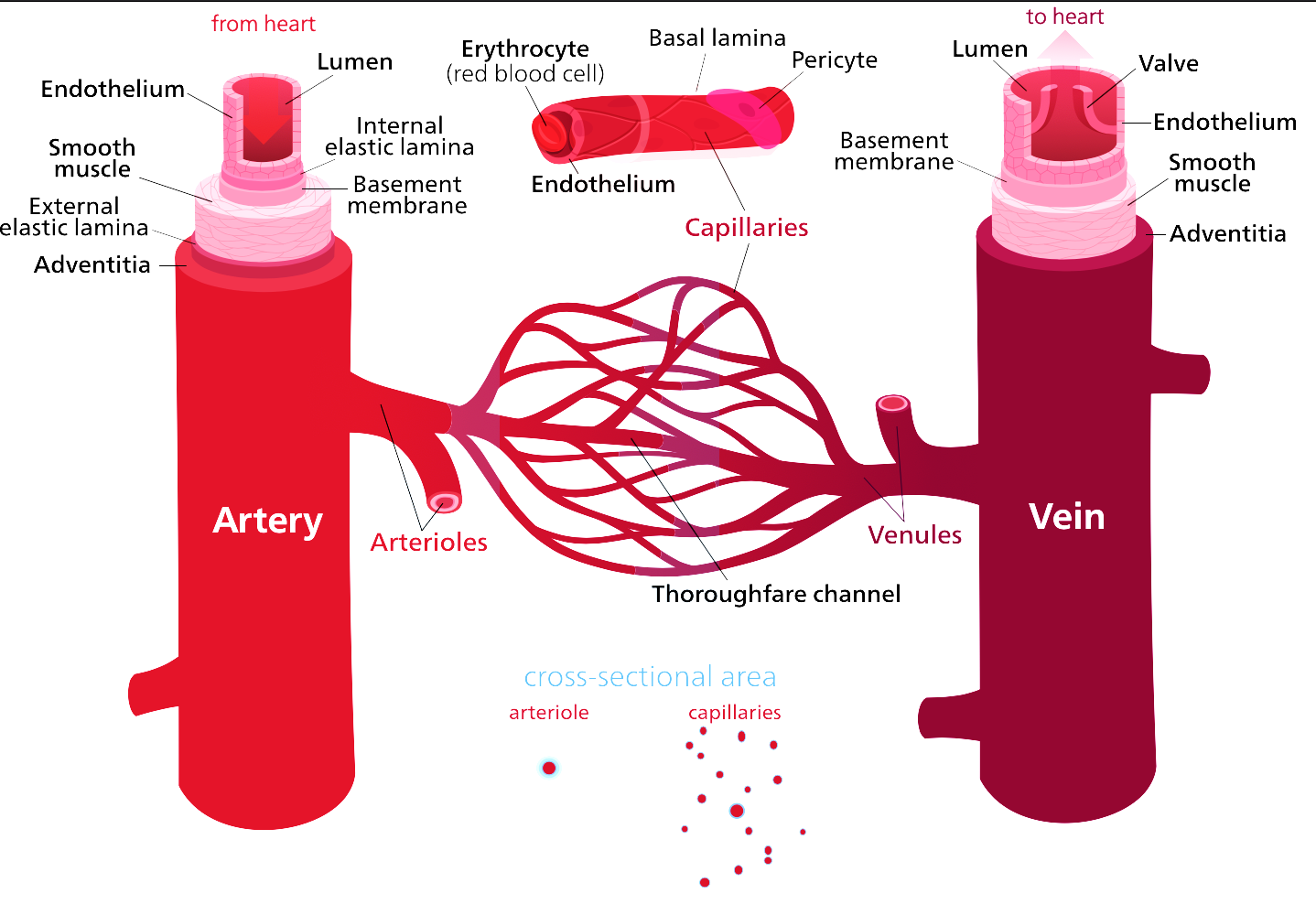
The ventricles of the venules carry deoxygenated blood from the different organs back to the lungs. The blood vessels also help to circulate blood throughout the body and the oxygen leaps on haemoglobin in the red blood cell. The blood vessels also carry the red blood cells which carry oxygen and are very useful in our daily functions. The capillaries are the smallest blood vessels and are many in numbers which function as to connect the different blood vessels which carry the blood away from the heart to the different organs and back from the different organs to the heart.
Note: The blood vessels are the most important components of the human circulatory system and blood vessels carry not only blood but also blood cells, nutrition, oxygen. It is a closed circulatory system with a beginning and ending at the heart.
Complete Answer step-by-step answer:
There are three types of blood vessels present in the human circulatory system and they are arteries, veins, and capillaries. They all play an important role in carrying the oxygenated and deoxygenated blood from the heart to the other parts of the body and from the different parts of the body to the heart. These blood vessels carry blood cells, nutrition, oxygen to the different tissues while they collect harmful wastes like carbon dioxide away from the tissues. All the blood vessels are important to encourage life as all the tissues of the body depend on the blood vessels and their function.
The arteries or arterioles plays the role in carrying the oxygenated blood from the lungs to the different organs.
The ventricles of the venules carry deoxygenated blood from the different organs back to the lungs. The blood vessels also help to circulate blood throughout the body and the oxygen leaps on haemoglobin in the red blood cell. The blood vessels also carry the red blood cells which carry oxygen and are very useful in our daily functions. The capillaries are the smallest blood vessels and are many in numbers which function as to connect the different blood vessels which carry the blood away from the heart to the different organs and back from the different organs to the heart.
Note: The blood vessels are the most important components of the human circulatory system and blood vessels carry not only blood but also blood cells, nutrition, oxygen. It is a closed circulatory system with a beginning and ending at the heart.
Recently Updated Pages
Master Class 12 Economics: Engaging Questions & Answers for Success

Master Class 12 English: Engaging Questions & Answers for Success
Master Class 12 Social Science: Engaging Questions & Answers for Success
Master Class 12 Maths: Engaging Questions & Answers for Success
Master Class 12 Physics: Engaging Questions & Answers for Success
Master Class 11 Social Science: Engaging Questions & Answers for Success
Trending doubts
One Metric ton is equal to kg A 10000 B 1000 C 100 class 11 physics CBSE
Difference Between Prokaryotic Cells and Eukaryotic Cells
Two of the body parts which do not appear in MRI are class 11 biology CBSE
1 ton equals to A 100 kg B 1000 kg C 10 kg D 10000 class 11 physics CBSE
Draw a diagram of nephron and explain its structur class 11 biology CBSE
10 examples of friction in our daily life