




Name the stage of the human embryo at which it gets implanted. Explain the process of implantation.
Answer
 Verified
592.8k+ views
Hint: Implantation is the process in which the embryo formed gets attached to the walls of the uterus. The development of the embryo takes place by the process of embryogenesis. This embryogenesis follows the set of processes and it starts with the fusion of the male and the female gamete to produce the embryo and result in the complete individual.
Complete answer:
The human embryo which gets presented in the uterus is called a blastocyst. It gets implanted in the following way.
The process of implantation:
(1) Fertilization is the first process in which the haploid nucleus of the sperm and the egg fuses to form the diploid nucleus of the zygote. The diploid zygote is the result of the fertilization. Zygote is the type of the eukaryotic cell and contains the genome of both the male and the female gametes. It is the fertilized ovum in the female fallopian tube which is the result of the fertilization.
(2) The zygote from the fallopian tube moves to the uterus. At this time, the zygotic cell divides to form the two, four, six and eight daughter cells. The cells that are divided from the parent zygote cells are called the blastomeres.
(3) After this the blastomeres undergo cell division, and the zygote with the sixteen cells are called morula.
(4) Next, the process of cleavage takes place. It is the process in which the cells of the zygote undergo the cell division. In humans and the animals, the cleavage happened in the radial type. This cleavage then follows the stages of the morula, blastula and the gastrula.
(5) The morula stage is the stage of the zygote which contains sixteen cells of the blastomeres and the zygote appears as the solid ball.
(6) Then the repeated cell division causes the single layer of the cells called blastula and which grows into the multi layered cells called gastrula.
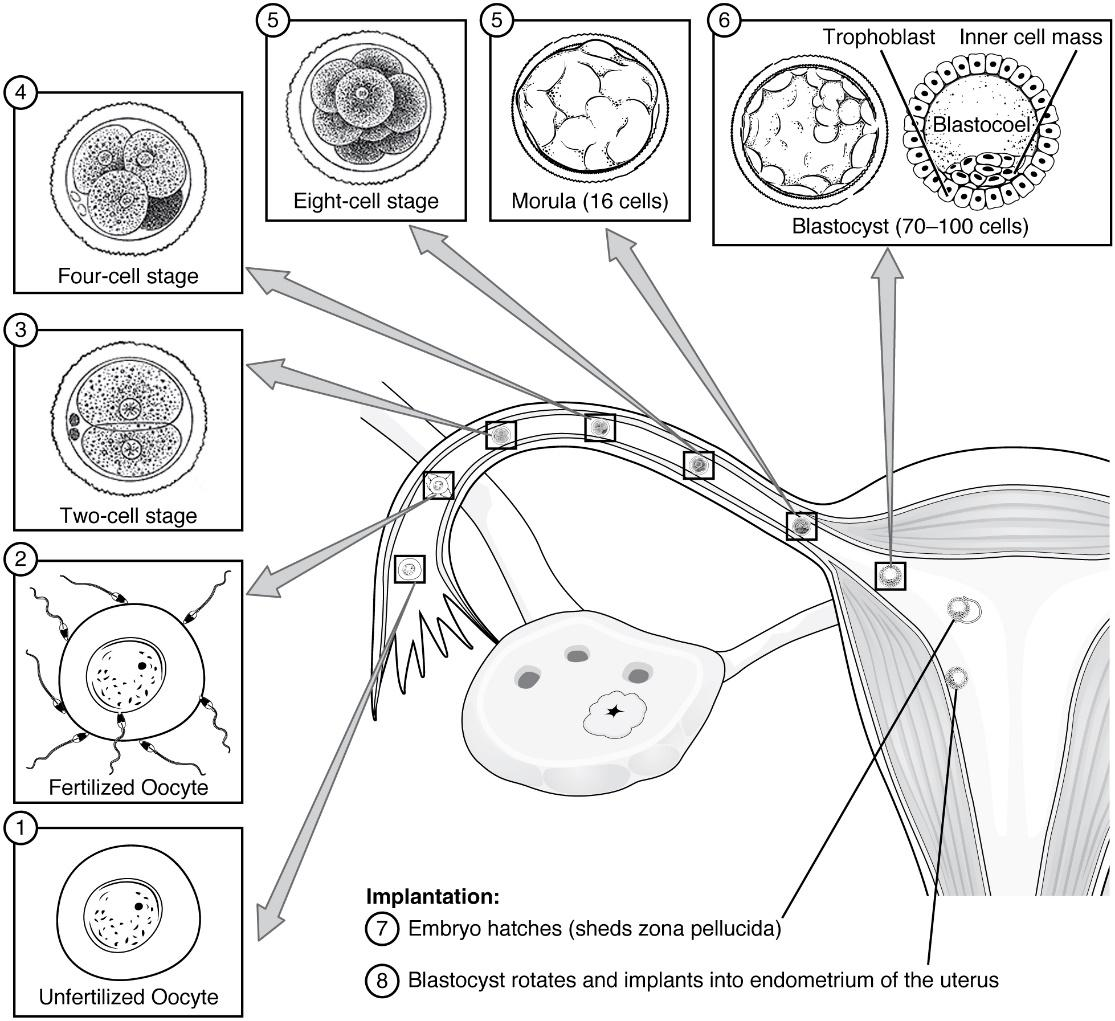
Note: Morula appears as the solid ball and the blastula appears as the hollow ball since it contains only the single layer of the cells. These two processes are followed by the gastrula which appears as the cup shaped cells which are multilayered.
Complete answer:
The human embryo which gets presented in the uterus is called a blastocyst. It gets implanted in the following way.
The process of implantation:
(1) Fertilization is the first process in which the haploid nucleus of the sperm and the egg fuses to form the diploid nucleus of the zygote. The diploid zygote is the result of the fertilization. Zygote is the type of the eukaryotic cell and contains the genome of both the male and the female gametes. It is the fertilized ovum in the female fallopian tube which is the result of the fertilization.
(2) The zygote from the fallopian tube moves to the uterus. At this time, the zygotic cell divides to form the two, four, six and eight daughter cells. The cells that are divided from the parent zygote cells are called the blastomeres.
(3) After this the blastomeres undergo cell division, and the zygote with the sixteen cells are called morula.
(4) Next, the process of cleavage takes place. It is the process in which the cells of the zygote undergo the cell division. In humans and the animals, the cleavage happened in the radial type. This cleavage then follows the stages of the morula, blastula and the gastrula.
(5) The morula stage is the stage of the zygote which contains sixteen cells of the blastomeres and the zygote appears as the solid ball.
(6) Then the repeated cell division causes the single layer of the cells called blastula and which grows into the multi layered cells called gastrula.
Note: Morula appears as the solid ball and the blastula appears as the hollow ball since it contains only the single layer of the cells. These two processes are followed by the gastrula which appears as the cup shaped cells which are multilayered.
Recently Updated Pages
Master Class 11 Social Science: Engaging Questions & Answers for Success

Master Class 11 Physics: Engaging Questions & Answers for Success
Master Class 11 Maths: Engaging Questions & Answers for Success
Master Class 11 Economics: Engaging Questions & Answers for Success
Master Class 11 Computer Science: Engaging Questions & Answers for Success
Master Class 11 Chemistry: Engaging Questions & Answers for Success
Trending doubts
One Metric ton is equal to kg A 10000 B 1000 C 100 class 11 physics CBSE
There are 720 permutations of the digits 1 2 3 4 5 class 11 maths CBSE
1 Quintal is equal to a 110 kg b 10 kg c 100kg d 1000 class 11 physics CBSE
State and prove Bernoullis theorem class 11 physics CBSE
Difference Between Prokaryotic Cells and Eukaryotic Cells
Which among the following are examples of coming together class 11 social science CBSE